


Is your university replacing lecture hall seating or planning a new auditorium? A poorly specified writing tablet can restrict student movement, complicate cleaning and make long lectures less comfortable, even when the chair itself looks suitable. Before comparing quotations, purchasing teams need to define how the seat, tablet, room layout and installation should work together—not simply look for the lowest unit price.
Quick Product Picks
| Image | Best For | Key Benefit | Product | Action |
|---|---|---|---|---|
|
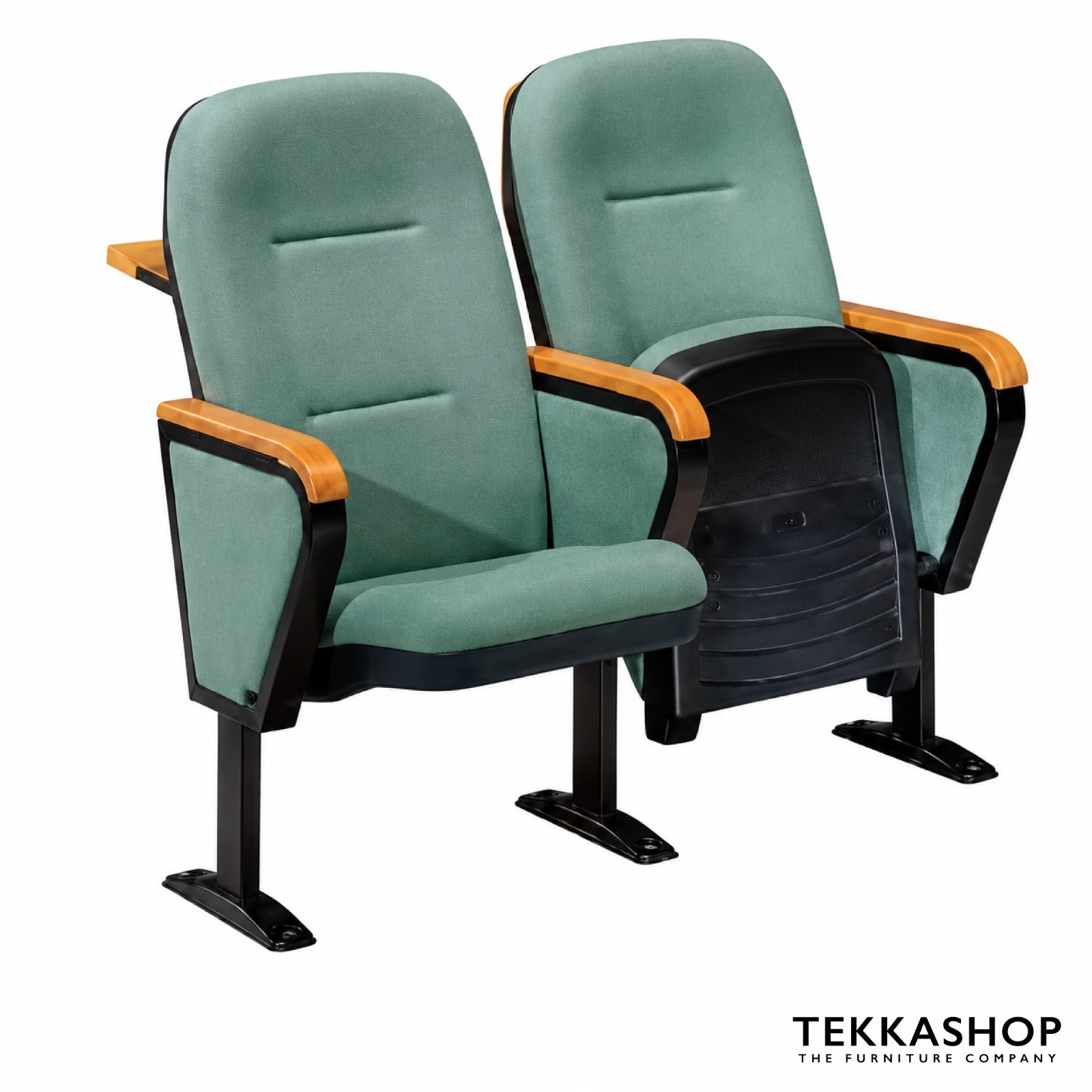
Universities planning fixed, high-back seating for lecture halls or auditoriums and willing to verify a compatible writing-tablet option before procurement | The floor-mounted design combines cushioned fabric seating, solid wood armrests and a heavy-duty steel frame | Fabric Auditorium Chair | Check STAC4783 |
See whether the STAC4783 suits your lecture hall
WhatsApp for a Quick RecommendationMatch the Seating to the Teaching Activity
An auditorium chair with a writing tablet should support what students are expected to do during class. Note-taking, laptop use, examinations and technical drawing place different demands on the available work surface, so faculty representatives should help define the room’s teaching needs. Consider session duration, class size, room turnover and whether students need space for several items at once.
A compact tablet may work for short seminars but feel restrictive during examinations or extended lectures, while a multipurpose hall needs a surface that stores neatly when teaching is not taking place. This consultation gives every bidder the same practical use case. It also reduces the risk of selecting lecture theatre chairs that meet the budget but interfere with how the room is taught and managed.

AI-generated image for illustration purposes only. Actual product appearance may vary.
Specify the Writing Tablet as a Separate Requirement
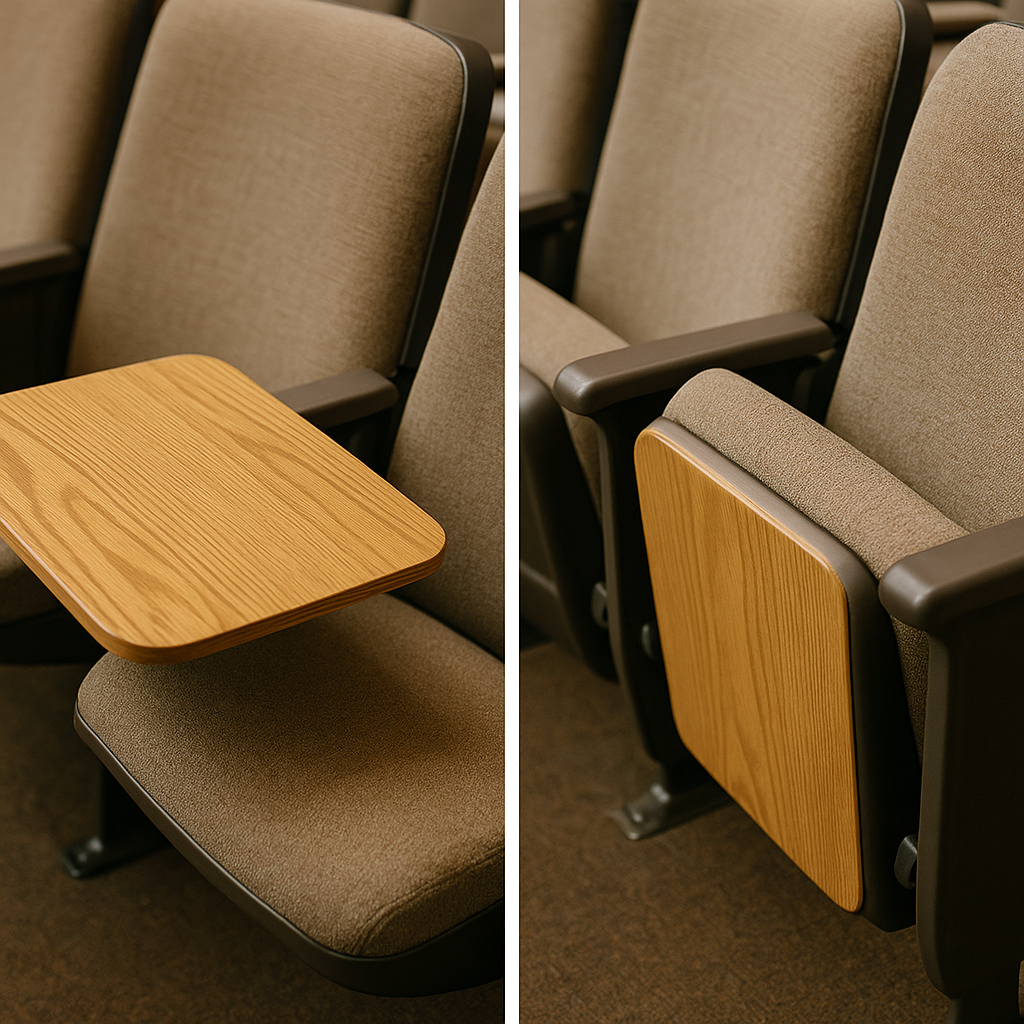
Do not assume that every auditorium seat can automatically be fitted with a writing tablet. Compatibility depends on the chair, armrest and the space the tablet occupies when opened or stored, so the request for quotation should identify the tablet as a required component. Ask bidders to explain the usable work area, opening direction, stored position and ease of operation from a seated position.
The specification should also address left-handed users and confirm whether the surface is suitable for the university’s intended paper formats, stationery or devices. Written confirmation, drawings and an approved sample are more dependable than a generic product image or broad wording in a quotation. These documents allow the purchasing team to verify the complete configuration before committing to a bulk order.
AI-generated image for illustration purposes only. Actual product appearance may vary.
Assess the Featured Fixed Auditorium Chair
The Lecture Hall Conference Cinema Seat is a floor-mounted option with a high back and cushioned seat and backrest. Its heavy-duty steel frame, fabric upholstery and solid wood armrests provide a practical starting point for discussing comfort, appearance and everyday lecture hall use. The STAC4783 High-Back Fabric W550 Auditorium Chair is shown with a black frame and green seat, while the verified information indicates that an optional colour may be available.
Universities should request current choices or physical swatches and record the approved finish in the order documentation. The verified specifications do not identify this chair as tablet-equipped. Before shortlisting it for a writing-tablet project, ask for written confirmation of compatibility and any effect on the armrest, row layout, installation scope, unit configuration or project schedule.

AI-generated image for illustration purposes only. Actual product appearance may vary.
Plan the Lecture Hall Layout Around People in Motion
Room capacity cannot be calculated from chair width alone. Row spacing must allow for occupied seats, open tablets, aisles, steps, doors and students entering or leaving without excessive disruption. Start with an accurate plan showing columns, floor levels, stage edges, control booths and other fixed features.
For a tiered or curved hall, ask the supplier or project consultant to demonstrate how the rows and floor-fixing points will follow the room, then check views of teaching screens and demonstration areas from several positions. Do not confirm quantities until the architect, consultant or facilities team has reviewed the proposed layout. Building, fire-safety and accessibility requirements take priority over maximising seat count, and the approved drawing revision should form part of the purchase and installation documents.

AI-generated image for illustration purposes only. Actual product appearance may vary.
Evaluate Student Comfort with a Complete Sample
Specifications and photographs cannot show how a chair feels through a long lecture. A physical sample lets purchasing, facilities and academic representatives assess back support, cushioning, armrest position and the effort required to open and store the tablet. Ask testers with different body sizes and dominant hands to sit down, stand up, write notes and use a laptop if that reflects the room’s purpose.
They should also check stability during normal writing, access to belongings and whether the tablet or its moving parts create uncomfortable contact points. Evaluate the complete proposed chair rather than a standard seat without its tablet. A short scoring form covering entry, posture, writing position, operation and space beside neighbouring occupants creates a more useful procurement record than comments such as “comfortable” or “modern.”

AI-generated image for illustration purposes only. Actual product appearance may vary.
Confirm Floor Fixing and Installation Responsibilities
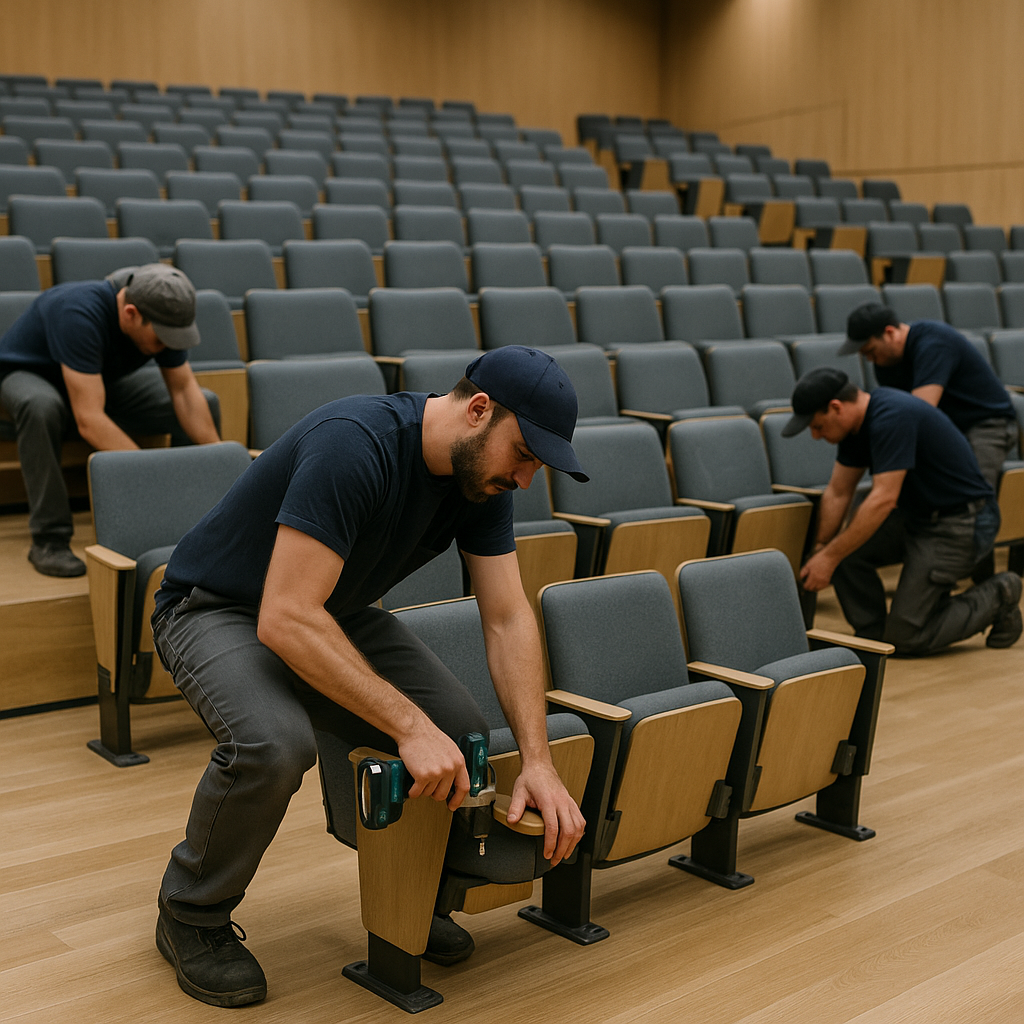
Floor-mounted lecture hall seating requires coordination with the building and other contractors. The installer needs to understand the floor structure, finishes, level changes and any hidden services that could affect where drilling and fixing can take place. The quotation should identify who will mark the row positions, secure the chairs, remove installation debris and inspect the completed work.
It should also separate product supply, delivery, positioning and installation so that responsibilities and costs are clear before the order is awarded. Approve the final row plan before installation begins and agree when the room will be ready to receive the seating. On completion, inspect alignment, fixing stability and the operation of all moving components, then record any corrections, handover documents and care instructions still required.
AI-generated image for illustration purposes only. Actual product appearance may vary.
Share your room plan and writing-tablet requirements
Send Us Your RequirementsPrepare Cleaning and Maintenance Requirements
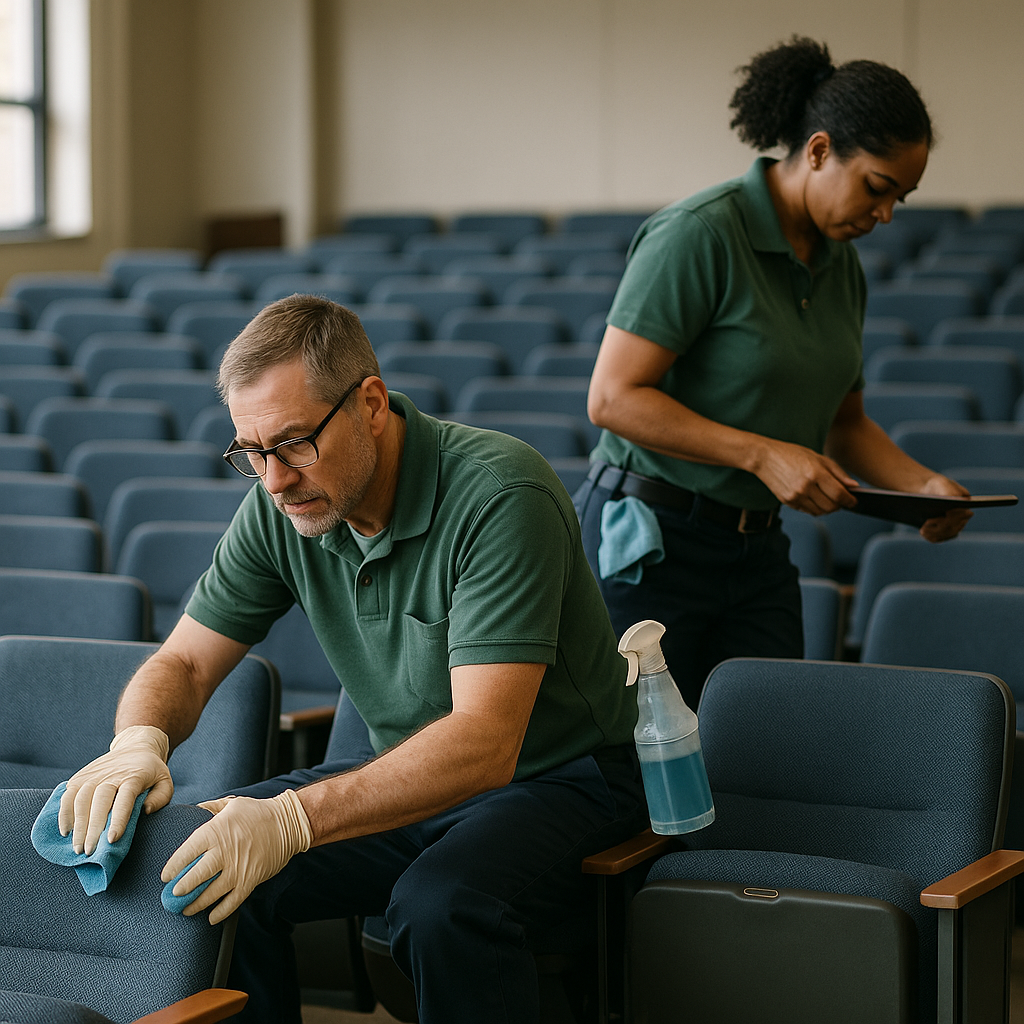
University seating must cope with regular use, dust, drink spills and contact from bags or equipment. Ask for care instructions covering the exact upholstery, armrests, frame and tablet surface so cleaning teams know which products and methods are suitable. Maintenance planning should include checks of floor fixings, accessible fasteners and the tablet’s moving parts.
The university should also ask whether commonly worn or damaged components can be replaced separately and how staff can identify the correct part when requesting support. Include warranty coverage, spare-part availability and service arrangements in the quotation request. These commitments are not provided in the verified information for the featured chair, so they should be confirmed directly and documented rather than treated as standard.
AI-generated image for illustration purposes only. Actual product appearance may vary.
Build Accessibility into the Initial Layout
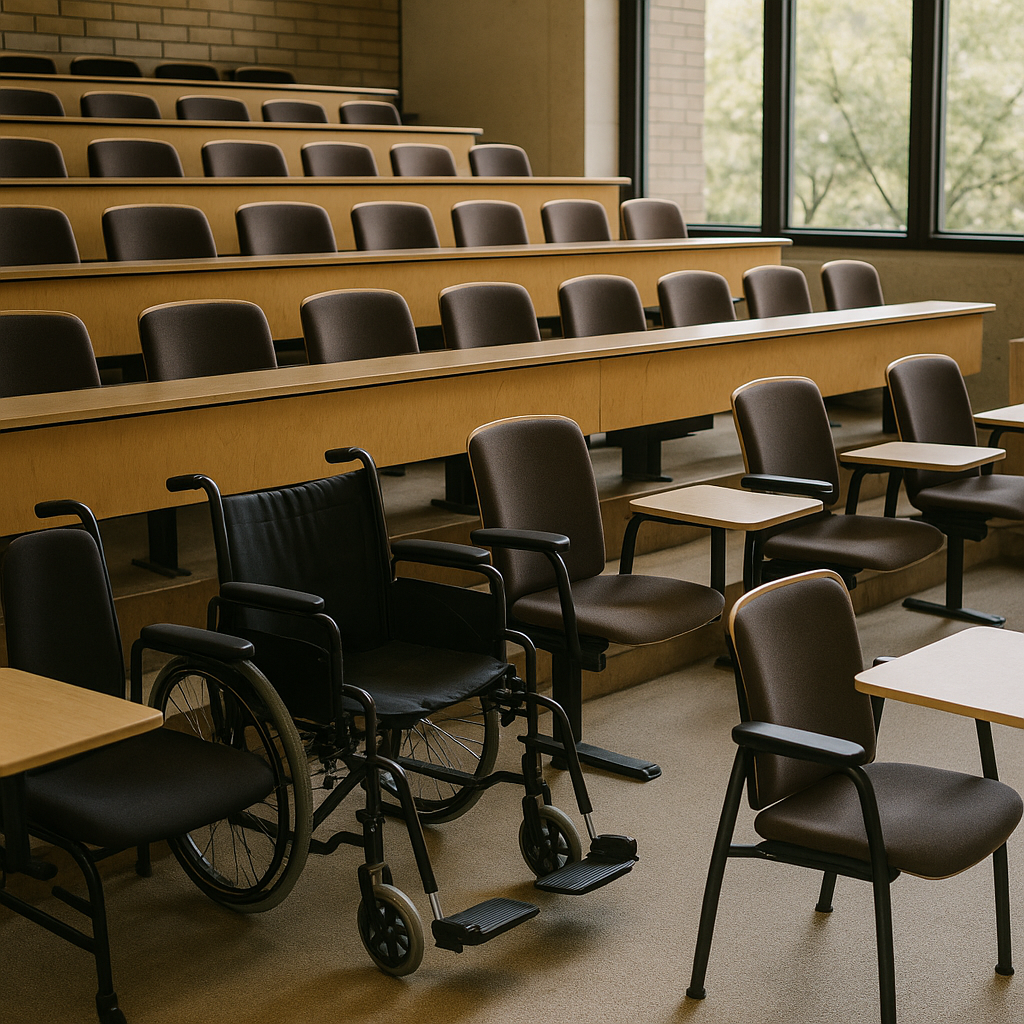
Accessible participation should be planned before fixed chairs are installed. The project team needs to identify suitable wheelchair spaces, companion seating and clear routes while preserving a practical view of the lecturer, stage and presentation screens. A standard chair-mounted tablet may not meet every user’s writing needs.
Discuss whether selected positions require alternative work surfaces, removable seating or another approved arrangement that integrates properly with the rest of the room. Qualified project professionals should review the design against requirements applicable to the site. The furniture supplier can provide chair and layout information, but interpretation and approval of statutory requirements should remain with the relevant consultants and authorities.
AI-generated image for illustration purposes only. Actual product appearance may vary.
Write an RFQ That Produces Comparable Quotations
A vague request for an auditorium chair with a table can produce quotations based on different assumptions. Give each bidder the same room plan, expected quantity, teaching use, completion window and tablet requirements, then ask them to identify anything excluded or dependent on a site inspection. The response schedule should cover the proposed chair, finishes, confirmed tablet arrangement, colour options, delivery, installation, sample approval and layout support.
It should also request warranty terms, spare-part arrangements, quotation validity and any minimum order condition, with every proposed substitution clearly identified. Ask for separate pricing lines for the chairs, writing tablets, delivery, installation, optional items and applicable taxes. Contact us for current pricing and availability, as the final cost can vary with quantity, confirmed configuration and total project scope.

AI-generated image for illustration purposes only. Actual product appearance may vary.
Build a Realistic Procurement Programme
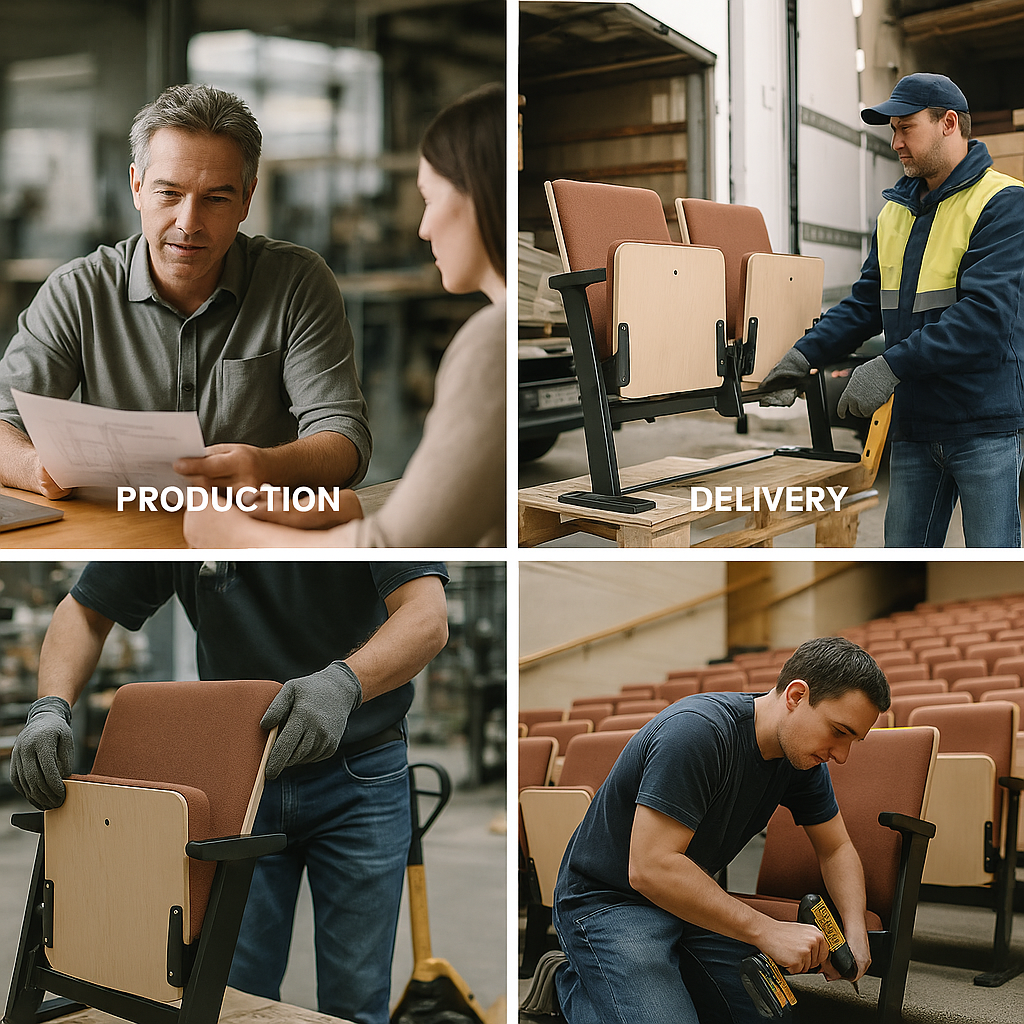
A production lead time is only one part of the overall programme. Sample evaluation, tablet approval, colour selection, layout preparation, transport and installation may all add time, so request a project-specific schedule based on the chosen quantity and configuration. Work backwards from the date when the hall must be ready for teaching or events.
Allow for internal approvals, purchase-order processing and drawing revisions, then coordinate seating installation with flooring, electrical, audio-visual and interior work. Communicate any fixed semester-opening or event deadline during the initial enquiry. Agreed milestones, approval dates and site-readiness responsibilities should be documented so delays can be identified before they affect installation.
AI-generated image for illustration purposes only. Actual product appearance may vary.
Compare Whole-Project Value Before Award
The lowest unit price may not represent the lowest project risk. A stronger evaluation considers compliance with the specification, tablet usability, layout assistance, installation scope, delivery programme and the clarity of after-sales commitments. Use an evaluation sheet that reflects the university’s tender rules and project priorities.
Commercial reviewers can assess price and contract terms, while facilities, academic and project representatives evaluate function, maintainability and room suitability; exclusions and proposed alternatives should be recorded rather than overlooked. Before issuing the purchase order, compare the selected configuration with the wider theatre, lecture hall and auditorium chair range, then confirm the model, quantity, colour, approved sample, final layout and completion scope. The award should remain based on documented project requirements and written supplier commitments.

AI-generated image for illustration purposes only. Actual product appearance may vary.
Product Details
Fabric Auditorium Chair
- Best for
- Universities planning fixed, high-back seating for lecture halls or auditoriums and willing to verify a compatible writing-tablet option before procurement
- Material
- Fabric upholstery, high-density foam, solid wood armrests, heavy-duty steel frame
- Key benefit
- The floor-mounted design combines cushioned fabric seating, solid wood armrests and a heavy-duty steel frame
- Product code
- STAC4783
- Price
- Contact us for current pricing and availability
Buying Guidance
For a useful initial enquiry, provide the room plan, site location, indicative chair quantity, teaching-use summary and target completion date. Define the writing tablet by its intended use, operating and stored positions, left-handed provision and suitability for examinations, notebooks or laptops, then request a complete sample and proposed layout. For the STAC4783 High-Back Fabric W550 Auditorium Chair, obtain written confirmation that a suitable tablet configuration is available because this feature is not included in the verified specifications.
Compare compliant quotations by total project scope, installation responsibilities, schedule and after-sales support, with qualified professionals reviewing accessibility, safety and floor-fixing requirements before the order is placed.
Request a detailed project quotation and availability check
WhatsApp Us NowFrequently Asked Questions
Can a university request one sample chair before approving a bulk order?
Ask whether a complete sample can be provided and whether charges, transport or return conditions apply. The sample should include the proposed tablet, armrest and upholstery configuration so the university can test the product it would actually receive.
Is there usually a minimum order quantity for university auditorium chairs?
Minimum quantities are not provided in the verified product information and may depend on the model, colour, configuration and production arrangement. State the required quantity and any future expansion plans, then ask the supplier to confirm all order conditions in writing.
What warranty should be requested for lecture theatre chairs?
Request written coverage for the chair and any confirmed tablet mechanism, including the coverage period, exclusions and claim procedure. No warranty details are listed in the verified information for the featured product, so the university should not assume a standard term.
Should spare chairs or replacement components be included in the order?
This depends on the number of seats, expected usage and future component availability. Ask the supplier to recommend a practical allowance and record the model or part references needed for future replacements.
Can auditorium chair colours be matched to university branding?
The verified product information identifies a green seat and indicates that an optional colour may be available, but it does not guarantee an exact branding match. Request current colour options or physical swatches and record the approved selection before production.