

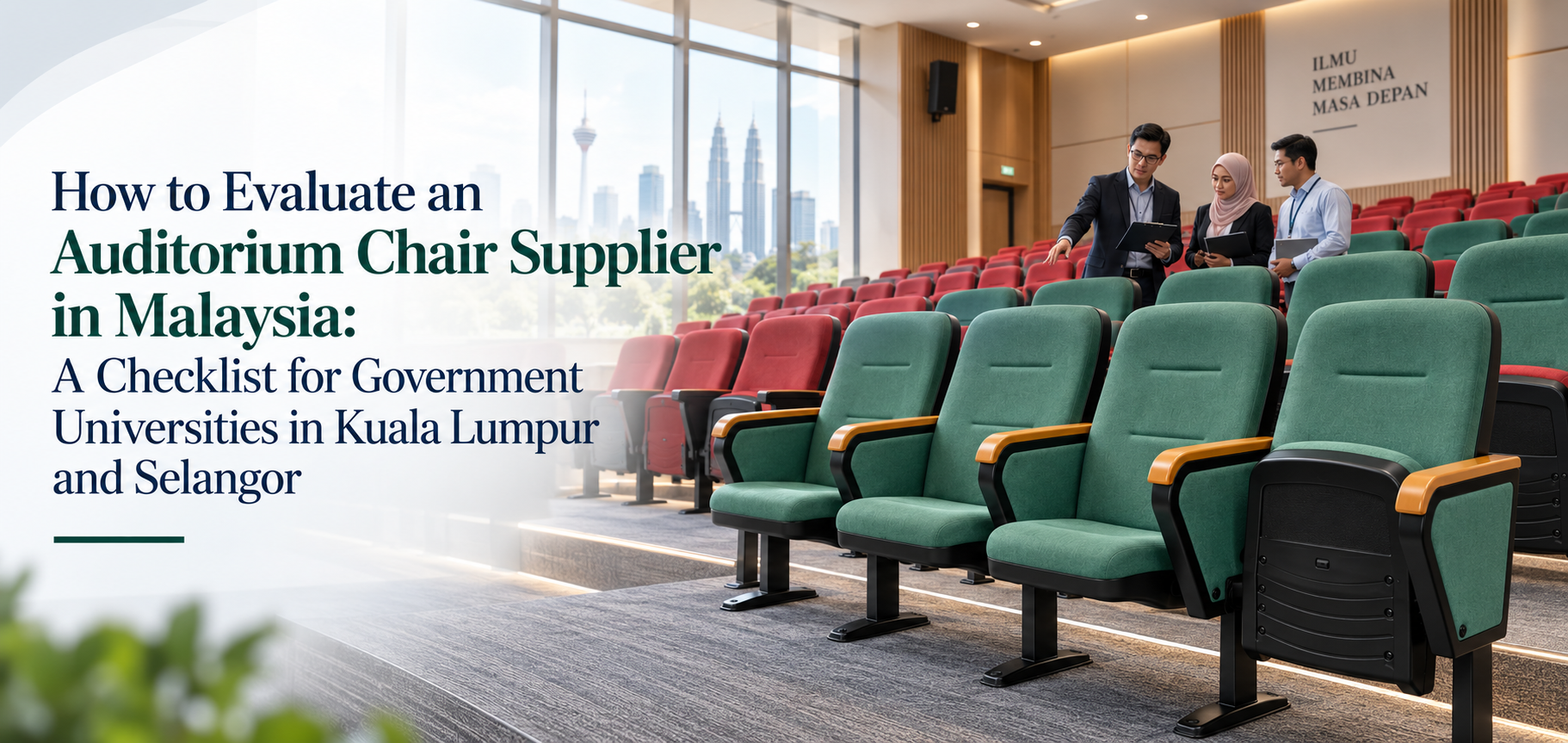
Is your university simply buying chairs, or commissioning a seating system that must work with the hall, teaching format and procurement process? An attractive quotation can become costly if it overlooks floor conditions, row planning, writing needs or installation responsibilities. For government university operators in Kuala Lumpur and Selangor, supplier evaluation should begin with a clear, documented checklist—not a product photo and unit cost alone.
Quick Product Picks
| Image | Best For | Key Benefit | Product | Action |
|---|---|---|---|---|
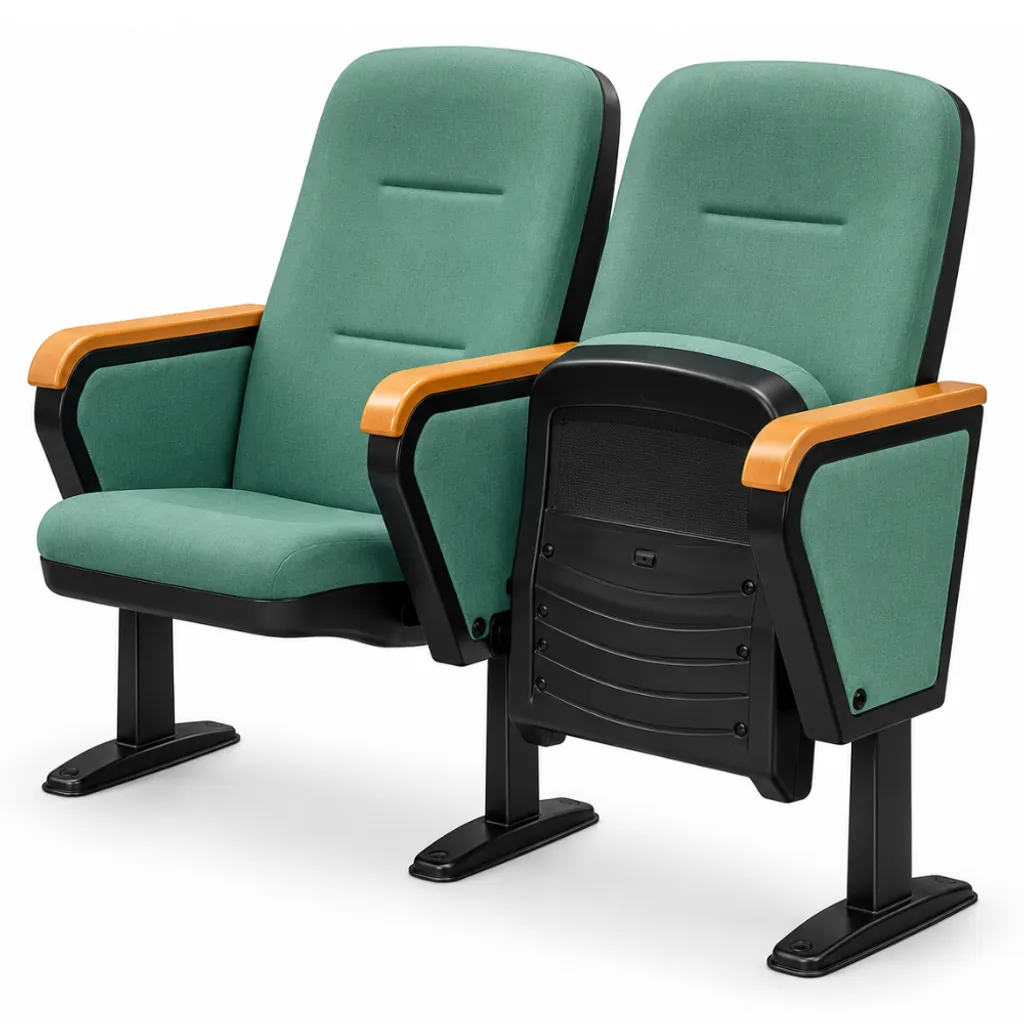 |
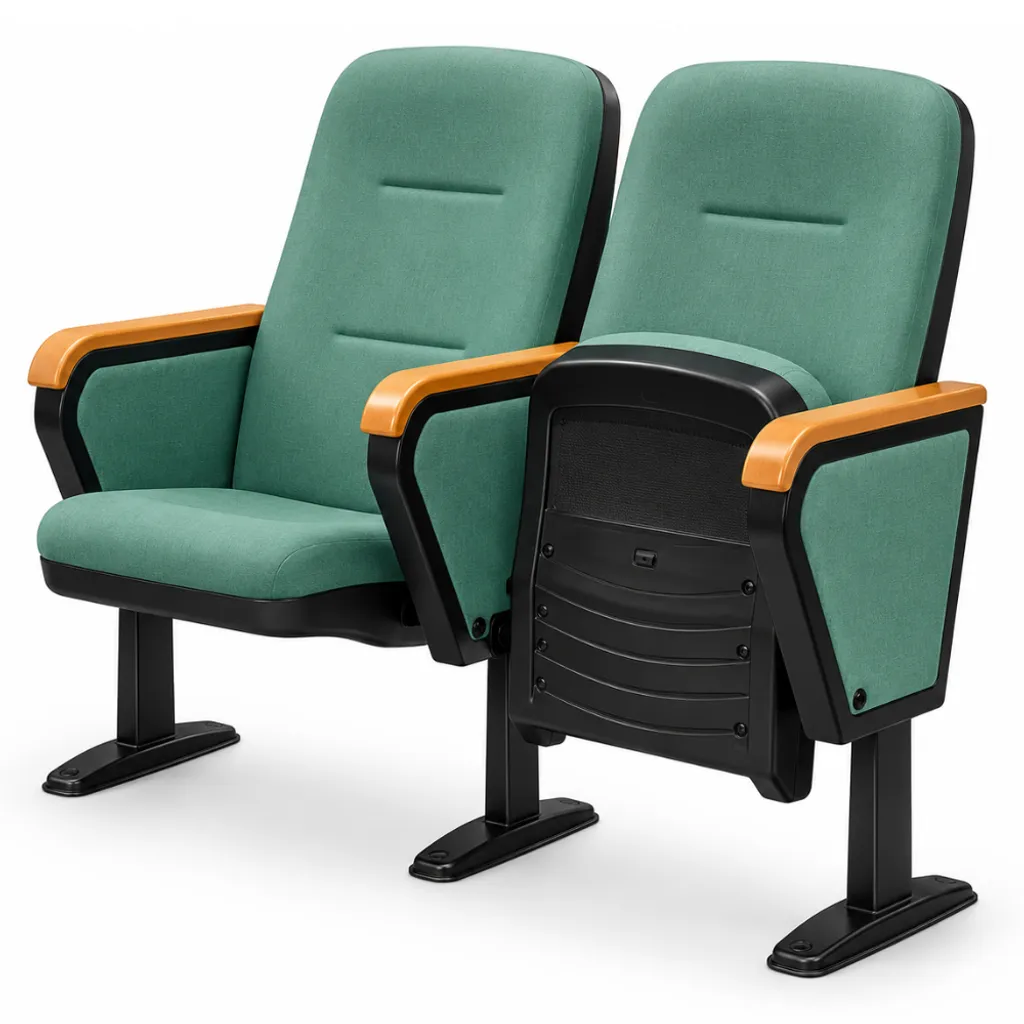
Formal auditoriums and presentation-led lecture halls requiring high-back fixed seating | Its cushioned high back and solid wood armrests suit projects where supportive seating and a more formal interior character take priority. | Fabric Auditorium Chair | Review High-Back Model |
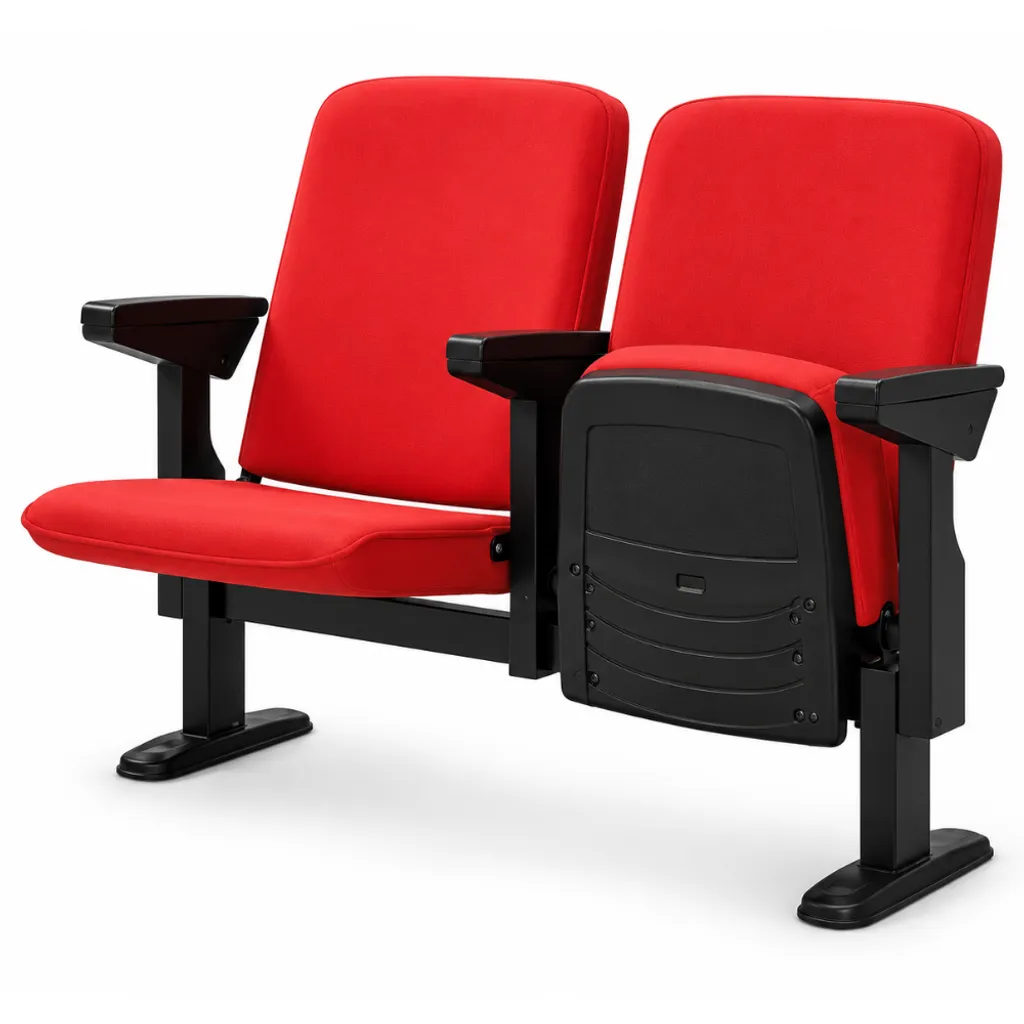 |
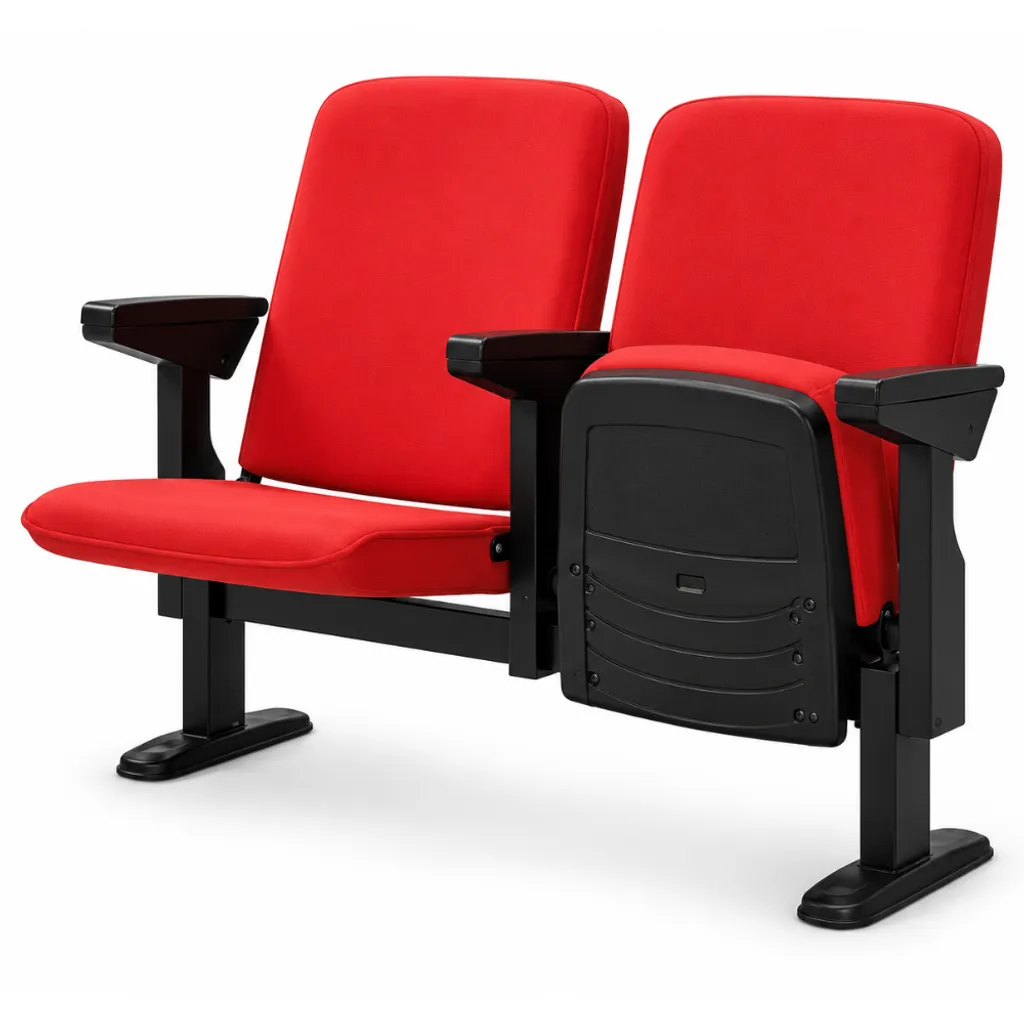
High-use institutional halls where unoccupied seats should fold away | Its tip-up seat creates a tidier row profile between sessions, while polypropylene armrests offer a practical alternative to wood. | Fabric Auditorium Chair | Review Tip-Up Model |
See which fixed-seating configuration fits your hall brief.
WhatsApp for a Quick Recommendation1. Define the Hall's Operational Requirements
Begin by documenting how the room will actually be used. A ceremonial auditorium, teaching-focused lecture hall and multipurpose conference venue may look similar on a drawing, but each places different demands on writing provision, audience movement and cleaning access. Record the expected activities, typical occupancy, session duration and frequency of use.
Government university operators should also involve facilities teams, academic users, safety personnel, procurement officers and the department responsible for audiovisual equipment. Turn those discussions into a written requirement rather than asking suppliers to recommend a model without context. State whether the seating must be fixed, whether tip-up seats are preferred, whether students need writing surfaces and whether the work covers supply only or includes layout and installation support.

AI-generated image for illustration purposes only. Actual product appearance may vary.
2. Assess the Supplier's Fixed-Seating Project Knowledge
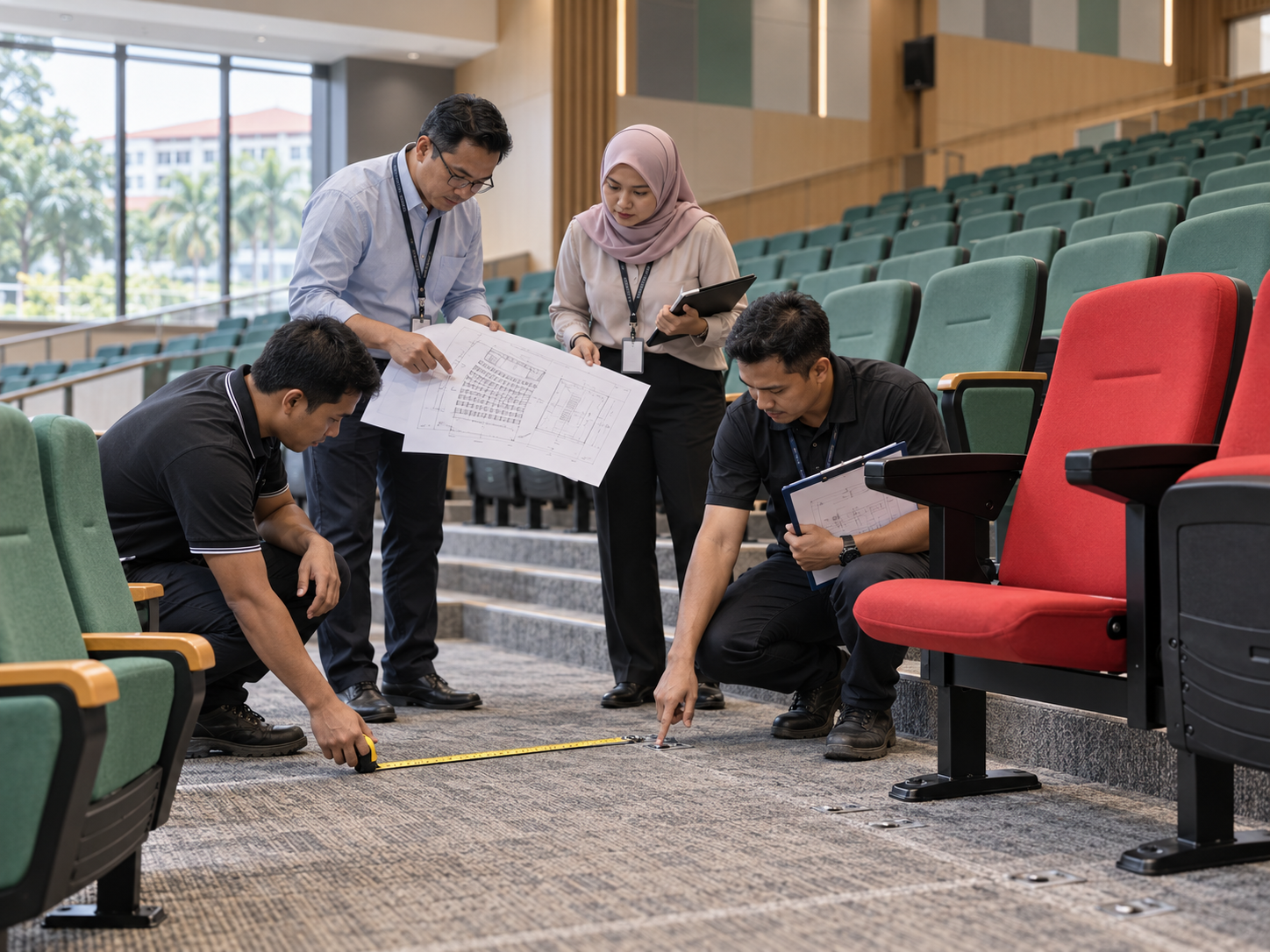
An auditorium seating supplier should understand that floor-mounted chairs form part of a planned room layout rather than being loose furniture placed after delivery. Ask how the supplier gathers site information, confirms row positions and identifies conditions that could affect installation. The review should cover the existing floor, steps, aisles, doors, stage views and other permanent features.
For refurbishment projects, clarify who will assess old fixing points, uneven surfaces and possible conflicts with floor finishes or hidden building services. Project communication matters as much as the catalogue. Ask who will handle technical questions, quotation revisions, approvals and installation coordination so the university has a clear point of contact throughout the procurement process.
AI-generated image for illustration purposes only. Actual product appearance may vary.
3. Compare Auditorium Seating Quotations on a Like-for-Like Scope
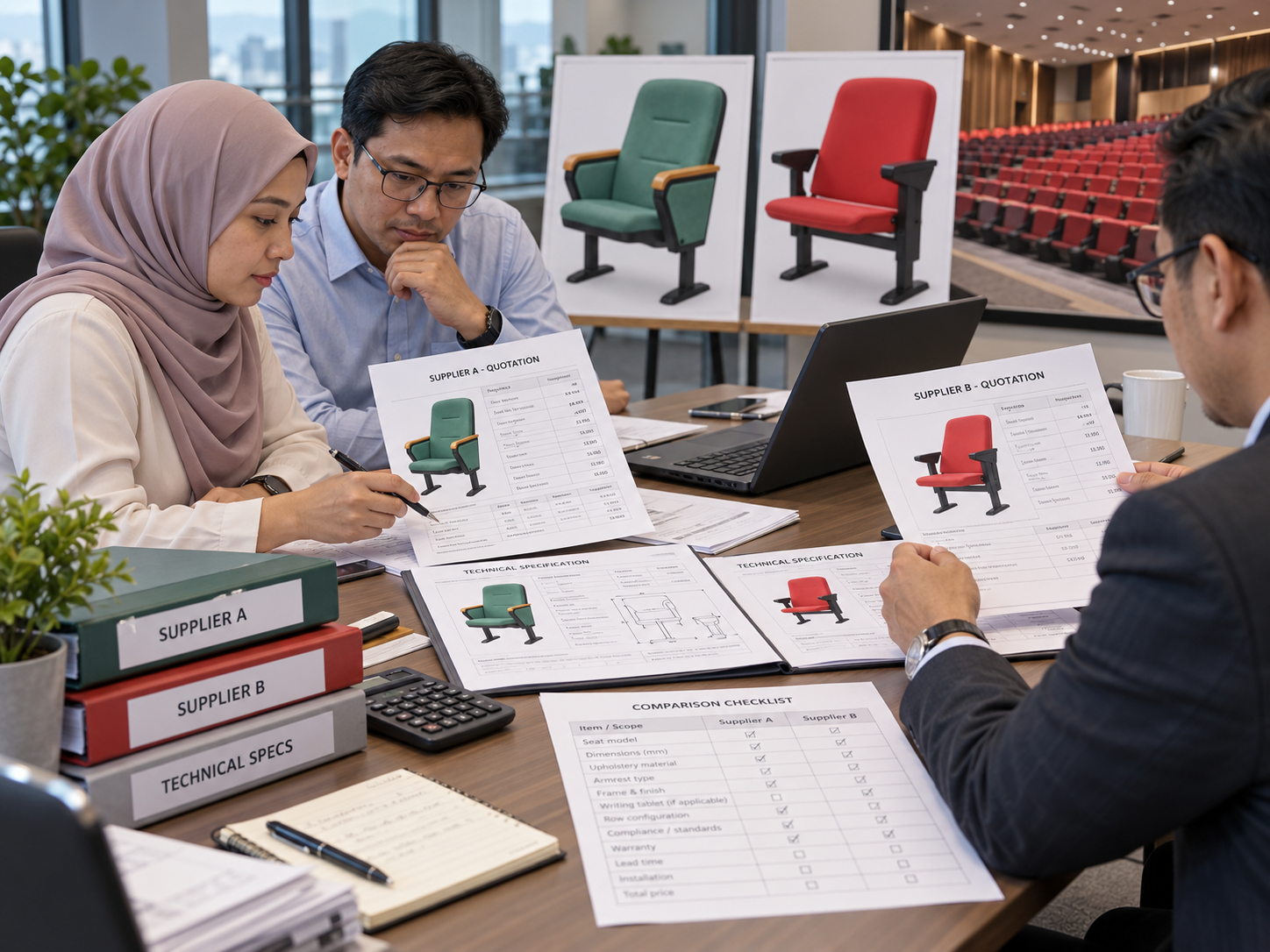
The lowest chair quote may not represent the lowest complete project cost. One quotation may cover chairs only, while another includes delivery arrangements, floor fixing or installation support, so the totals cannot be compared fairly without a common scope. Issue the same request for quotation to every shortlisted supplier.
Ask each company to separate the seating quantity, model, selected options, delivery arrangements, installation work, site requirements, warranty information, assumptions and exclusions. For further budgeting considerations, consult the auditorium chair price and buying guide for Malaysian universities. Contact the supplier for current pricing and availability, together with an itemised quotation based on the project requirements.
AI-generated image for illustration purposes only. Actual product appearance may vary.
4. Match the Chair Configuration to the Teaching Format
The right lecture hall chairs depend partly on what students are expected to do during a session. Presentation-led events may only require comfortable fixed seating, while spaces used for note-taking, laptops or assessments may need an auditorium chair with a table or writing tablet. Do not assume every auditorium model can accept a tablet accessory.
Ask suppliers to confirm whether the proposed chair includes a writing surface, supports one as a compatible option or has no provision for it; where relevant, confirm its orientation and how it is stored. Neither example model in this guide is verified as having a writing tablet. If writing provision is essential, use our guide to auditorium chairs with writing tablets to develop a more specific requirement before requesting proposals.

AI-generated image for illustration purposes only. Actual product appearance may vary.
5. Review Materials for Everyday University Use
Material descriptions are most useful when connected to daily operations. Fabric upholstery and high-density foam cushioning support seated comfort, while a heavy-duty steel frame provides the underlying structure for permanent auditorium seating. Armrests also influence the chair's appearance, feel and cleaning routine.
Solid wood can complement a formal interior, while polypropylene provides a different practical surface; the appropriate choice depends on the design brief and facilities team's maintenance approach. Request finish samples where feasible and ask the supplier to identify the materials included in the quoted configuration. Avoid relying on vague descriptions such as “premium quality” when the tender evaluation requires clear information about the upholstery, cushioning, armrests, frame and colour.

AI-generated image for illustration purposes only. Actual product appearance may vary.
6. Consider Two Chair Models as Non-Comparative References
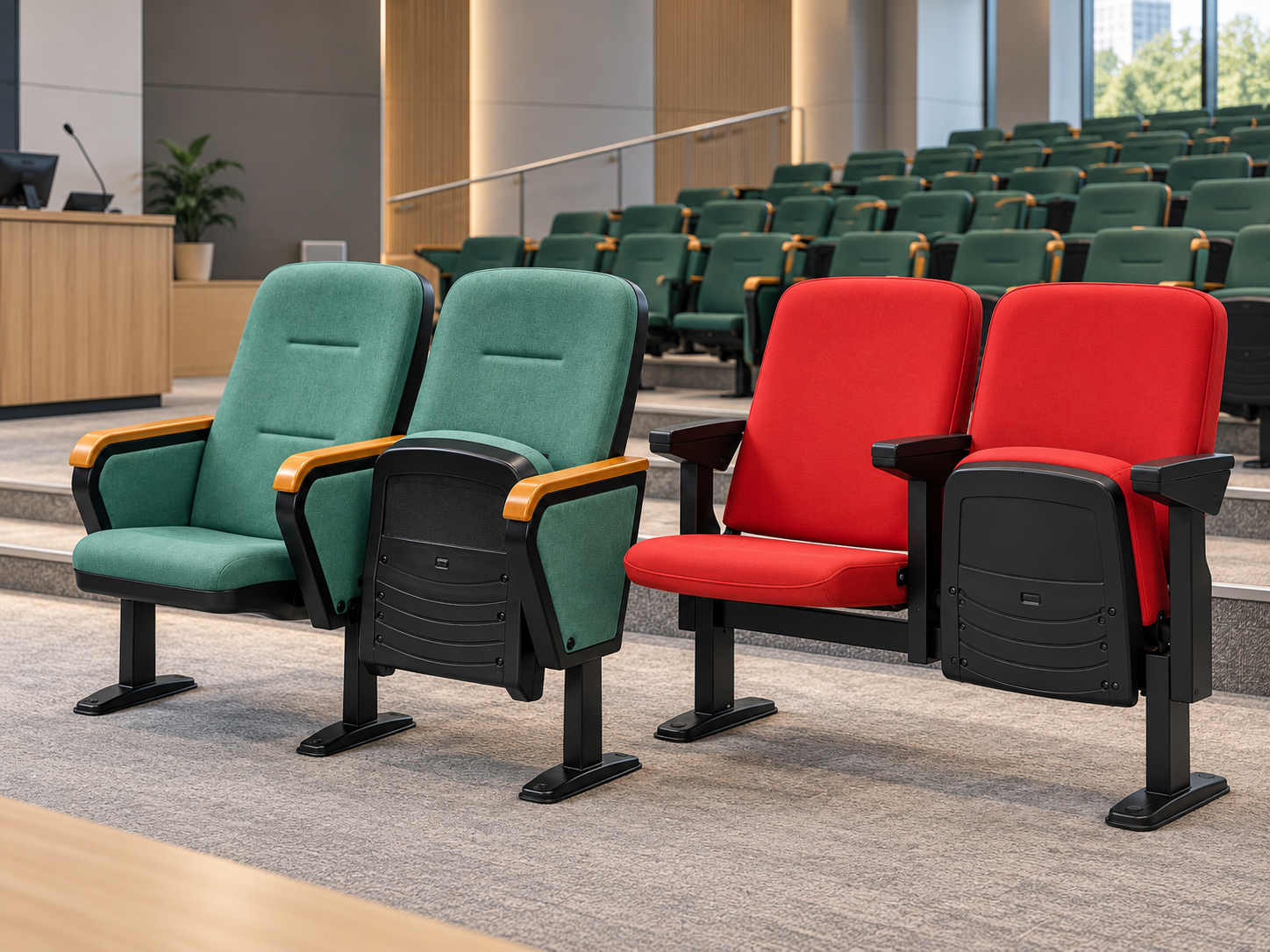
One reference is the Tekkashop STAC4783 Modern Auditorium Seating Chair Fabric Upholstered Lecture Hall Conference Cinema Seat (pre-order). The shorter display name, STAC4783 High-Back Fabric Auditorium Chair, highlights its cushioned high back, solid wood armrests and permanent floor-mounted arrangement. A second reference is the Tekkashop STAC6588 Theatre Style Fixed Auditorium Seating Chair Fabric Upholstered Lecture Hall Cinema Conference Seat (pre-order).
The STAC6588 Tip-Up Fabric Auditorium Chair has a cushioned seat that folds away when unoccupied, polypropylene armrests and a fixed, powder-coated steel-framed structure. These models illustrate two different seating arrangements rather than competing universal recommendations. The STAC4783 represents a formal high-back option, while the STAC6588 demonstrates the practical benefit of a tip-up seat; either choice must still be checked against the hall plan and approved university brief.
AI-generated image for illustration purposes only. Actual product appearance may vary.
7. Evaluate Row Planning, Movement and Sightlines
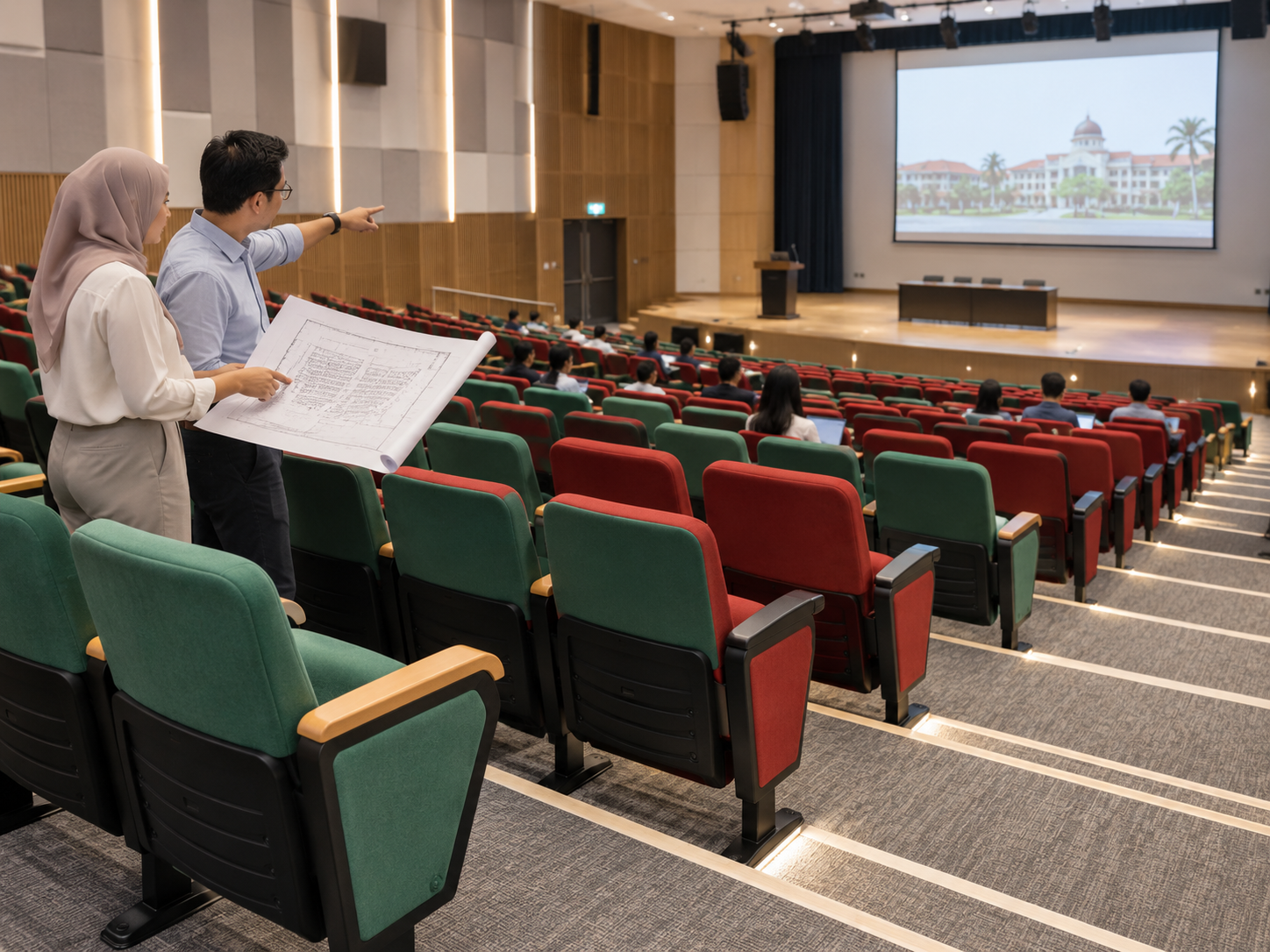
Seat selection should not be separated from row planning. The space each chair needs, its position and how the seat moves can affect capacity, aisle access and how easily users enter or leave a row. Ask for a proposed arrangement based on verified site information or the university's current drawings.
It should account for doors, aisles, steps, columns, the stage and any areas where chairs cannot be fixed to the floor; accessibility and safety requirements should be reviewed by the university's appointed professionals and relevant authorities. Sightlines also need project-level assessment. Chair back height, floor profile, spacing between rows and the position of the stage or screen work together, so no single chair feature can guarantee a clear view.
AI-generated image for illustration purposes only. Actual product appearance may vary.
Turn your drawings and estimated quantity into an itemised quotation.
Send Us Your Requirements8. Request Samples, Finish Confirmation and Approval Records
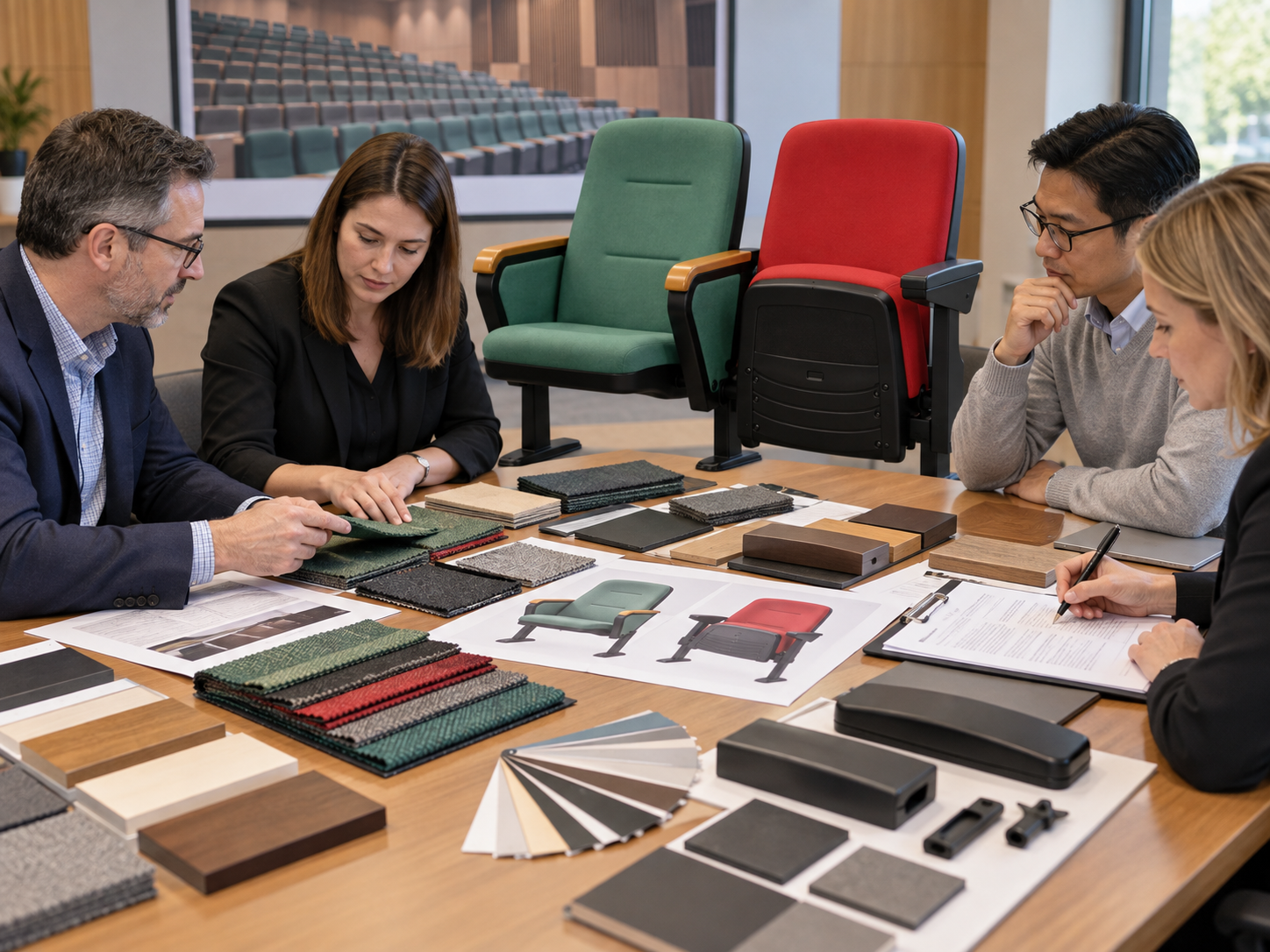
Images are useful for shortlisting, but they cannot fully communicate seat movement, cushioning feel, fabric appearance or armrest touch. For a substantial lecture hall seating project, ask whether a sample, finish swatch or equivalent approval reference can be arranged before the final order is confirmed. Document every approved detail, including the chair model, upholstery choice, frame finish, armrest type, colour and seat mechanism where applicable.
If a colour is described as optional, obtain written confirmation of the selected finish rather than relying on a discussion or an image from an earlier proposal. Maintain one approval record that procurement, facilities and the supplier can reference. This helps prevent different stakeholders from working with conflicting product descriptions during order review and project coordination.
AI-generated image for illustration purposes only. Actual product appearance may vary.
9. Clarify Installation Responsibility and Site Readiness
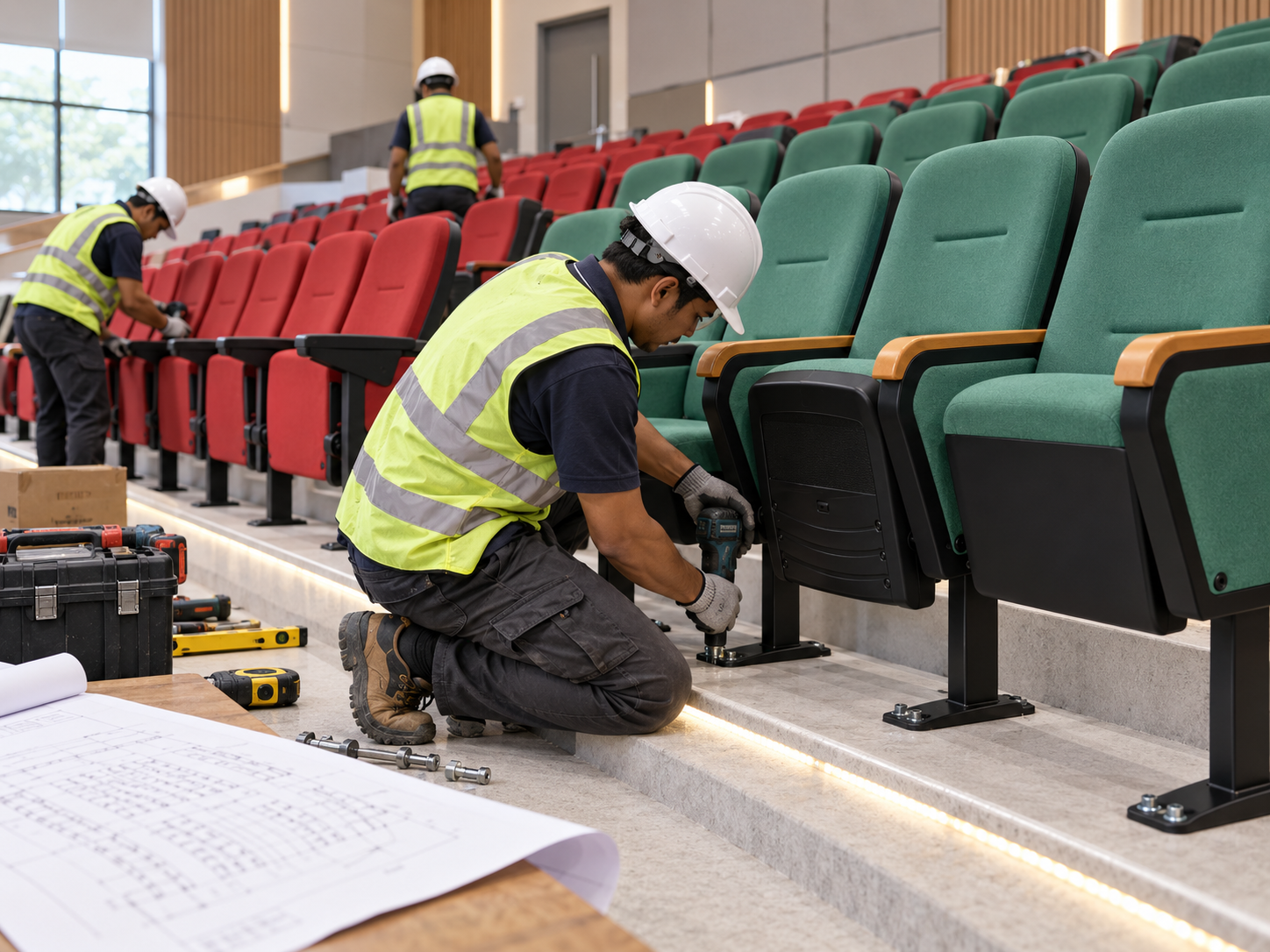
Fixed seating must be matched to the floor condition and proposed fixing method. Ask who will mark the row positions, install the chairs, provide the required fixing components, protect nearby finishes, remove packaging and respond if site conditions prevent the planned work. Before work begins, clarify whether the hall must be empty and whether other contractors will still need access.
Flooring, electrical services, audiovisual work and interior finishing can affect the installation sequence or approved chair positions, so responsibilities should be coordinated in advance. Request a written description of the installation scope and exclusions. Contact the supplier to confirm current availability and delivery arrangements based on the campus location, quantity, access restrictions and site readiness.
AI-generated image for illustration purposes only. Actual product appearance may vary.
10. Examine After-Sales Support and Maintenance Guidance
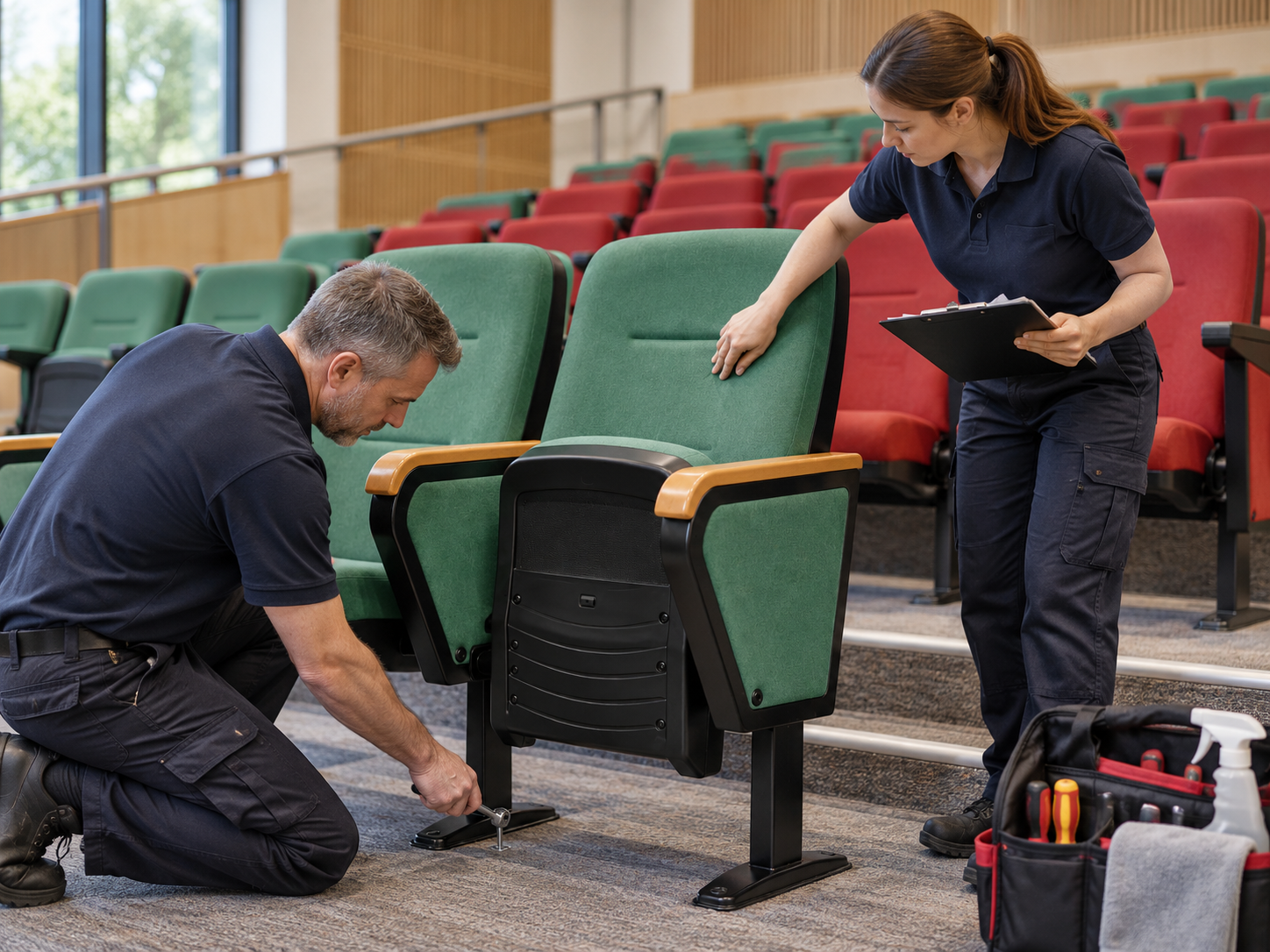
Supplier evaluation should continue beyond initial delivery. Ask what maintenance guidance is available, how cleaning questions are handled and whether the supplier can advise on suitable next steps if an individual chair is damaged. The facilities team should understand how the upholstery, armrests, moving parts and floor fixings are to be inspected and cared for.
Check cleaning products and methods against the supplier's material guidance before applying them widely, especially when introducing a new chemical or process. Request written warranty terms and a clear procedure for reporting issues. Instead of relying on a general promise of support, establish what information is required, who receives the report and which limitations or exclusions apply.
AI-generated image for illustration purposes only. Actual product appearance may vary.
11. Score Shortlisted Suppliers with a Procurement Matrix
A documented scoring matrix helps a government university assess suppliers consistently. Categories can cover compliance with the brief, seating suitability, clarity of finishes, layout assistance, installation responsibilities, delivery coordination, maintenance information, warranty terms, scope completeness and responses to clarification questions. Separate mandatory requirements from scored preferences.
A required fixed-mounting arrangement should not be assessed in the same way as a preferred colour, while writing tablet provision should only be mandatory when the teaching format genuinely requires it. Record all clarifications and evaluate each supplier's final confirmed offer rather than an earlier quotation that has since changed. A supplier that asks relevant questions about the site and intended use may offer more project value than one that responds quickly with an unqualified product list.

AI-generated image for illustration purposes only. Actual product appearance may vary.
12. Prepare a Complete Enquiry for Kuala Lumpur or Selangor
A useful enquiry gives the supplier enough information to respond accurately. Include the campus location, room type, estimated seating quantity, preferred configuration, writing requirements, available drawings, current site status, installation expectations and any internal quotation or submission format that must be followed. Attach photographs where they help explain access routes, flooring, steps or existing seating.
Identify the university's project contact and requested quotation breakdown, and label preliminary measurements or drawings clearly so the supplier can state what must be verified before confirmation. You can review Tekkashop's theatre, lecture hall and auditorium chair range when preparing a shortlist. Contact us for current pricing and availability, and send the available hall information to discuss an itemised quotation for a government university project in Kuala Lumpur or Selangor.

AI-generated image for illustration purposes only. Actual product appearance may vary.
Product Details
Fabric Auditorium Chair
- Best for
- Formal auditoriums and presentation-led lecture halls requiring high-back fixed seating
- Material
- Fabric upholstery, high-density foam, solid wood armrests, heavy-duty steel frame
- Key benefit
- Its cushioned high back and solid wood armrests suit projects where supportive seating and a more formal interior character take priority.
- Product code
- n/a
- Price
- Contact us for current pricing and availability
Fabric Auditorium Chair
- Best for
- High-use institutional halls where unoccupied seats should fold away
- Material
- Fabric upholstery, high-density foam cushioning, durable polypropylene armrests and heavy-duty powder-coated steel frame
- Key benefit
- Its tip-up seat creates a tidier row profile between sessions, while polypropylene armrests offer a practical alternative to wood.
- Product code
- n/a
- Price
- Contact us for current pricing and availability
Buying Guidance
Before appointing an auditorium chair supplier in Malaysia, confirm five essentials in writing: the chair configuration, approved finish, planned quantity, installation responsibility and complete commercial scope. Treat drawings, finish samples and product samples as controlled approval documents rather than informal references. Use the STAC4783 High-Back Fabric Auditorium Chair and STAC6588 Tip-Up Fabric Auditorium Chair as reference points for discussing different hall requirements, not as automatic selections.
The final choice should reflect the room's main purpose, teaching activities and planned seating arrangement. If students need a writing surface, request a chair or verified option designed for that requirement rather than assuming a tablet can be added later. Ask the supplier to review the room information and confirm the exact quoted configuration before approval.
For a more useful first response, send the campus location, estimated quantity, hall photographs, available drawings, preferred seat arrangement and required installation scope with the enquiry. Issue the same structured checklist to every shortlisted supplier, request itemised responses and ask each bidder to identify assumptions or exclusions clearly. Contact us for current pricing and availability, as well as confirmation of delivery arrangements for the campus and project scope.
Send your project details for a seating and installation scope discussion.
WhatsApp Us NowFrequently Asked Questions
Should a university tender specify one chair model or state performance requirements?
That depends on the procurement approach and whether a particular model has already been approved. If alternatives are permitted, define the mandatory configuration, materials, writing needs, installation scope and required supporting documents so proposed options can be evaluated consistently.
Can auditorium seating work be completed in phases around the academic calendar?
Phased work may be possible, but it depends on the hall, seating quantity, site access and supplier scope. Discuss the intended sequence before appointment and contact the supplier to confirm current availability and delivery arrangements for each phase.
How should replacement chairs or spare components be handled?
Ask whether individual components or matching chairs may be obtainable and what information is needed to identify the original configuration. Retain the model reference, approved colour, upholstery record and order documents because finishes or specifications may change over time.
What should a university do if its existing auditorium drawings are outdated?
Mark the drawings as preliminary and provide current photographs and any known changes to the room. Ask the supplier what site details or measurements must be verified before seating quantities, row positions or installation requirements can be confirmed.
Can an auditorium chair supplier prepare a quotation without visiting the site?
A preliminary quotation may be based on the information provided, but assumptions should be stated clearly. The university should ask which floor, access and layout details require verification before the proposal and installation scope can be finalised.