

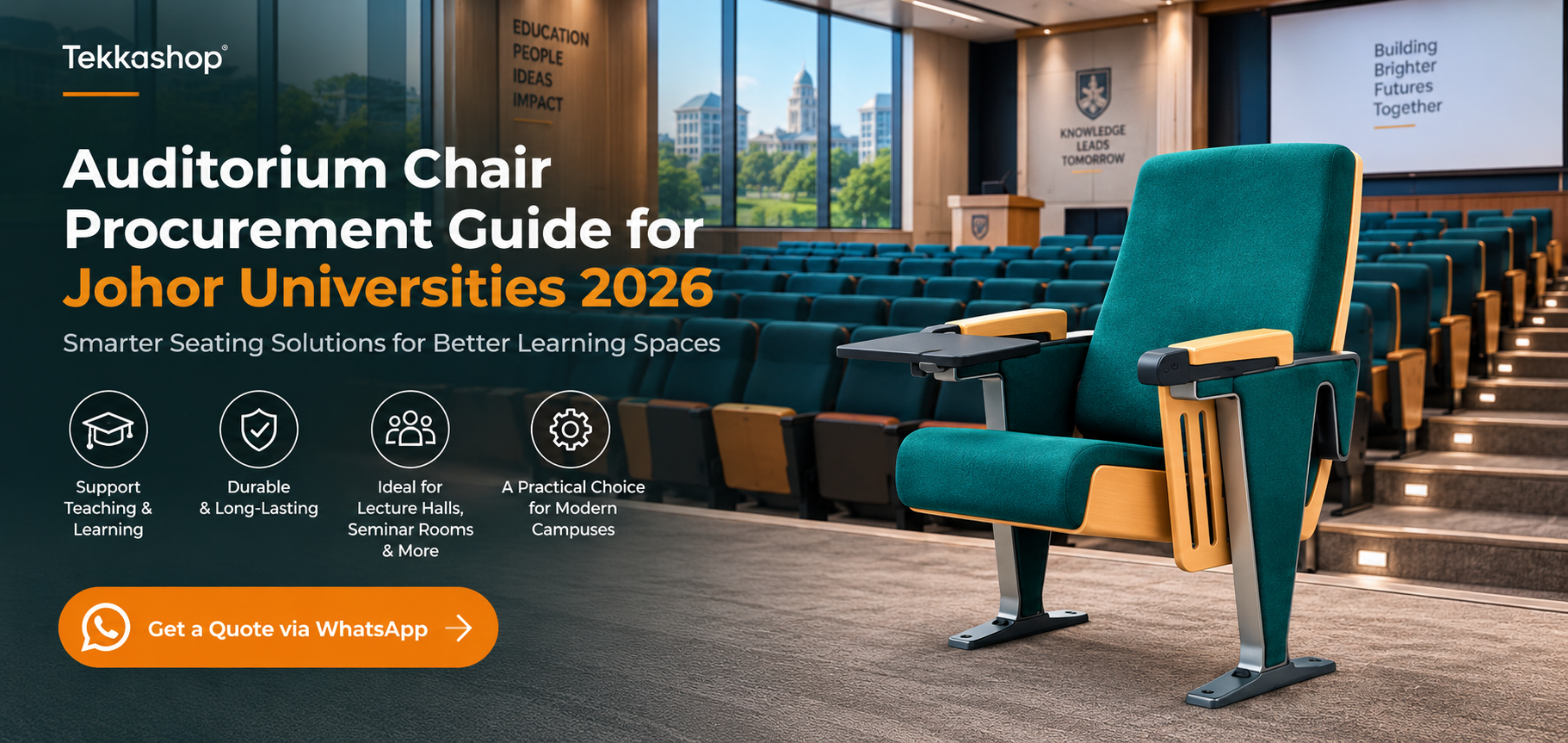
A lecture hall seating project can look straightforward until a quotation arrives with assumptions your team did not expect. Will the proposed layout work with the room, support teaching activities, remain manageable for facilities staff and fit around campus operations? This guide helps Johor university purchasing departments turn those questions into a clear seating brief, compare supplier responses fairly and make a more confident project decision.
Turn your hall survey into a clearer supplier brief.
WhatsApp for a Quick RecommendationStart With the Hall’s Teaching Use
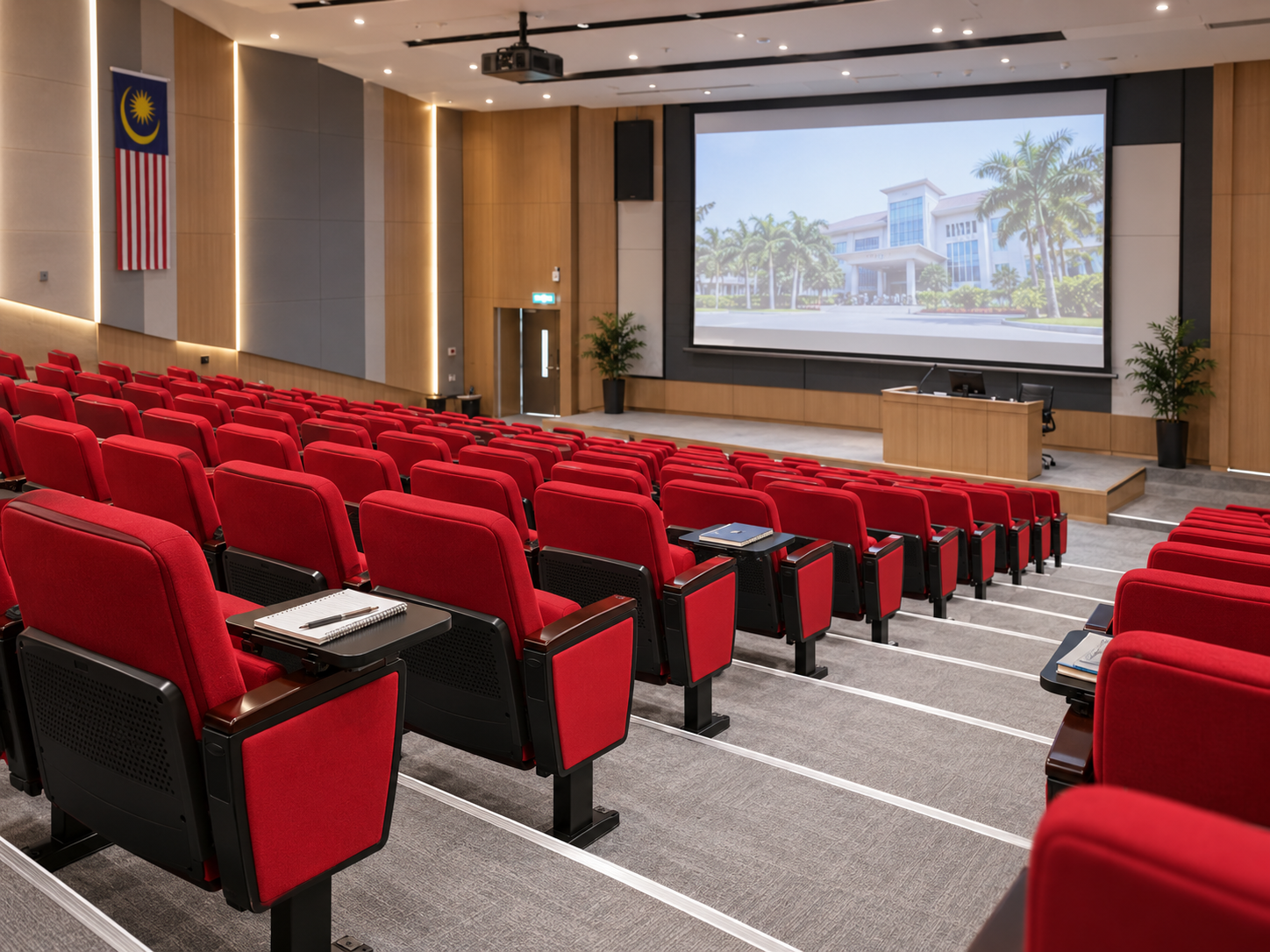
Start with how the space is used during an ordinary teaching week, not just how it appears on a floor plan. A tiered lecture theatre used mainly for presentations may need a different seating approach from a room that also hosts examinations, seminars, ceremonies or external events. Speak with academic users, facilities staff, campus operations and cleaning teams before finalising the brief.
They can identify practical concerns such as busy entry points, bag storage, clear aisles, accessibility routes and the time available between bookings. Separate non-negotiable requirements from preferences at this stage. That distinction helps suppliers respond accurately and gives the evaluation committee a defensible basis for assessing proposals.
AI-generated image for illustration purposes only. Actual product appearance may vary.
Complete a Site Survey Before Requesting Proposals
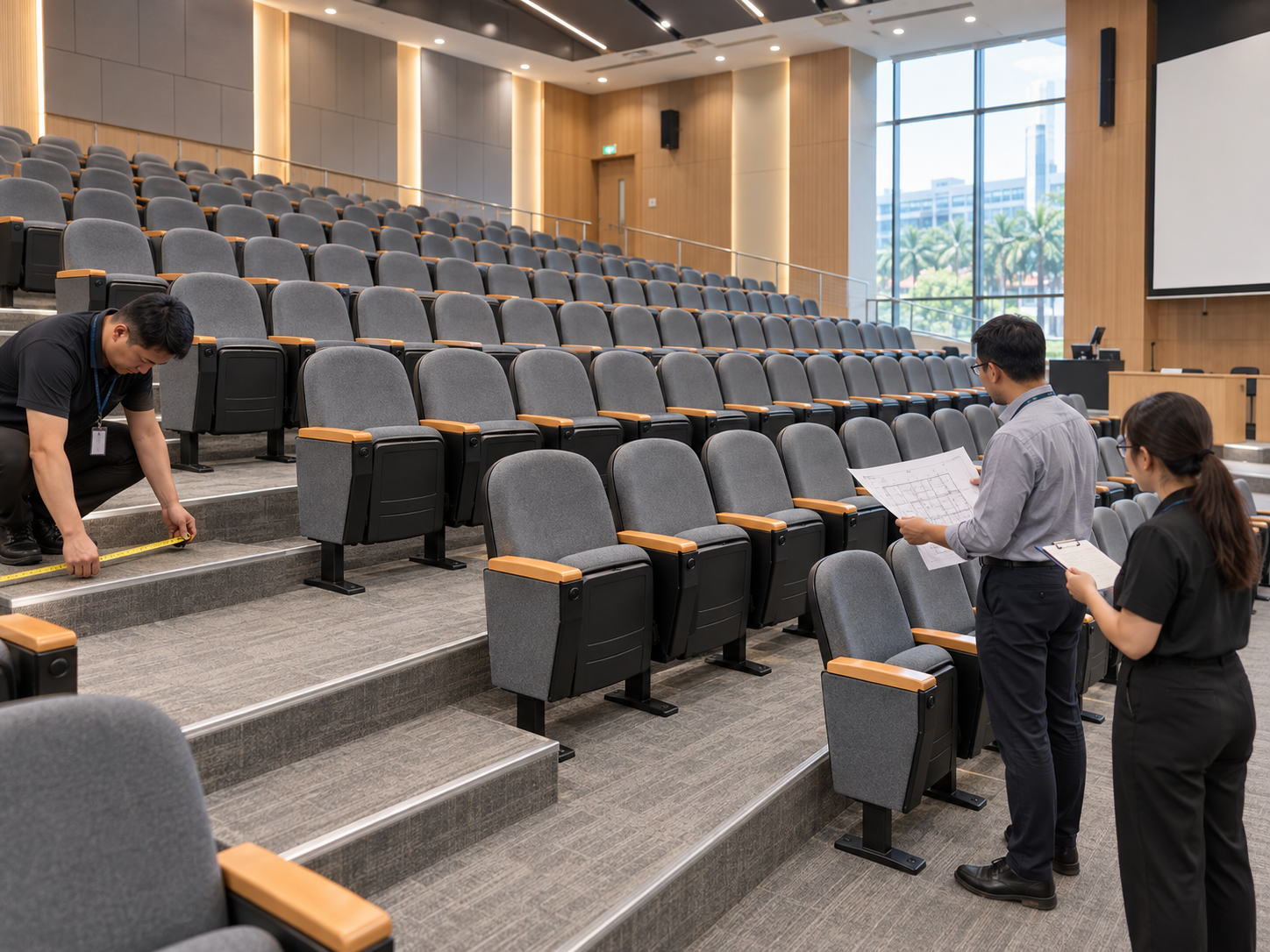
A useful auditorium seating proposal depends on a clear understanding of the room. Share current floor plans where available, photographs of the hall, the floor gradient, entrances, stairways, columns and any service points that may affect the layout. Record the circulation routes that must remain clear, including access to aisles and emergency exits.
Review these points with the university’s relevant building, safety and accessibility stakeholders, rather than treating them as furniture choices alone. For refurbishment work, note how existing seats will be removed and whether the floor requires attention before new seating is fitted. Clarifying building access and removal constraints early helps prevent suppliers from pricing different assumptions.
AI-generated image for illustration purposes only. Actual product appearance may vary.
Write a Supplier-Ready Seating Brief
A strong request for quotation explains the outcome your university needs rather than simply asking for lecture hall chairs. Include the intended application, estimated quantity, Johor site location, preferred seating arrangement, available hall information and whether the project is a new fit-out or replacement programme. Ask each supplier to state exactly what their proposal includes.
Depending on your project, this may cover seating, fixing arrangements, layout input, seat numbering, delivery arrangements, installation, removal of old seating and handover checks. If students need an integrated writing surface for lectures or assessments, make that a stated requirement rather than an assumption. For additional planning context, see this Malaysian university guide to auditorium chairs with writing tablets.
Do not rely on product photographs alone. Request the information needed to review the proposed finish, fixing approach, cleaning guidance, maintenance considerations, available layout support and any stated limitations on use.

AI-generated image for illustration purposes only. Actual product appearance may vary.
Set Evaluation Criteria Before Supplier Responses Arrive
Agree on a weighted evaluation sheet before reviewing proposals. This helps the committee assess compliance with the brief, layout fit, maintenance practicality, completeness of scope and supplier responsiveness using the same criteria. Comfort matters when students, visitors and staff may be seated for long lectures, assessments, ceremonies or conferences.
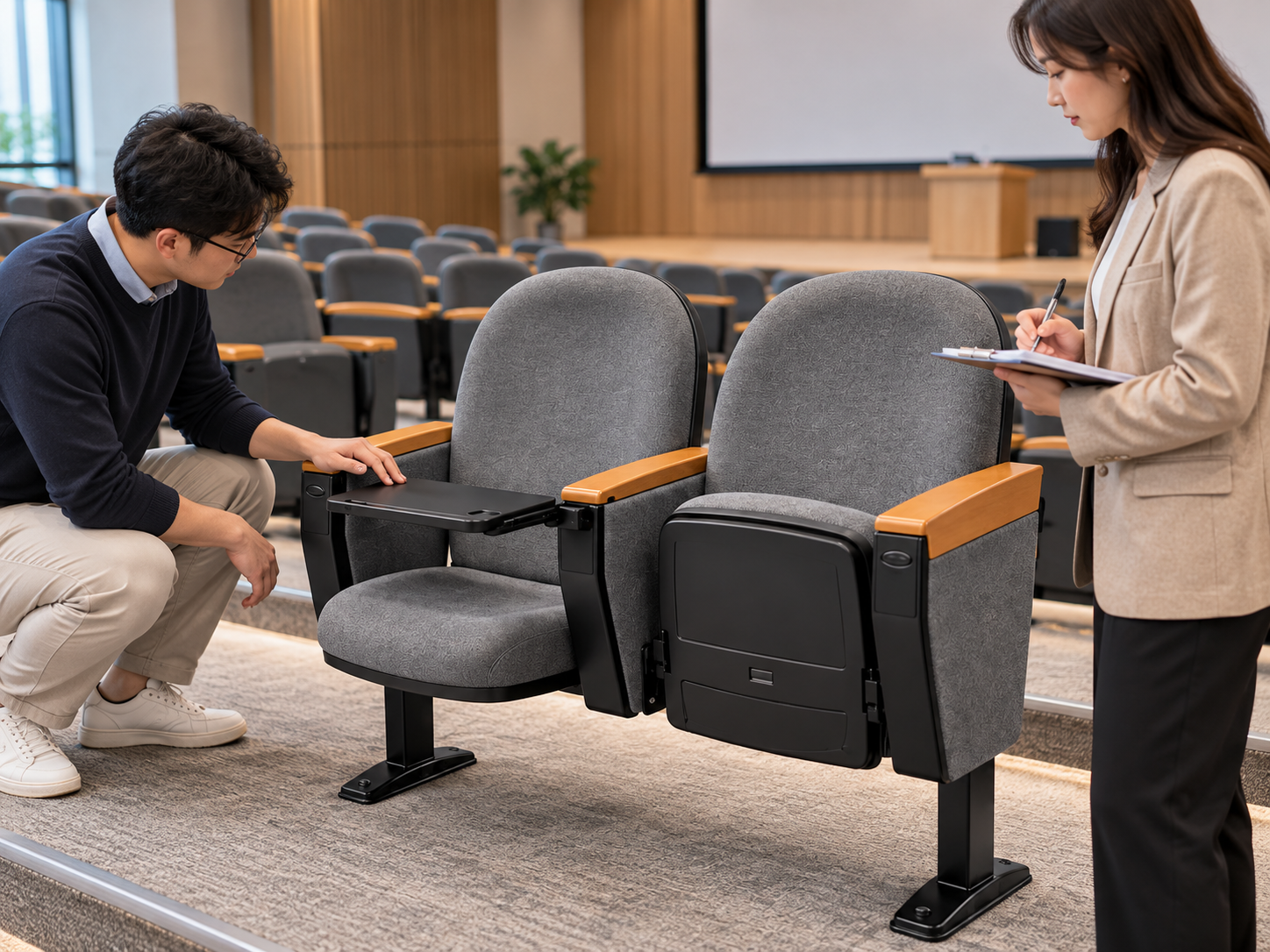
For university purchasing teams, however, the more suitable option is also one that facilities staff can inspect, clean and maintain without creating unnecessary work. Ask suppliers how routine cleaning should be handled, which areas may receive the most wear and what maintenance information will be supplied. Where procurement procedures allow, arrange for relevant stakeholders to inspect a representative seat; a physical review gives users and facilities teams a better basis for judging the seating feel and finish than photographs alone.
AI-generated image for illustration purposes only. Actual product appearance may vary.
Ready to compare like-for-like proposals for your lecture hall project?
Send Us Your RequirementsCompare Supplier Scope, Not Only the Quotation
The lowest quoted figure does not necessarily represent the lowest project risk. Put every response into one comparison schedule and identify whether each item is included, excluded, optional or still subject to site confirmation. Look closely at how suppliers respond to questions about the hall and project requirements.
Clear, timely clarification is especially important when procurement must coordinate with consultants, facilities teams, campus management and academic users. Confirm current availability and delivery arrangements during the live evaluation process, particularly where work must fit around the academic calendar. A catalogue listing or an earlier quotation should not be treated as confirmation of current project arrangements.
For a structured due-diligence checklist, refer to this university procurement checklist for evaluating an auditorium chair supplier. It can help your team keep a consistent record of questions and responses across shortlisted suppliers.

AI-generated image for illustration purposes only. Actual product appearance may vary.
Coordinate Installation With Campus Operations
Discuss installation planning while suppliers are still being evaluated. Confirm loading access, permitted working hours, site induction rules, protection for existing finishes, waste responsibilities and the university contact who can resolve site queries. Consider the effect on lectures, examinations, orientation activities and existing hall bookings.
A workable installation plan protects university operations while giving the contractor suitable access to complete the agreed scope methodically. At handover, check the completed seating against the approved layout and inclusion schedule before sign-off. Keep the final quotation, drawings, care information and supplier contact records in the facilities file for future reference.
If you are still researching the category, browse theatre, lecture hall and auditorium chairs before submitting a project-specific enquiry. When your quantity, hall information and required scope are ready, share them with us for current pricing, availability and delivery arrangements.
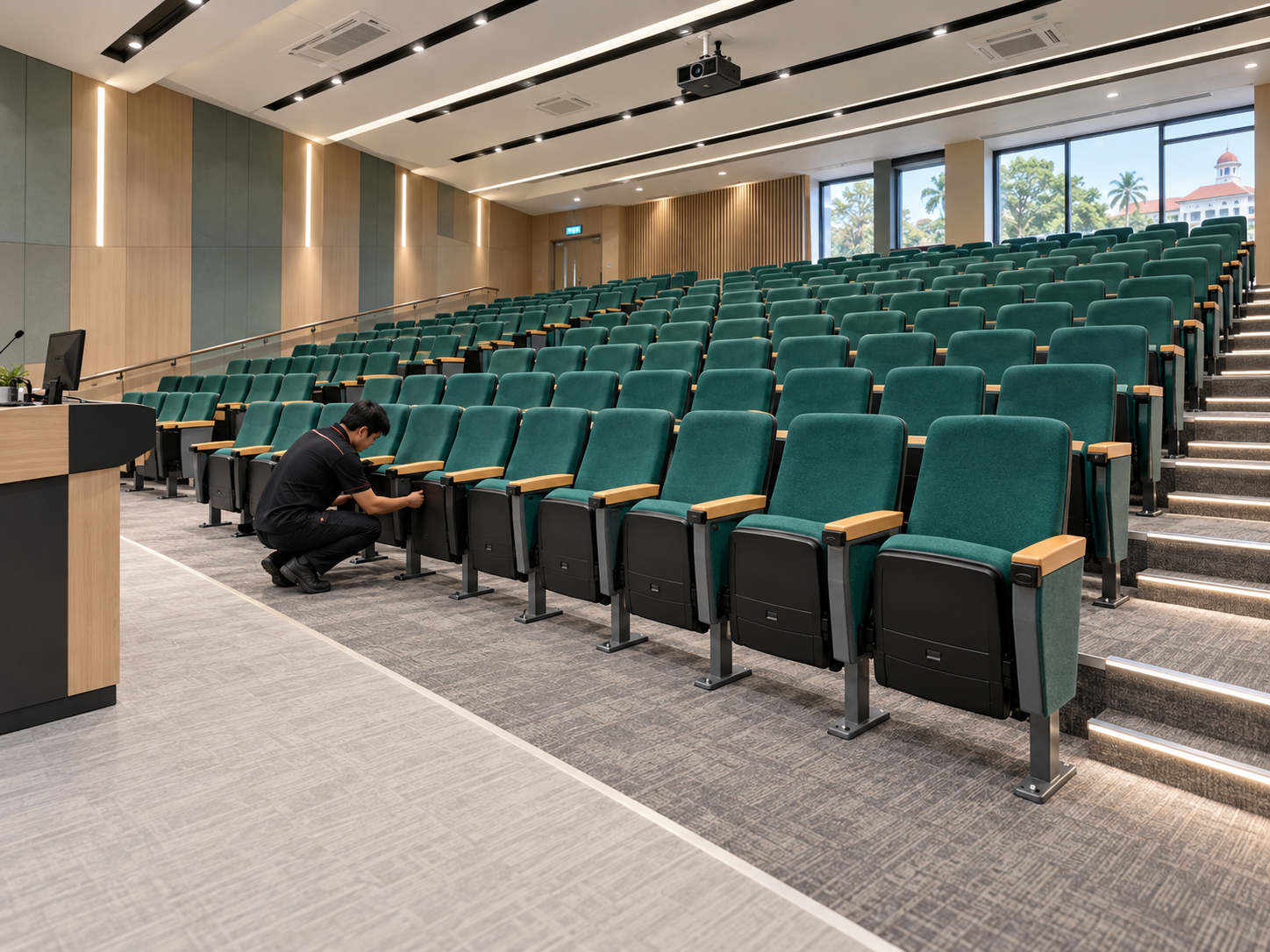
AI-generated image for illustration purposes only. Actual product appearance may vary.
Buying Guidance
Use a simple three-stage process to keep the project controlled. First, collect site information and stakeholder requirements; second, issue one written brief to every shortlisted supplier; third, assess every response against the same evaluation schedule. Your brief should distinguish mandatory requirements from desirable preferences.
This prevents optional appearance choices or unconfirmed extras from obscuring essential needs such as the intended use, quantity, site conditions, layout support and required project services. Create a comparison schedule that records each supplier’s response against every mandatory requirement, including proposed fixing arrangements, maintenance information, layout assumptions and included project services. Mark unclear items for written clarification rather than assuming they are included.
When responses arrive, retain written clarifications alongside each quotation. Before recommending a supplier internally, check that the proposed scope, site assumptions and responsibilities are understood by both the university and supplier. Present approvers with a concise recommendation that explains operational fit as well as commercial scope.
Once your team has a floor plan, estimated quantity and project requirements, contact us to confirm current pricing, availability and delivery arrangements.
Share your quantity, floor plan and required scope for current pricing and availability.
WhatsApp Us NowFrequently Asked Questions
Can a university request an initial auditorium seating quotation from drawings?
Yes, current drawings, hall photographs, estimated quantity and intended use can help a supplier prepare an initial project response. Make clear which details still require site confirmation so that the proposal does not treat assumptions as final conditions.
What should a university do if the seating scope changes after a quotation is received?
Issue the revised requirement in writing and ask the supplier to confirm how the change affects the proposed scope. Keep the revised response with the original quotation so approvers can see exactly what has changed before a decision is made.
Should a university replace auditorium seating in phases?
Phased replacement may be worth considering where a hall remains heavily booked or only part of the seating requires renewal. The purchasing team should define each phase clearly, including access constraints, affected areas and whether the completed sections must match future work.
What information should be confirmed before issuing a purchase order for lecture hall chairs?
Confirm the approved layout, quantity, included services, site responsibilities and any outstanding conditions requiring confirmation. The purchase order should align with the final written supplier scope rather than relying on informal discussions or an earlier version of the quotation.
How can procurement reduce delays caused by internal approvals?
Set out the decision criteria and required stakeholders before supplier responses are reviewed. A single comparison schedule, supported by written clarifications, helps academic users, facilities teams and approvers review the same project information.