


A lecture theatre can look right on a plan yet become difficult to use once students, teaching equipment and daily cleaning routines enter the picture. For Johor university purchasing teams, the challenge is not simply selecting seats; it is aligning the room brief, supplier scope and site requirements before approval. This guide helps you prepare a more useful enquiry, compare proposals fairly and reduce avoidable surprises during coordination.
Have a room plan, photos or an early seat estimate ready to review?
WhatsApp for a Quick RecommendationStart with the teaching space, not the product listing
A hall used mainly for lectures has different needs from a venue that also hosts examinations, guest talks and ceremonies. Before approaching suppliers, identify how each room is used, how often it is occupied and whether students need a writing surface during sessions. Record the current room plan, aisle positions, floor levels, doors, emergency routes and fixed elements that affect access.
This gives suppliers a practical starting point and helps prevent proposals based on assumptions that later need revision. Separate essential requirements from preferences at this stage. A defined seating layout may be essential, while colour direction and finish preferences can remain open for stakeholder review.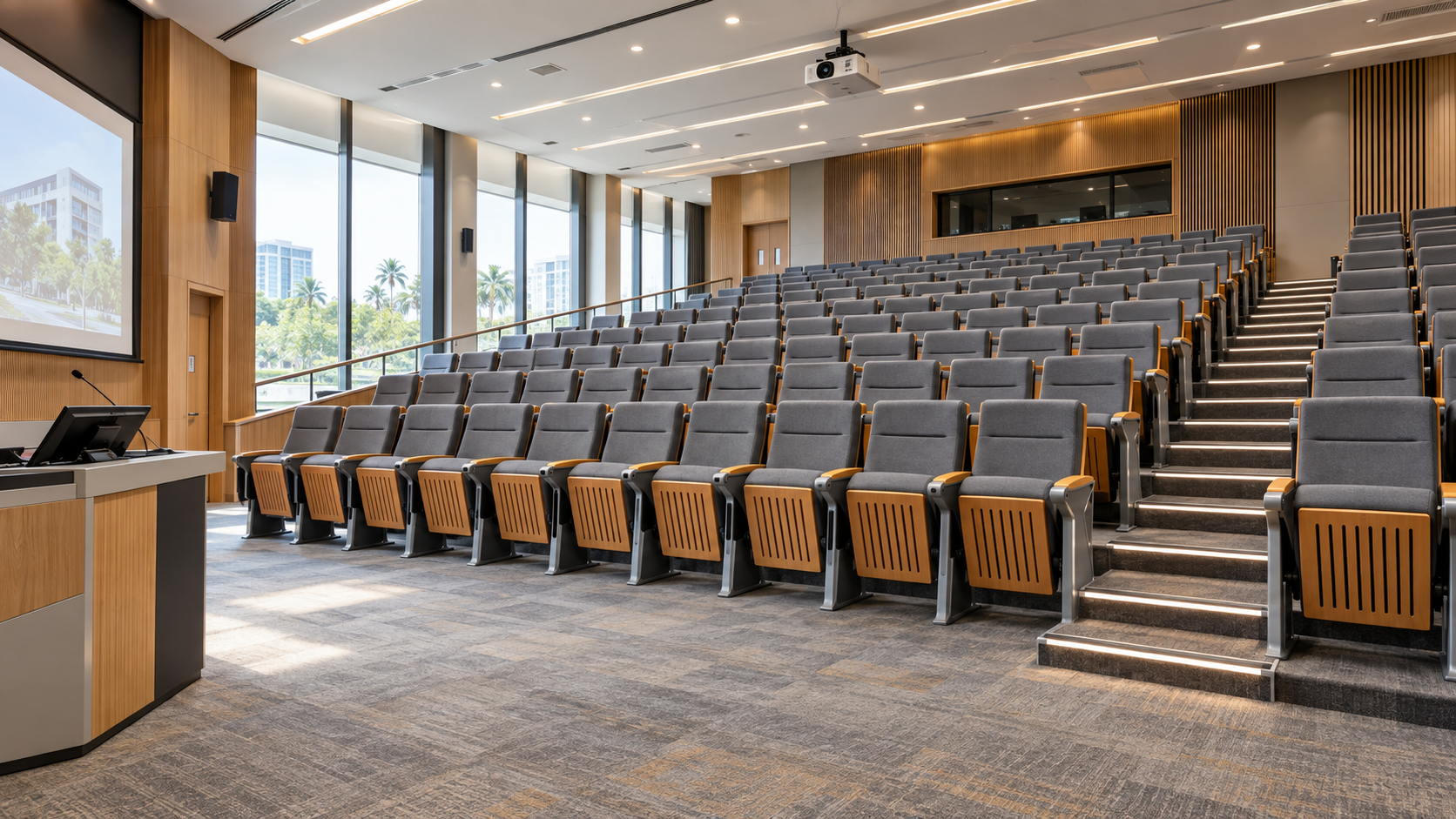
AI-generated image for illustration purposes only. Actual product appearance may vary.
Build a procurement brief suppliers can answer clearly
A concise written brief helps university teams receive proposals that can be assessed on the same basis. Include the Johor project location, intended room use, estimated seat quantity, available drawings or photos, installation conditions and the person responsible for consolidating supplier questions. When choosing an auditorium chair supplier in Malaysia, ask every supplier to state what is included in its proposal.
Seating supply, layout support, site verification where available, installation, delivery arrangements and post-installation support should be clearly distinguished rather than assumed. Do not rely on a broad description such as “suitable for lecture halls.” Confirm the configuration proposed for your room, the fixing approach and whether requested accessories are available for the exact model quoted.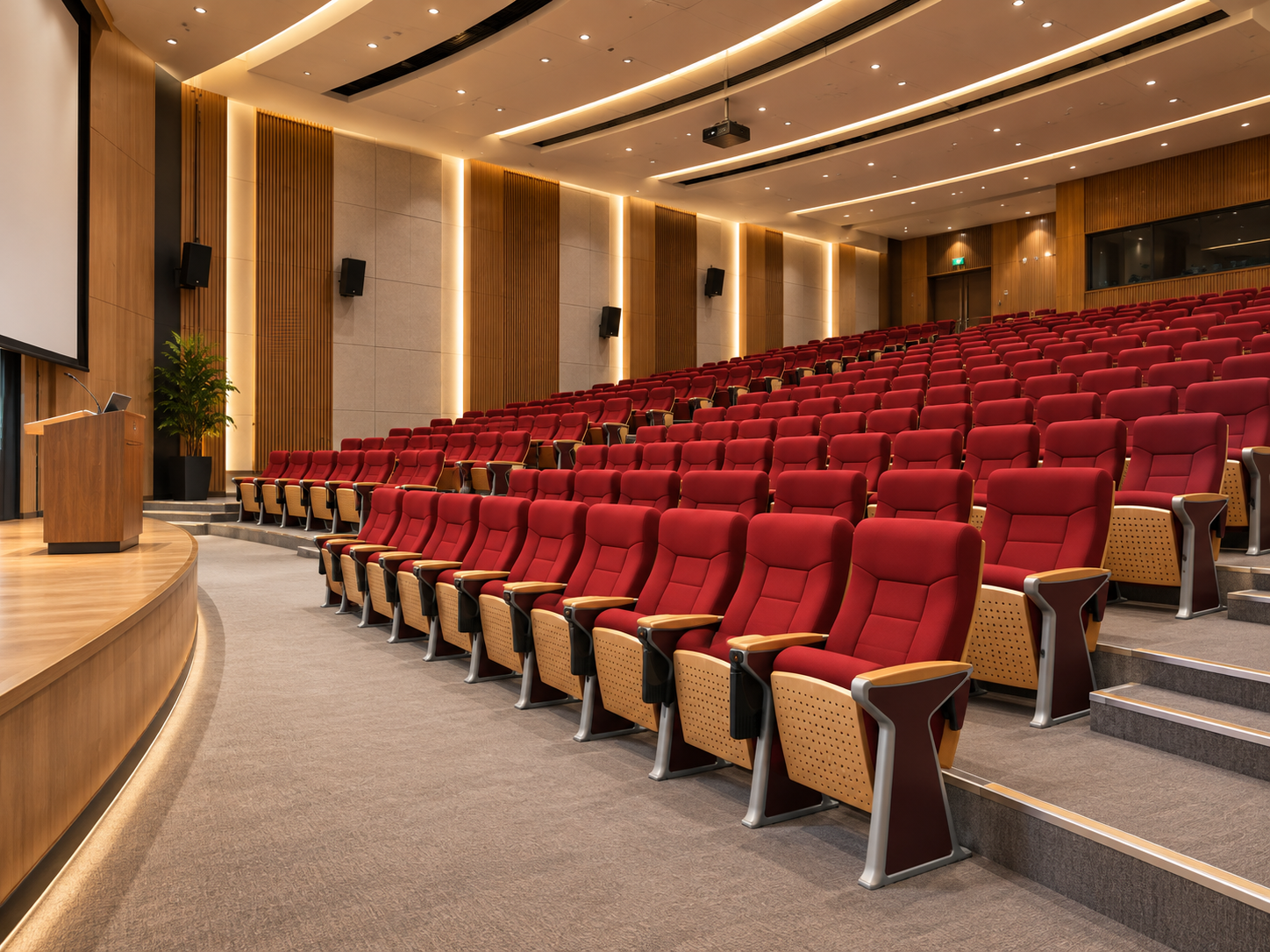
AI-generated image for illustration purposes only. Actual product appearance may vary.
Assess everyday student use and facilities requirements
Consider what students and staff will experience throughout a typical session: entering a row, sitting through a class, taking notes when required and leaving efficiently afterwards. Discuss how the proposed seating arrangement supports movement through the room while meeting the university’s capacity and teaching needs. Bring facilities considerations into the conversation early.
Ask how the proposed upholstery or surface should be cared for, what routine maintenance information is available and how the university can plan for wear or accidental damage over time. If the venue supports different programmes, test the proposal against each main use. A teaching-focused room, formal auditorium and cinema-style viewing space may call for different priorities, even when all are described as lecture hall chairs.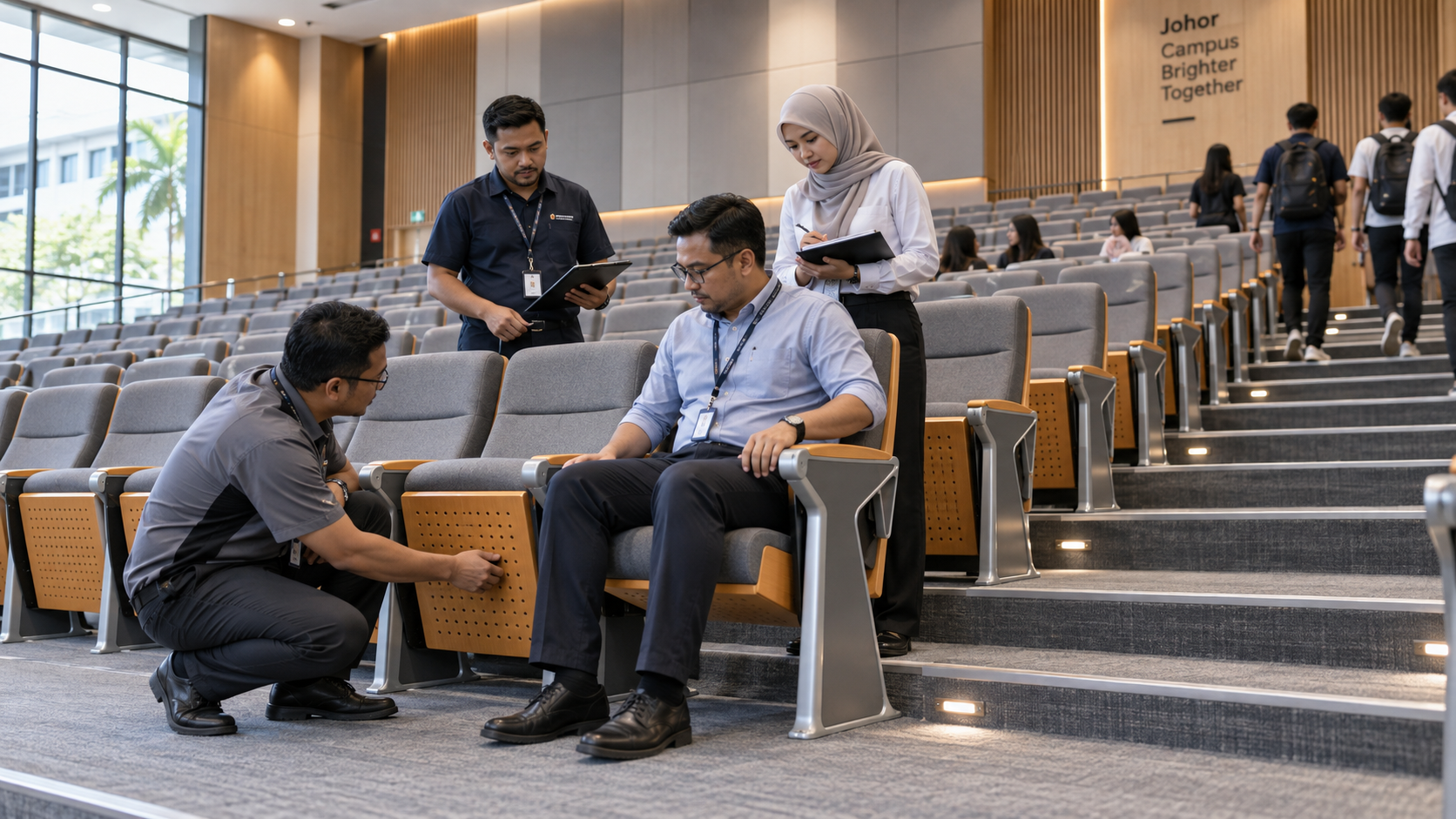
AI-generated image for illustration purposes only. Actual product appearance may vary.
Confirm writing-tablet requirements before shortlisting
Writing tablets may be important where students regularly write, use devices or complete assessments, but they should be specified as a functional need rather than assumed to be standard. State who requires a writing surface and how it needs to support the room’s teaching format. Ask suppliers to confirm in writing whether a tablet is available on the exact chair model proposed.
Also consider how the arrangement may affect movement along rows, cleaning routines, sightlines and the overall seating plan. For more focused planning questions, see guidance on auditorium chairs with writing tablets for Malaysian universities. Use it to shape your enquiry, then obtain model-specific confirmation before approval.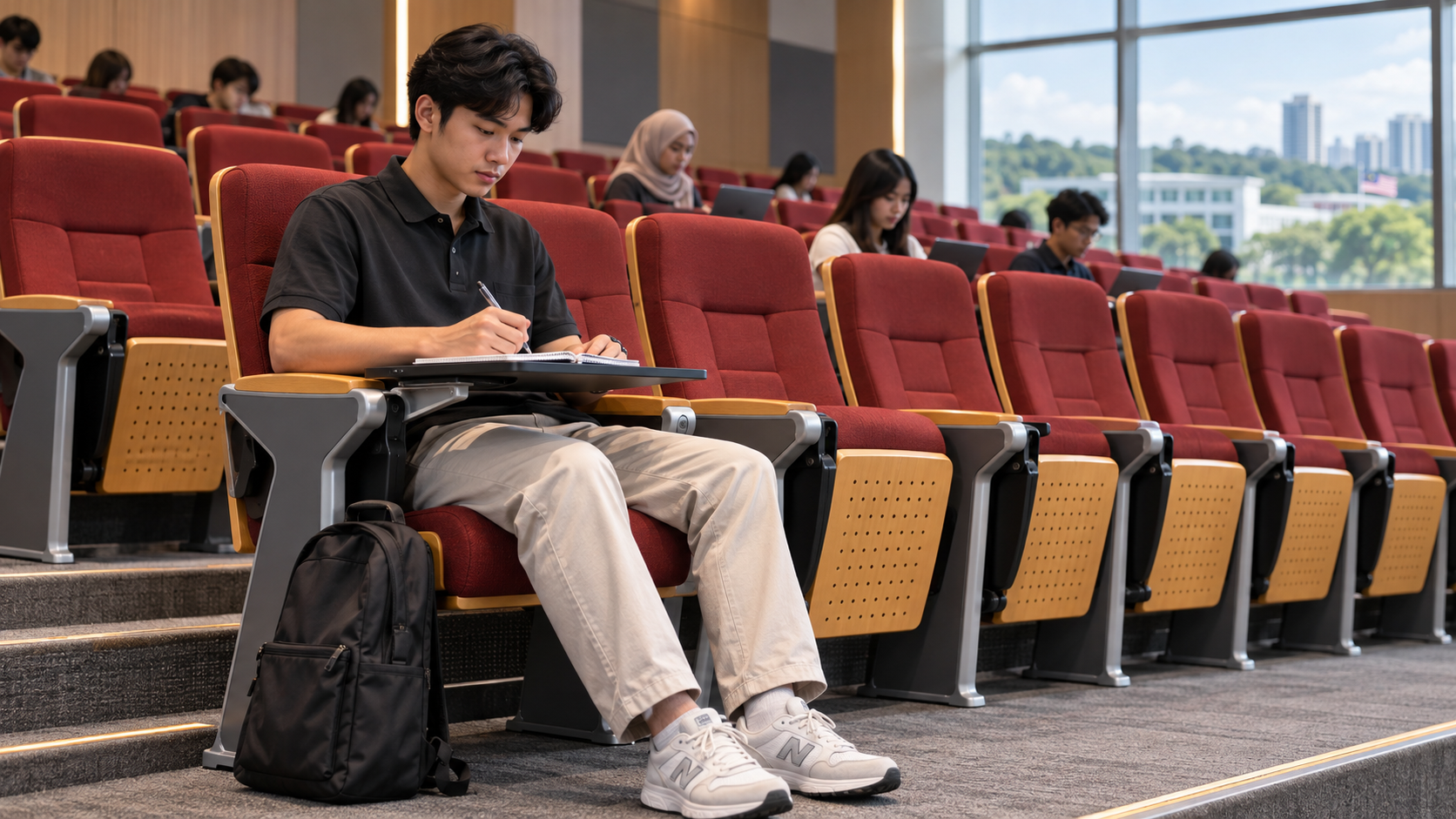
AI-generated image for illustration purposes only. Actual product appearance may vary.
Compare supplier proposals on a like-for-like basis
A simple comparison sheet keeps each response tied to the same questions. Instead of reviewing only the headline figure, check whether every proposal identifies the chair model, proposed quantity, room assumptions, relevant accessories, installation scope and availability status. Request clarification whenever one response is less detailed than another.
A lower figure is difficult to assess when important activities, exclusions or project responsibilities have not been defined, particularly for a project that requires coordination with campus facilities teams. University teams can use this university procurement checklist for evaluating an auditorium chair supplier to organise supplier questions. The goal is not to make every proposal identical, but to make differences in model, scope and assumptions clear enough for decision-makers to assess.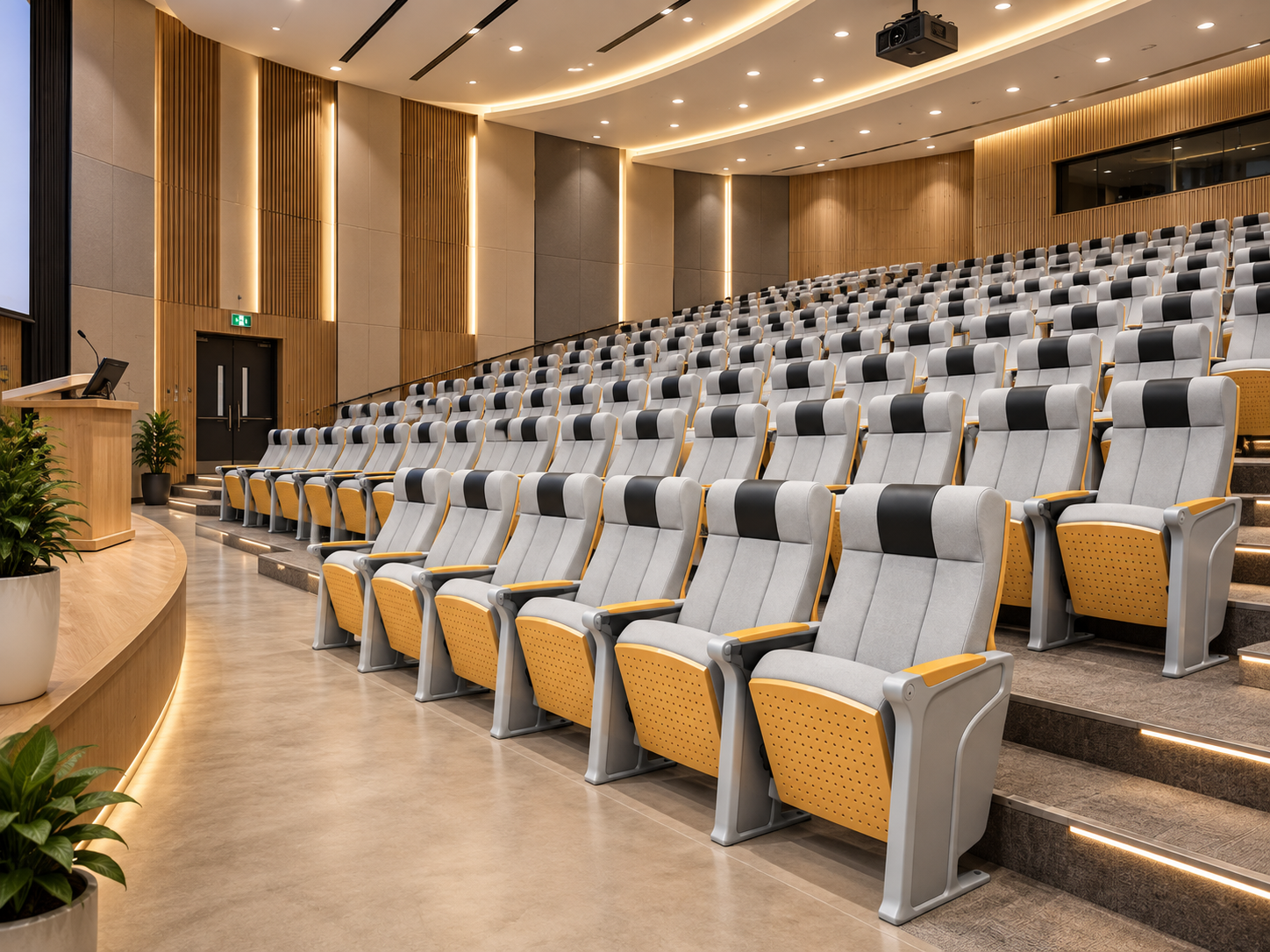
AI-generated image for illustration purposes only. Actual product appearance may vary.
Need a clearer basis for comparing proposed models, scope and exclusions?
Send Us Your RequirementsAsk for model-specific evidence before approval
A product category page can help a purchasing team understand the types of theatre, lecture hall and auditorium seating available. It cannot confirm that a particular model meets the university’s layout, accessory or operational requirements. For each shortlisted chair, request the product code, confirmed features, relevant available options, care guidance where provided and a written statement of the proposed supply scope.
If a feature is essential, such as a writing tablet or a particular seating configuration, make it a written requirement rather than relying on listing imagery or general category wording. Where practical, ask for finish references, samples or an opportunity to view the seating before approving a large project. This gives stakeholders a more reliable basis for assessing the proposed model than screen images alone.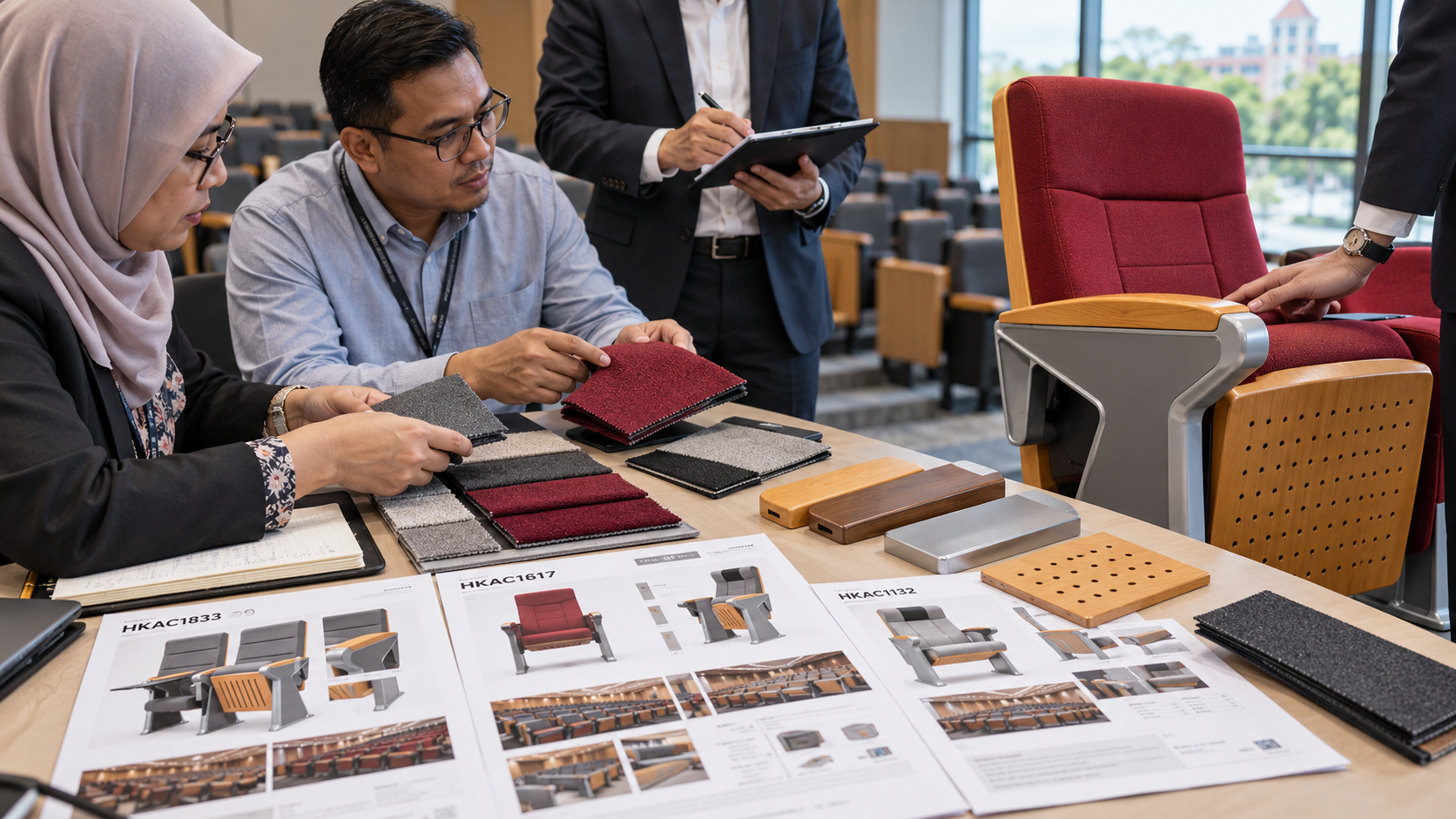
AI-generated image for illustration purposes only. Actual product appearance may vary.
Prepare for approvals and site coordination
Auditorium seating projects usually involve more than the purchasing department. Facilities personnel, room owners, finance approvers, campus safety stakeholders and appointed contractors may each need different information, so allocate review responsibilities early. Share the latest drawings and site details with the supplier, including access restrictions, permitted working hours and campus procedures that could affect delivery or installation arrangements.
Contact us to confirm current availability and delivery arrangements once the project scope is sufficiently defined. Before final approval, establish who will verify the layout and what site conditions must be ready. This helps avoid ordering a suitable chair against an incomplete installation assumption.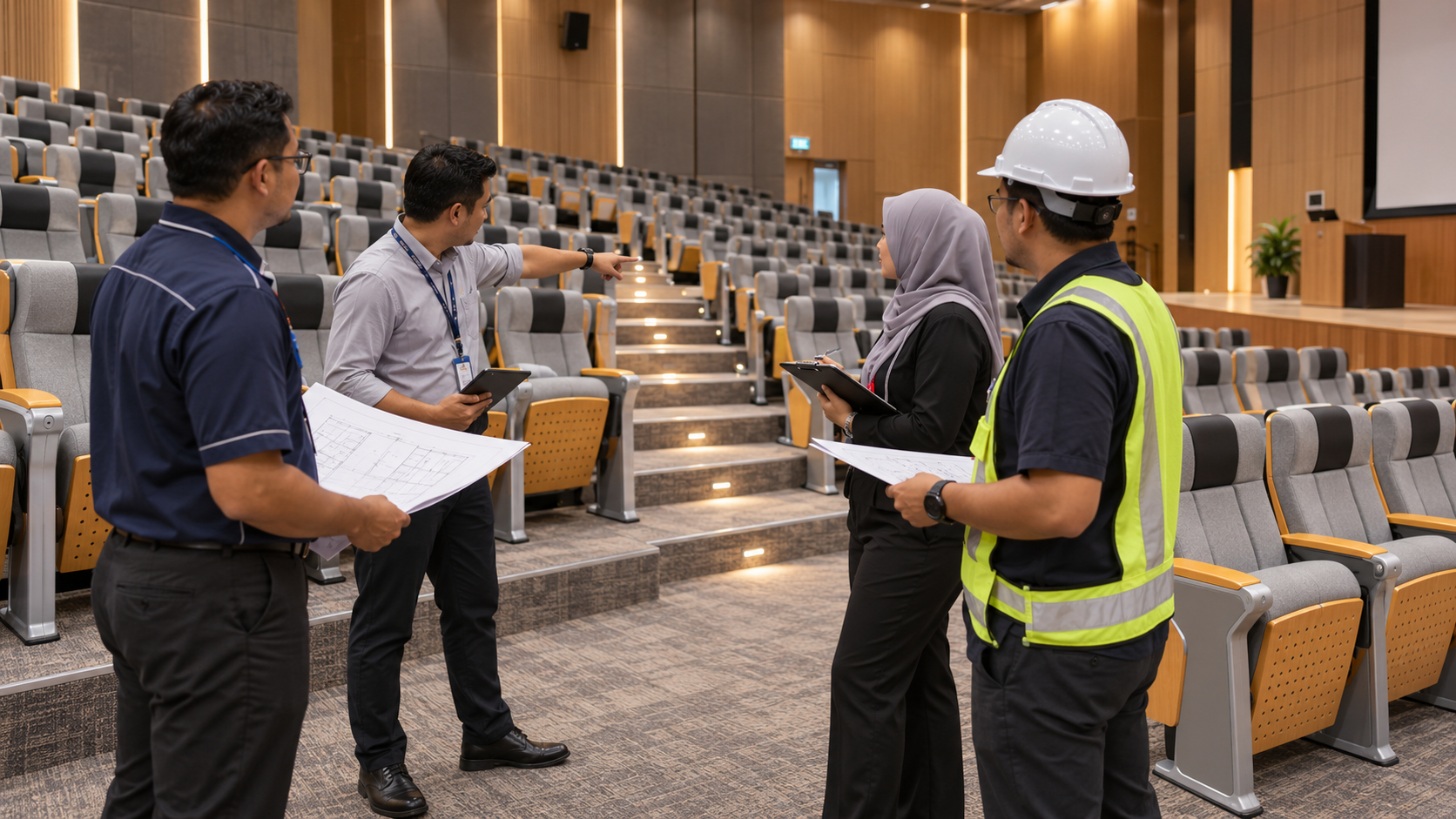
AI-generated image for illustration purposes only. Actual product appearance may vary.
Use the category range to begin, then verify each model
Browse Tekkashop’s theatre, lecture hall and auditorium chair range to identify seating styles that may suit the intended setting. This is a useful first step for developing a shortlist and discussing likely requirements with internal stakeholders. Category browsing should not replace a model-by-model review.
Confirm product details, suitability for the proposed layout and any requested feature directly with the supplier before recommending a chair for a university project. When requesting options, send the room information and evaluation criteria together. This gives the supplier a stronger basis for recommending relevant models and preparing a useful commercial response.
Keep an approval record for future phases
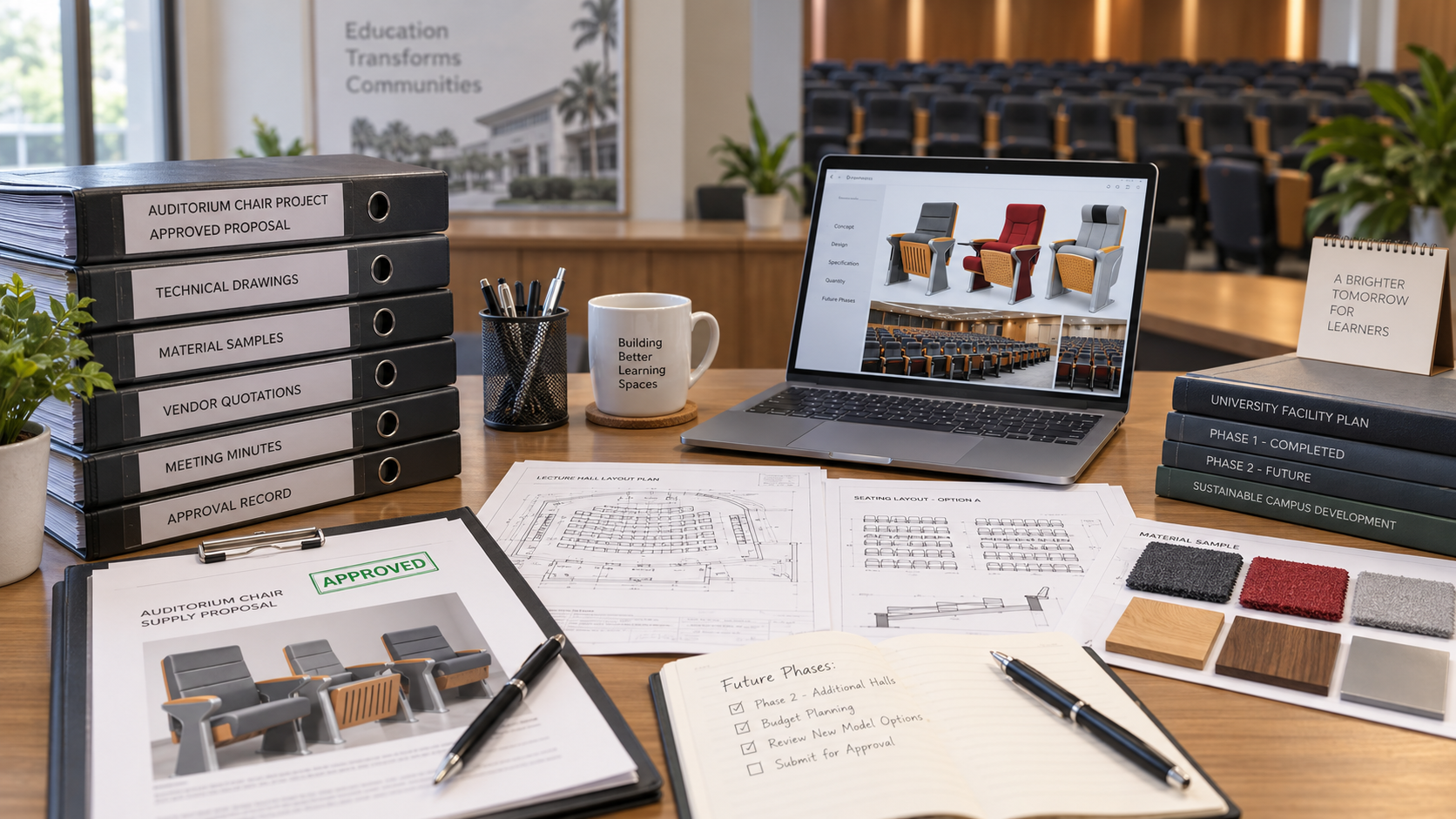
Procurement committees need more than a visual preference to support a decision. Keep supplier responses, outstanding questions, approved changes and the final scope in one project record so stakeholders can see how the selected proposal met the brief. Retain the approved proposal, final drawings, confirmed product code, selected options and care information where available.
These records can be useful when the university needs to investigate compatibility, replacements or a later seating phase. Contact us for current pricing and availability once the model, required features and project scope are clear. A well-prepared enquiry creates a stronger foundation for commercial comparison, internal approval and site coordination.
AI-generated image for illustration purposes only. Actual product appearance may vary.
Buying Guidance
For a university purchasing department, the strongest approach is staged. First, define the room’s academic purpose and gather current layout information. Then issue one consistent brief to each supplier so proposals can be evaluated on comparable scope rather than headline figures alone.
Use a decision sheet with practical columns: proposed model, confirmed features, suitability for the intended teaching format, quantity assumption, layout assumption, installation scope, maintenance information, exclusions and questions still requiring confirmation. Assign clear review roles so facilities staff can assess site implications while end users consider teaching needs. For a more productive supplier response, submit the enquiry with the latest plan or room photographs, estimated quantity, intended usage, required accessories and any known site restrictions.
This lets the supplier identify missing information early and helps your team avoid comparing incomplete proposals. Do not approve a chair solely because its listing includes terms such as auditorium, lecture hall or university seating. Ask the supplier to confirm the exact model offered, the features available for that model and how the proposal relates to your room.
If a writing tablet, a particular configuration or another feature is important, make it a written requirement in the enquiry. Request current pricing and availability after the scope is clear enough for suppliers to respond accurately. A well-prepared enquiry creates a better foundation for internal approval, commercial comparison and project coordination.
Ready to request a project quotation with current pricing and availability?
WhatsApp Us NowFrequently Asked Questions
What room information is most useful if our drawings are not final?
Share the latest available plan, photos of the room, estimated seating requirement, known aisle or access constraints and the intended use of the space. Clearly identify information that is still subject to approval so the supplier can explain what needs confirmation before a final proposal is prepared.
Can we request a preliminary recommendation before our seat quantity is confirmed?
Yes. Provide the best available room information, intended teaching use and an estimated quantity range or target capacity. Treat any early recommendation as preliminary until the final layout, required features and site conditions are confirmed.
What should our enquiry ask a supplier to confirm in writing?
Ask for the exact model, proposed quantity, requested features, layout assumptions, stated supply and installation scope, exclusions, care information where available, current availability and delivery arrangements. Written confirmation gives purchasing and facilities teams a clearer record for approval.
How can we test whether a proposed chair is suitable before a large order?
Where practical, request finish references, samples or an opportunity to view the proposed seating. Ask stakeholders who manage teaching, facilities and the room itself to assess the exact model against the project brief rather than approving from a category image alone.
How should we keep records for future repairs or additional phases?
Retain the approved proposal, final drawings, model information, confirmed options and written supplier correspondence. These records make it easier to ask about compatibility, replacements or current availability if the university needs further seating later.