

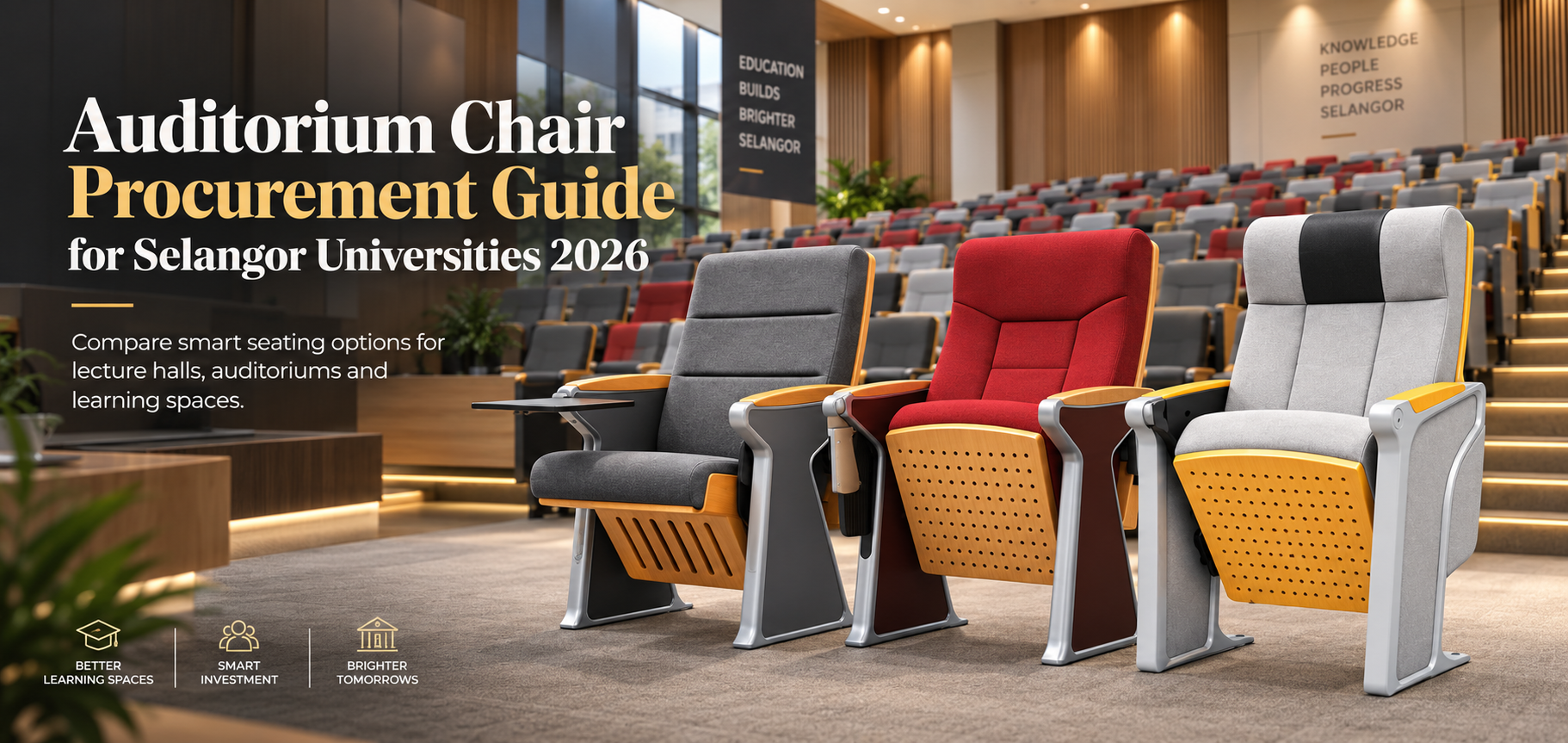
A lecture theatre can look complete on a floor plan yet still frustrate students, lecturers and facilities teams once classes begin. Before selecting seating, university purchasing departments need to balance teaching needs, student comfort, cleaning routines, room access, installation planning and quotations that can be compared fairly. A clear brief gives academic, facilities and procurement stakeholders a shared basis for reviewing the project before approval.
Use your room brief to start a more focused seating discussion.
WhatsApp for a Quick RecommendationStart with the teaching environment, not the catalogue
A large lecture theatre, faculty seminar hall and multipurpose auditorium may all need fixed seating, but they do not necessarily need the same solution. Document how the room is used during a normal semester, including lectures, examinations, orientation sessions, guest talks, conferences and student events. Ask academic users whether students need a personal writing surface, whether laptop use is common and whether maintenance access is important.
Facilities teams should also identify cleaning routines, aisle access, floor conditions and any restrictions on installation work. These questions turn a broad search for auditorium seating into a clear requirement that suppliers can address accurately.
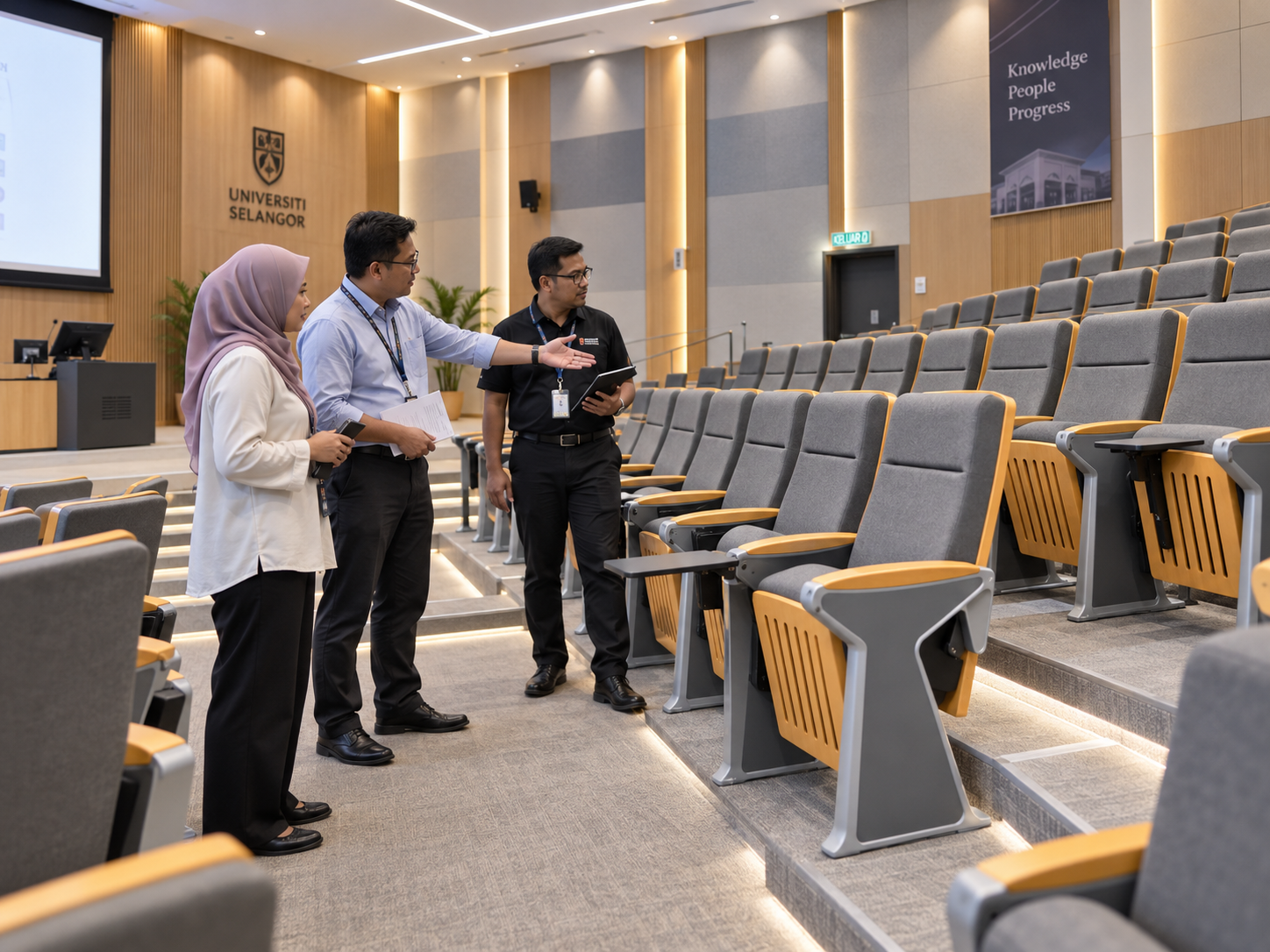
AI-generated image for illustration purposes only. Actual product appearance may vary.
Create a requirement sheet before requesting quotations
A written requirement sheet prevents suppliers from quoting based on different assumptions. Include the intended venue, approximate seat quantity, preferred seating arrangement, required functions, installation location, site-access constraints and the documents needed for internal approval. Separate non-negotiable requirements from preferences.
For example, a writing tablet may be essential in a teaching space where students take notes, while upholstery colour may depend on the university's interior scheme. This makes alternatives easier to assess without losing sight of what the room must deliver. Give each essential requirement a clear status: required, preferred or open for supplier recommendation.
That simple distinction helps purchasing teams identify whether a quotation is genuinely suitable, rather than merely visually similar to the intended seating.

AI-generated image for illustration purposes only. Actual product appearance may vary.
Check teaching functions in everyday use
For lecture hall seating, the key question is whether the chair supports the way students and lecturers use the room every day. If a writing surface is required, ask the supplier how it operates, whether left- or right-hand options are available where relevant, and whether students can use it comfortably while seated. Do not assume that a chair described as suitable for a lecture hall includes a writing feature.
Also consider movement during busy class changes: students should be able to enter, leave and reach their places without avoidable congestion. Where a room serves several purposes, include the academic department in the review so the choice reflects regular teaching use rather than occasional events alone. For projects where individual writing surfaces are central to the teaching brief, this guide to auditorium chairs with writing tablets can help the team form more specific questions before approaching suppliers.

AI-generated image for illustration purposes only. Actual product appearance may vary.
Review comfort, cleaning and campus upkeep together
Comfort matters during longer lectures, but it should be reviewed alongside the demands of a heavily used campus space. Ask suppliers to explain the upholstery and cushioning options available for the specific model quoted, along with the recommended cleaning and care approach. The most suitable option is one the operations team can maintain within its usual housekeeping routine.
Request model-specific information about parts that may need attention over time, including moving mechanisms and replaceable elements where applicable. It is better to receive a written supplier response than to rely on broad assumptions about theatre-style seating. For further supplier-evaluation prompts, see this university procurement checklist.
Bring the facilities representative into the product review before a preferred option is submitted for approval. Their feedback can reveal practical cleaning, access or upkeep concerns while there is still time to clarify the proposed scope.
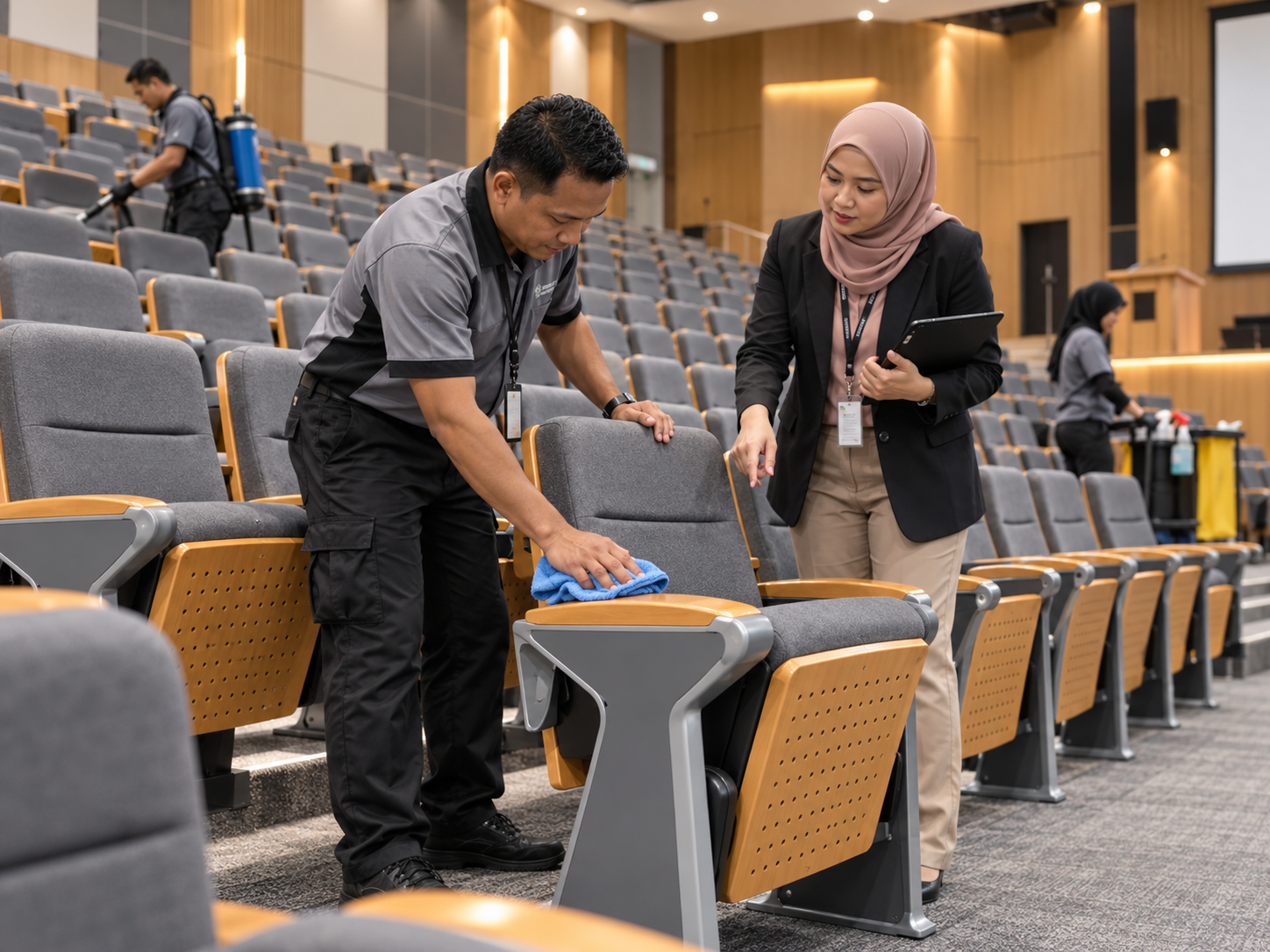
AI-generated image for illustration purposes only. Actual product appearance may vary.
Plan the layout and installation as part of the purchase
Fixed auditorium seating is a room project, not a loose-furniture order. Before final approval, check the proposed layout against the room plan and involve the campus stakeholders responsible for building works, safety, access and project coordination. Accurate site information helps a supplier advise on the installation scope more meaningfully.
Share practical details early, such as the project floor, lift availability, loading access, permitted working hours and whether existing seating must be removed. Include site measurements, drawings or photographs where available. This reduces avoidable follow-up questions and gives purchasing teams a fuller basis for comparing quotations.
If the room is being refurbished during a campus break or alongside other works, identify the project coordinator and decision-maker in the enquiry. A single contact point makes it easier to confirm site assumptions and resolve changes without fragmenting the quotation process.

AI-generated image for illustration purposes only. Actual product appearance may vary.
Share your layout and must-have functions for a model-specific quotation.
Send Us Your RequirementsCompare supplier quotations on a like-for-like basis
A lower total can be misleading when quotations do not cover the same scope. Use one request-for-quotation document and ask every supplier to respond to the same points: chair model, confirmed features, quantity, seating arrangement, upholstery selection, installation scope, site assumptions, warranty terms and exclusions. Where a supplier proposes an alternative, ask them to label it clearly rather than substituting it without explanation.
Keep a comparison sheet showing what has been confirmed and what still depends on site verification. This is especially useful for projects involving writing tablets, specialised layouts or refurbishment work. Before recommending a supplier internally, check that every line item can be traced back to an approved requirement.
Contact us for current pricing and availability, and confirm delivery arrangements against the project's current site conditions.

AI-generated image for illustration purposes only. Actual product appearance may vary.
Involve the right university stakeholders early
Purchasing can coordinate the process, but the final decision is stronger when it includes the people who will teach in, manage and maintain the room. Academic representatives can confirm learning needs, facilities can assess cleaning and access, project teams can validate site conditions, and finance or governance teams can confirm required approval documents. Set a short review meeting once supplier responses are received.
Use it to resolve open questions before a purchase order is raised, rather than after a seating choice has been specified. This approach is particularly useful for lecture theatres that also host external programmes, formal ceremonies or large faculty events. Ask each stakeholder to sign off on the part of the brief they own, such as teaching function, site readiness or maintenance practicality.
This creates a more defensible internal decision record and reduces the risk of late-stage objections.

AI-generated image for illustration purposes only. Actual product appearance may vary.
Use supplier discussions to close information gaps
A useful supplier discussion should provide clarity, not simply a product image and a total. Ask for a model-specific quotation, available finish information, installation assumptions, care guidance, warranty details and confirmation of what is included or excluded. If the room requires a writing surface, state that it is essential rather than making a general request for lecture theatre chairs.
Tekkashop's auditorium chair collection can be a starting point for an initial category review. Send the room plan, approximate quantity and list of must-have functions with your enquiry so the initial discussion starts with the realities of your project, not generic assumptions. A well-prepared enquiry helps the supplier respond with the right questions and gives your evaluation panel more useful information to review.
Contact us for current pricing and availability, and to confirm delivery arrangements for your proposed site scope.

AI-generated image for illustration purposes only. Actual product appearance may vary.
Buying Guidance
Use a staged decision process: document room use and essential functions, gather site and layout information, issue one consistent request for quotation, then review responses with academic, facilities and procurement stakeholders. Keep a record of every assumption that affects the project scope, particularly installation access, existing-seat removal, writing-surface requirements, finishes and exclusions. Avoid treating a general category description as confirmation of a required feature.
Ask for written, model-specific confirmation of every point that matters to the project, and require suppliers to identify alternatives separately. When you are ready to seek quotations, provide the room plan, approximate quantity, site-access details and internal decision requirements from the outset. Contact us for current pricing and availability, and confirm delivery arrangements once the site scope and selected seating arrangement are known.
Ready to move the project forward? Discuss your university auditorium seating requirements with our team.
WhatsApp Us NowFrequently Asked Questions
What should a university include in an auditorium seating enquiry?
Include the venue type, intended use, approximate quantity, room plan or available site information, required functions, finish preferences, installation location and any access limitations. Ask the supplier to state assumptions, inclusions and exclusions clearly so the response can be compared with other quotations.
Should a university request samples or a product demonstration before approval?
A sample or demonstration can be useful when upholstery, finish, seating comfort or a teaching function will affect the final choice. Ask what can be reviewed for the specific model being considered, and make sure the final approval record matches the confirmed model and finish.
How can procurement teams handle supplier alternatives without delaying approval?
Ask suppliers to present alternatives separately from the requested solution and explain exactly which requirement changes. The evaluation team can then decide whether the alternative is acceptable, rather than comparing it as though it were the same scope.
What should be recorded in the final approval file?
Keep the approved quotation, confirmed model details, selected finishes, room layout, installation scope, warranty information and any agreed exclusions together. A complete record helps the university confirm that the delivered scope matches the approved project.
When should the university confirm availability and delivery arrangements?
Confirm current availability and delivery arrangements after the supplier has reviewed the selected model, quantity and site requirements. This helps ensure that planning is based on the current project scope rather than early assumptions.