


A new auditorium seating project can look straightforward until purchasing, facilities and academic users need to agree on what the room must actually do. The right choice is not simply the chair that looks best in a catalogue; it is the option and project scope that work for teaching, cleaning, access and installation. Start with the hall’s day-to-day use, then give every supplier the same clear brief for a more defensible comparison.
Need help turning your room information into a supplier-ready brief?
WhatsApp for a Quick RecommendationStart with teaching needs, not a catalogue image
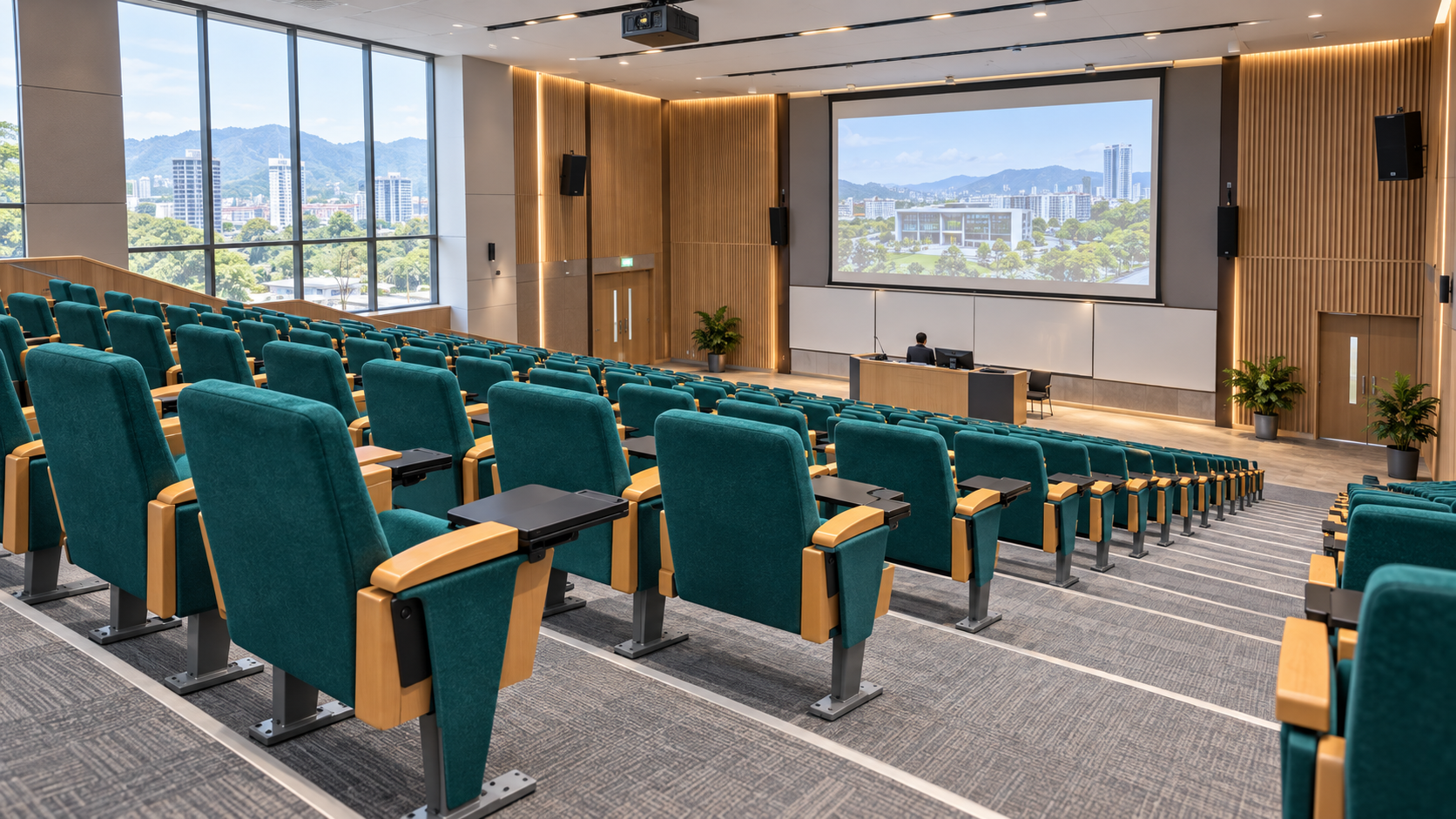
A university auditorium may host large lectures, examinations, guest talks, orientations, seminars and external events. Your brief should identify the hall’s main purpose, as well as the less frequent activities it still needs to support. For lecture-led rooms, decide whether students need a built-in writing surface or whether other tables and work surfaces are already available.
In presentation-focused halls, clear views of the front, easy movement through the room and an orderly fixed-seating layout may matter more. Before approaching suppliers, ask campus users what disrupts the current room. Useful questions include whether people can enter and leave rows comfortably, whether cleaning between sessions is manageable and whether the layout supports how the hall is used every day.
AI-generated image for illustration purposes only. Actual product appearance may vary.
Issue one clear brief to every supplier
A shared written brief makes quotation comparisons fairer. When suppliers receive different verbal descriptions of the same project, differences in scope can be mistaken for differences in value. State the project location, room function, required seating quantity, installation requirement, site access constraints and the university contact responsible for technical questions.
Also ask suppliers to return the same information: product details, available upholstery or finish options where relevant, layout assumptions, warranty terms, exclusions and current availability. Attach photographs, current plans and seating-layout drawings where available. These give suppliers a better understanding of the site and help bring important questions forward before work is arranged.
This is also the right point to request a requirements review if your team needs help turning site information into a supplier-ready brief.

AI-generated image for illustration purposes only. Actual product appearance may vary.
Review the room before approving the layout
An auditorium chair project must suit the room, not just the product image. A seating arrangement can create avoidable problems if aisles, row spacing, entrances, tiered flooring or maintenance access have not been considered together. Walk through the route used by students, lecturers, cleaners and maintenance staff.
Note doors, stairs, landings, columns, power points, floor finishes, wall conditions and fixed equipment that may affect access or installation. Clarify whether existing seating will be removed and who will clear the space. If plans are incomplete or the room has changed since they were produced, arrange a site review before committing to the final layout.

AI-generated image for illustration purposes only. Actual product appearance may vary.
Turn comfort expectations into clear questions
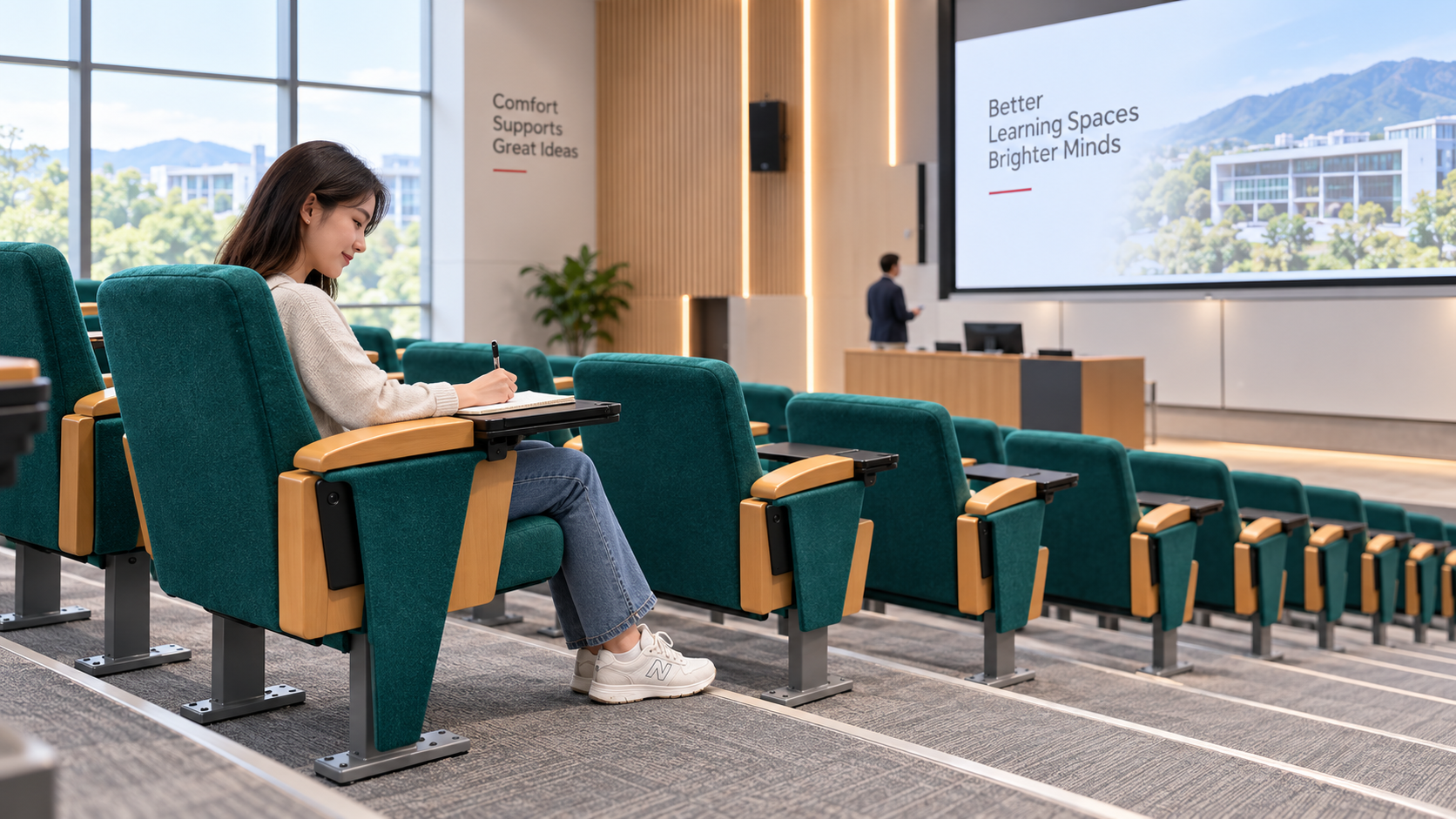
Terms such as “comfortable,” “premium” and “durable” can mean different things to different stakeholders. Instead of relying on broad descriptions, ask suppliers to explain how the proposed seating supports a typical lecture and how users enter, leave and use each row. Ask for care information for the proposed upholstery and finishes, including the recommended cleaning routine and any restrictions.
This gives facilities teams practical information without assuming a material will perform in a particular way. If writing tablets are essential to the teaching model, make that a non-negotiable requirement and request confirmation of the proposed arrangement. A buying guide to auditorium chairs with writing tablets can help stakeholders decide whether an integrated work surface genuinely suits the planned room use.
AI-generated image for illustration purposes only. Actual product appearance may vary.
Consider upkeep before placing an order
The best seating choice must work for facilities teams as well as students and lecturers. Consider how often the hall is used, who cleans it, whether food or drinks are allowed and how the room is prepared between classes and events. Ask the supplier how defects should be reported, whether replacement components may be available where applicable and how after-sales support is coordinated.
These are operational questions worth resolving during evaluation rather than after a purchase order is issued. Set out your own campus responsibilities as clearly as the supplier’s. A practical plan should identify who checks the room, records issues and approves completed work at handover.

AI-generated image for illustration purposes only. Actual product appearance may vary.
Ready to validate your scope before requesting quotations?
Send Us Your RequirementsCompare quotations by included scope
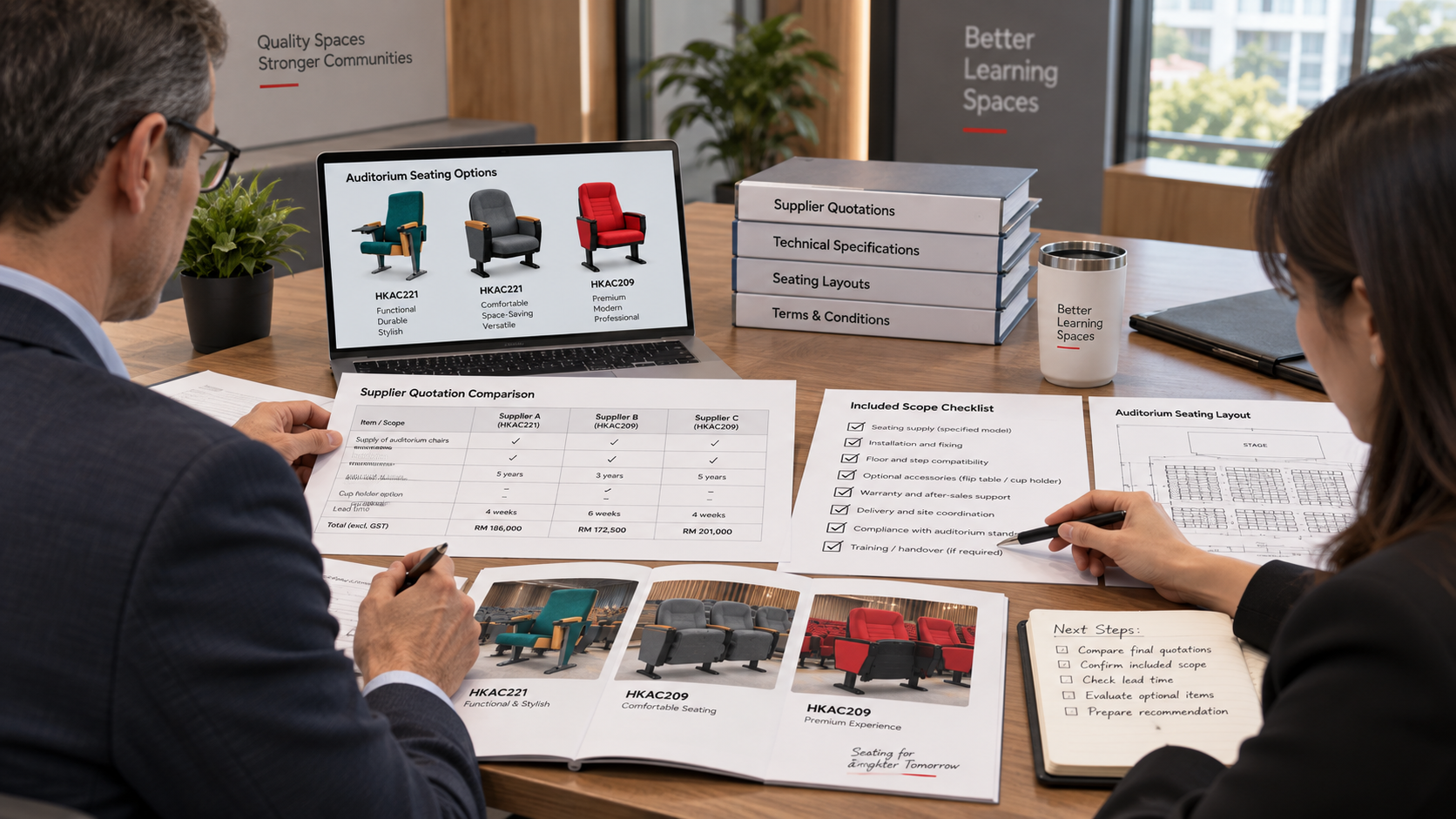
A lower quotation total may not cover the same work as another proposal. Compare each response against the same list: seating configuration, quantity, layout assumptions, delivery arrangements, installation responsibilities, removal work, applicable taxes, exclusions, warranty information and any site-preparation needs. Use a comparison sheet and mark missing answers as clarification items.
This creates a clearer record for the evaluation panel and gives suppliers a defined list of points to resolve before the university selects a preferred proposal. For a broader framework on cost-related procurement questions without relying on assumed figures, see this auditorium chair price and buying guide for Malaysian universities. Once your required scope is ready, request a project-specific quotation and contact us for current pricing and availability.
AI-generated image for illustration purposes only. Actual product appearance may vary.
Choose a supplier that is ready for the project
An auditorium chair supplier Malaysia university teams consider should be assessed as a project partner, not only as a source of furniture. Look for clear communication, relevant questions about the room and layout, and quotations that state assumptions openly. Provide any conditions that could affect the work, such as staged access, weekend access, security clearance or coordination with another contractor.
Ask for the documentation your university needs for approval, including the proposed scope, ordering process, installation coordination requirements and current availability. A university procurement checklist for evaluating an auditorium chair supplier offers additional prompts for your assessment. Use it alongside your institution’s own purchasing policy and approval process.

AI-generated image for illustration purposes only. Actual product appearance may vary.
Coordinate installation around campus operations
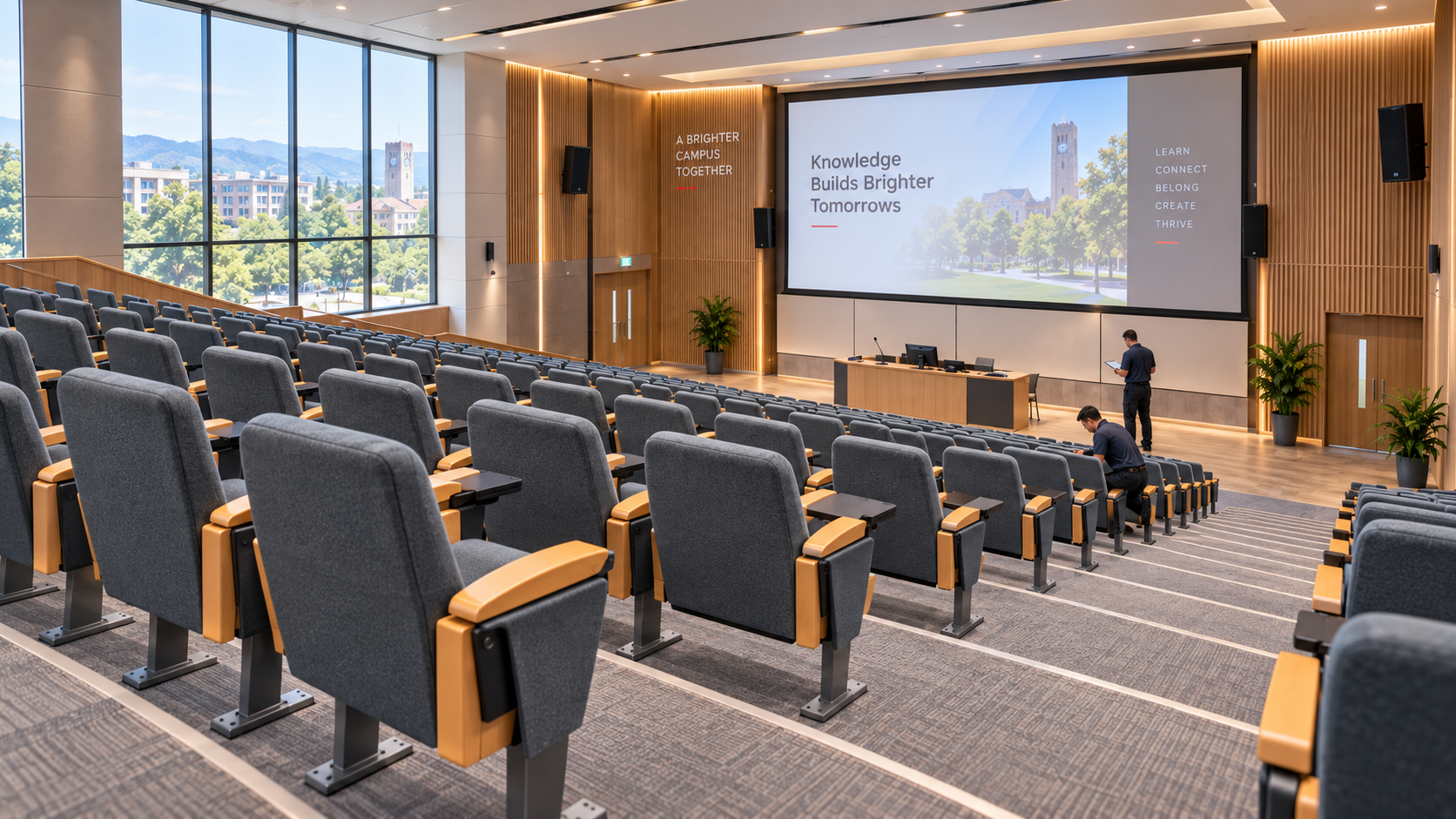
Treat installation as a campus project with clear responsibilities. Confirm site access, room-booking restrictions, completion checks, packaging and waste arrangements, and whether other trades must finish their work before seating is installed. Nominate one university project contact who can make decisions or escalate issues if the site differs from the approved plan.
Keep approved drawings, scope clarifications, variation decisions and handover records in one shared project file. Avoid relying on a generic delivery expectation. Contact us to confirm current availability and delivery arrangements, then coordinate the confirmed plan with facilities and academic teams.
A complete enquiry that includes your seating quantity, drawings, site photographs and required installation scope will support a more useful project discussion.
AI-generated image for illustration purposes only. Actual product appearance may vary.
Buying Guidance
Use a staged process rather than selecting seating from a single product page. First, document the room’s teaching and event needs; second, collect current drawings, photographs and access information; third, issue one written brief to every bidder; and fourth, compare responses with a shared evaluation sheet. For internal approvals, separate non-negotiable requirements from preferences.
Non-negotiables may include seating quantity, room function, installation scope, access constraints and any required student work surface, while preferences may cover visual direction or optional features. Before issuing an order, check that the quotation, approved layout, inclusions, exclusions and handover responsibilities all match. Ask the selected supplier to confirm current availability and delivery arrangements, and record every approved change.
For the most productive supplier enquiry, send the seating quantity, available plans or photographs, intended room use, access constraints and the decision-makers who need to review the proposal. This gives the supplier enough context to identify clarification points rather than returning a generic response.
Have a defined auditorium project? Contact us for current pricing, availability and coordination.
WhatsApp Us NowFrequently Asked Questions
What information should we include in an initial auditorium seating enquiry?
Include the project location, required seating quantity, intended room use, available plans or photographs, access constraints and whether installation is required. Identifying the university contact for technical clarifications also helps the supplier assess the scope more efficiently.
Should a university request a sample before a large auditorium seating order?
If your procurement process allows it, a sample or documented product review can help relevant stakeholders assess the proposed seating before a larger commitment. Ask the supplier what review options and current product information are available for your project.
Who should sign off on an auditorium seating decision?
Purchasing should involve facilities, the academic department responsible for the room and any estates or project team managing the site. Bringing these groups together helps balance teaching needs with cleaning, access, approvals and installation planning.
Can a university request a quotation before the final seating layout is approved?
Yes, but clearly identify which parts of the request are provisional. A supplier can review the available information and flag assumptions or clarification items, while the university retains responsibility for approving the final layout and scope before ordering.
What should be included in the final handover file?
Keep the approved layout, final quotation, records of any agreed changes, warranty information, care guidance and the contact process for after-sales support. A complete file helps facilities and purchasing teams manage the seating after the project is completed.