


A lecture hall seating purchase can look straightforward until teaching staff need writing surfaces, facilities teams raise cleaning concerns, and the proposed layout meets a stepped floor or restricted access route. For university purchasing departments, the strongest outcome starts before any quotation arrives. This guide shows Kuala Lumpur universities how to prepare a practical brief, compare supplier proposals fairly and keep approvals moving without overlooking operational needs.
Need a second view on your initial hall brief?
WhatsApp for a Quick RecommendationStart with teaching needs, not a catalogue
Before approaching a Malaysian auditorium chair supplier, establish how each hall is used day to day. A tiered theatre used mainly for lectures needs a different brief from a shared venue for examinations, guest talks, student presentations and faculty events. Bring academic users and facilities staff into the early discussion.
Ask what must work well in the room, such as note-taking support, clear sightlines, straightforward cleaning or practical access through the rows. Recording competing needs early is more useful than assuming one seating approach will suit every space. It also helps to separate core teaching rooms from event-facing venues.
A large undergraduate theatre, a faculty hall and a ceremonial space may each justify different priorities when the university prepares its enquiry.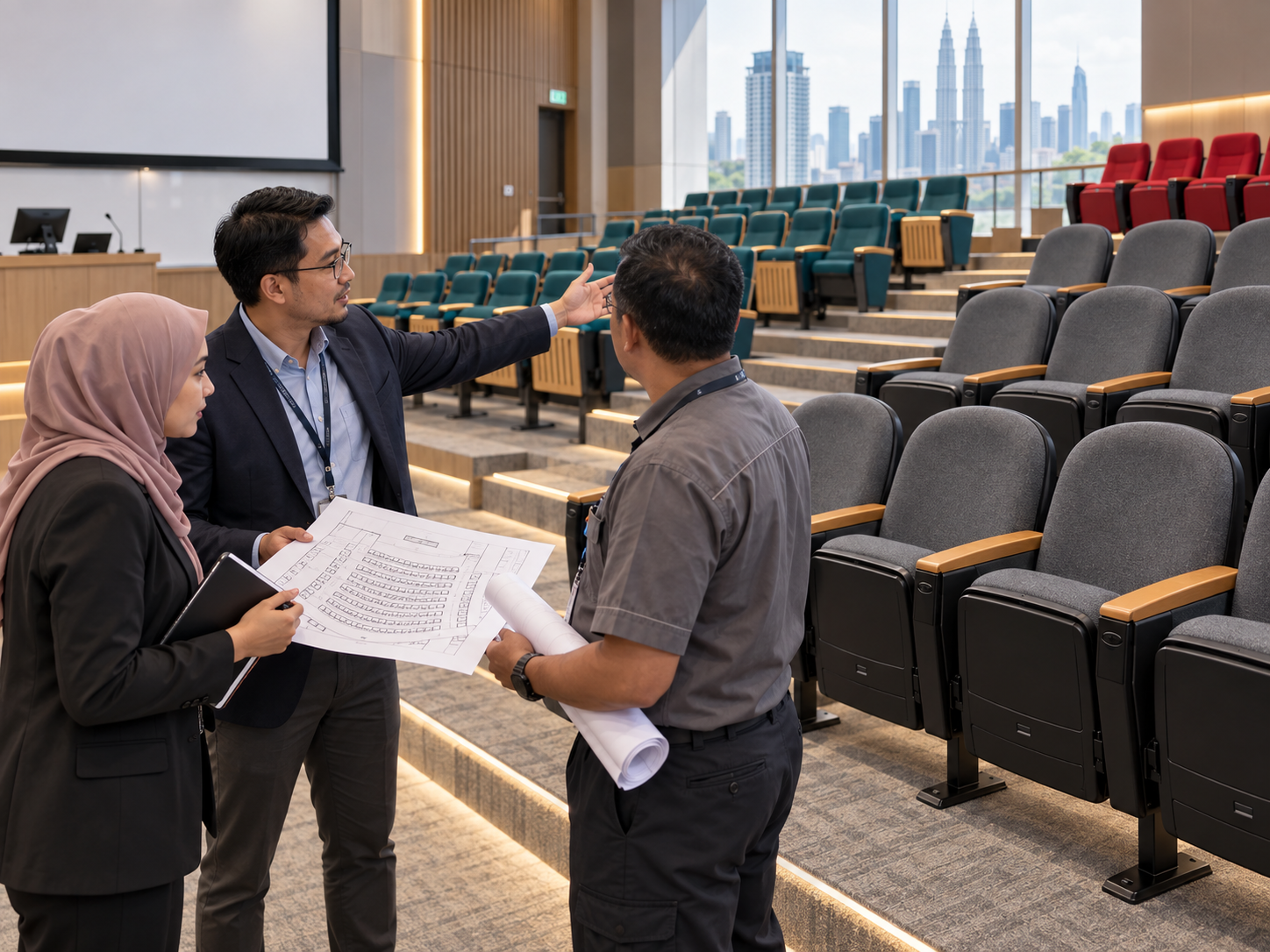
AI-generated image for illustration purposes only. Actual product appearance may vary.
Create a room-by-room project brief
Suppliers can respond more accurately when they receive a complete project brief rather than a seat count alone. For every room, note its intended use, existing arrangement, target quantity, access conditions, whether old seating will be removed and any site restrictions that could affect installation. Share current drawings where available, along with photographs of entrances, aisles, stepped areas and fixed elements around the hall.
State whether the existing row arrangement must be retained or whether the university is open to layout recommendations. Name a project contact who can resolve questions when drawings and site conditions do not fully align. Write teaching requirements as practical questions instead of broad requests for a “premium” or “modern” chair.
For example, does each student need a surface for written work or device use, and will staff need regular access to occupied rows? Clear questions give the procurement team criteria it can genuinely assess.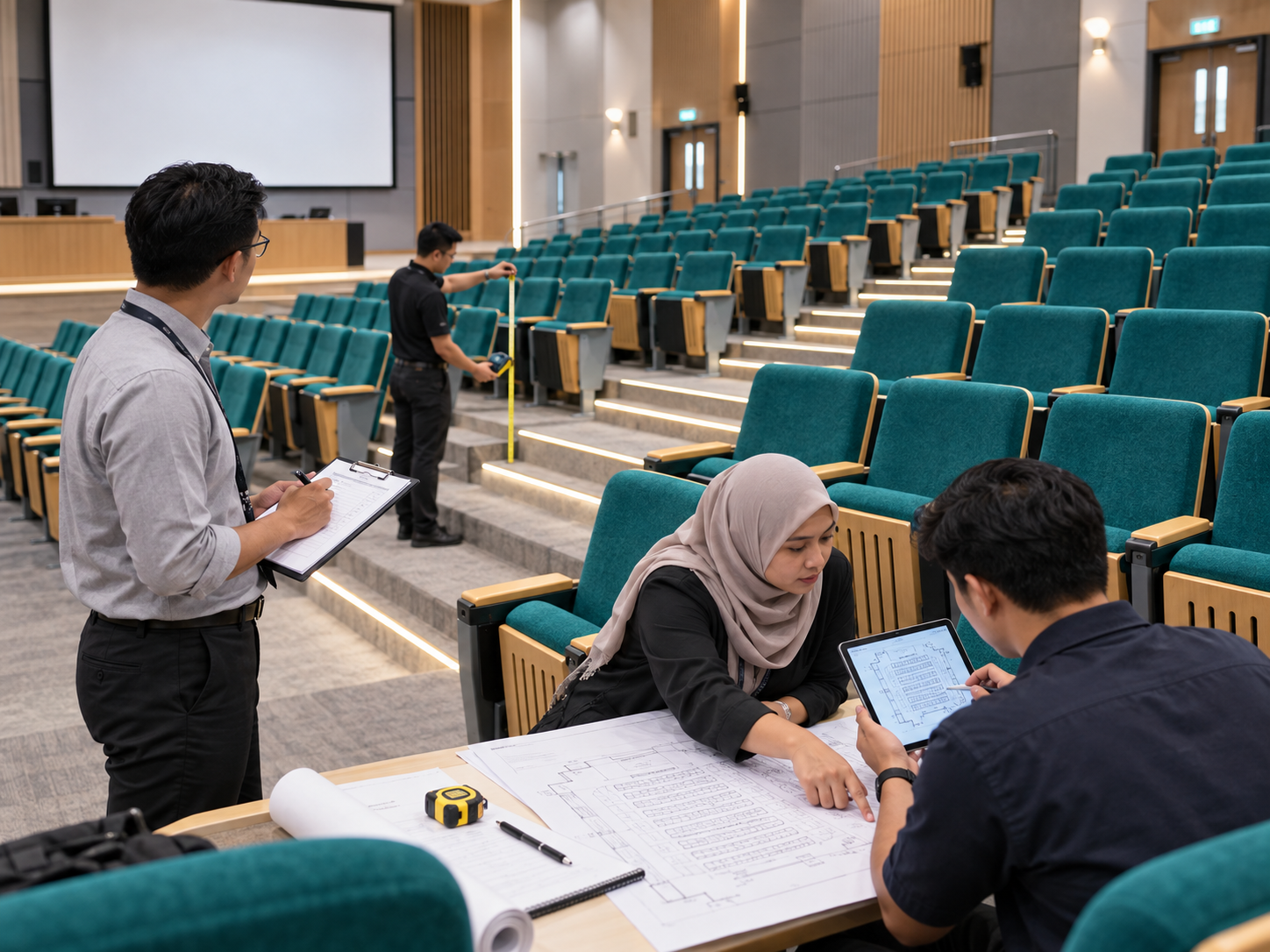
AI-generated image for illustration purposes only. Actual product appearance may vary.
Compare supplier proposals on the same scope
Send one scope sheet to every shortlisted supplier so proposals can be evaluated on like-for-like information. Request clear confirmation of the proposed seating arrangement, inclusions, exclusions, available options, installation responsibilities and assumptions that may affect the project. Do not judge quotations by the headline figure alone.
A lower proposal may cover a different scope, omit site-related work or treat useful additions as separate options. Ask suppliers to list alternatives separately, allowing the committee to distinguish essential requirements from optional upgrades. If a writing tablet is part of the academic brief, ask how the proposed configuration meets that need.
A product-page description is not enough on its own; the feature should be checked against the intended teaching use and the room plan before approval. For related planning considerations, review this writing tablet buying guide alongside the room brief.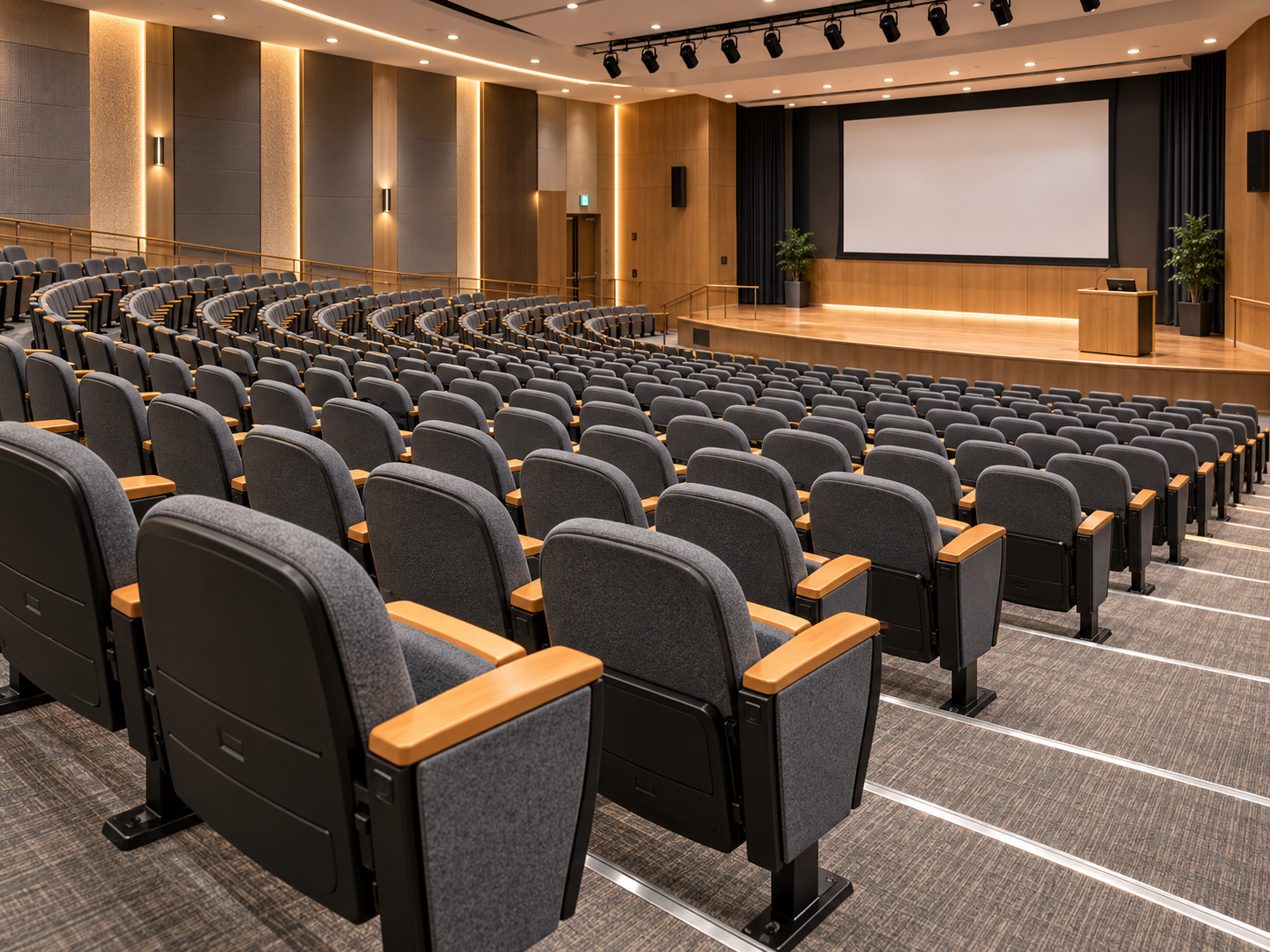
AI-generated image for illustration purposes only. Actual product appearance may vary.
Evaluate the supplier’s project process
For a university seating project, the supplier’s working process matters as much as the chair selection. Look for organised communication, a quotation that is easy to review, and a willingness to work from the university’s drawings, photographs and confirmed site information. Clarify who will manage site verification, layout discussions, delivery arrangements and installation responsibilities.
The purchasing department should also understand how proposed changes will be documented if site conditions differ from the original brief. Good documentation makes internal review easier. Your team may need proposal revisions, product information, approval records and a final scope that can be circulated across departments.
For further supplier-assessment prompts, use this university procurement checklist before issuing an enquiry.
AI-generated image for illustration purposes only. Actual product appearance may vary.
Ready to compare seating proposals against one consistent scope?
Send Us Your RequirementsInclude operations and upkeep in the decision
The people maintaining the hall after handover should influence the procurement brief. Facilities teams can identify the venue’s booking intensity, usual cleaning routine, likelihood of food or drinks and the practical time available between classes or events. Consider whether staff can reasonably inspect and clean around the planned rows.
In heavily used rooms, access for routine upkeep and a clear route for reporting issues can have as much operational value as the initial appearance of the seating. Ask what care information and project records the supplier can provide after completion. Keeping these records in one place helps future facilities staff understand the original scope when personnel or committee members change.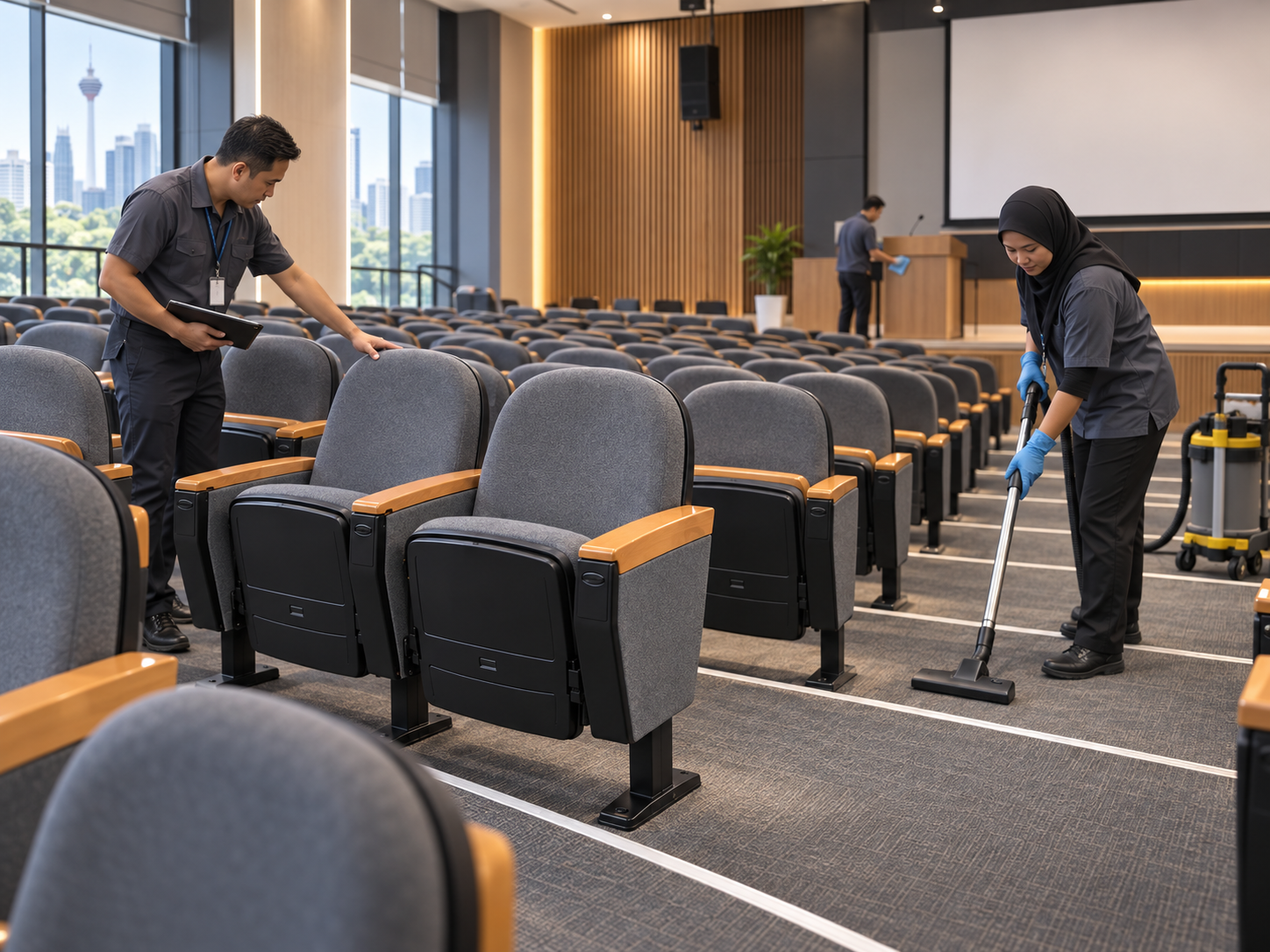
AI-generated image for illustration purposes only. Actual product appearance may vary.
Make your enquiry ready for a usable proposal
A decision-ready enquiry gives the supplier enough information to respond meaningfully and gives your committee fewer unknowns to resolve later. Send the room schedule, available drawings, site photographs, target quantity, intended teaching use and any non-negotiable requirements in one package. Ask for a proposal that clearly separates the proposed seating configuration, scope inclusions, exclusions, options, installation responsibilities and site assumptions.
This makes it easier to obtain feedback from academic users, facilities personnel and finance without asking each department to interpret an incomplete proposal. If your university is considering several halls, identify whether the request is for one immediate room or a wider programme. Request a project quotation and confirm current availability and delivery arrangements for your project.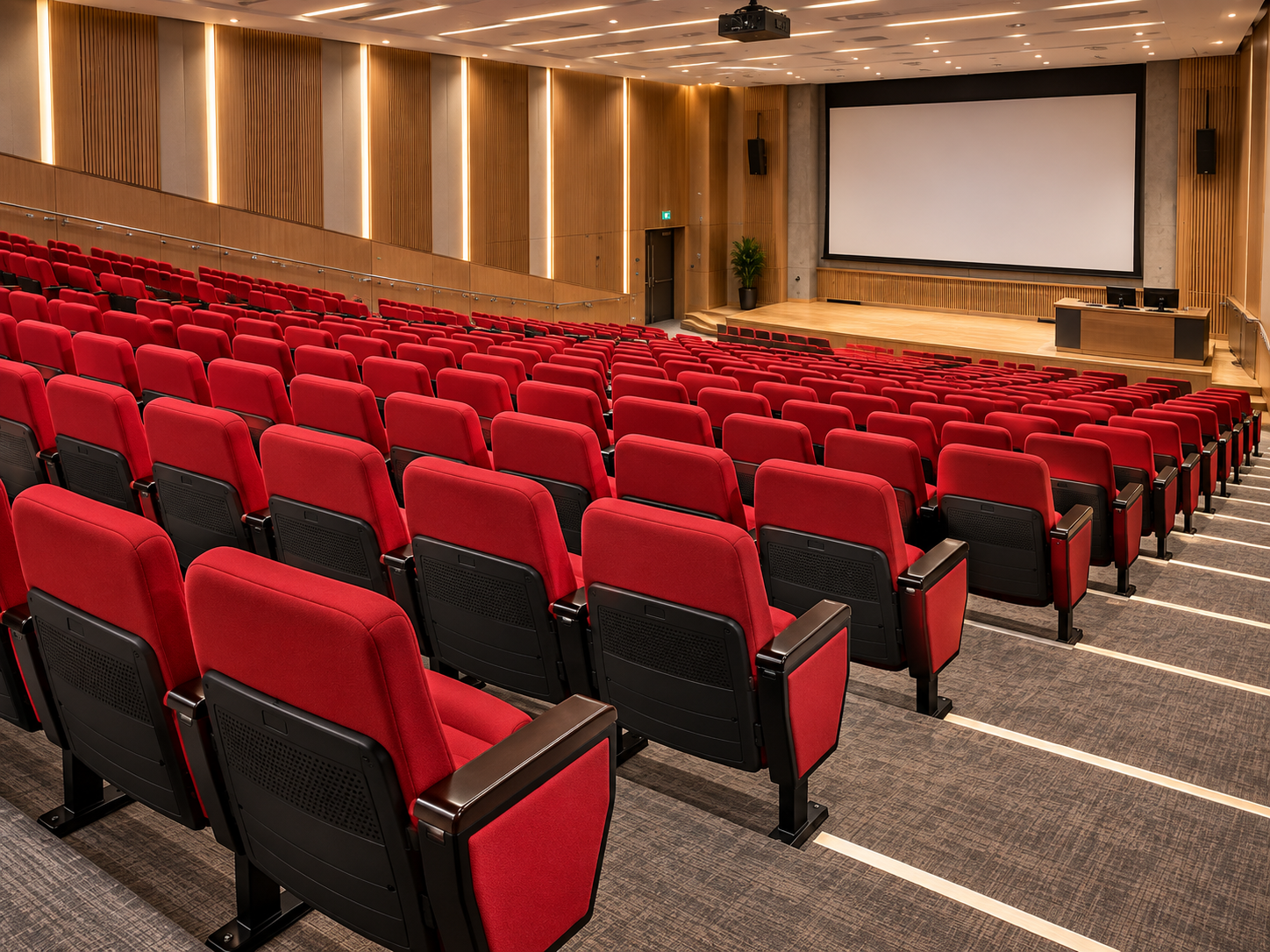
AI-generated image for illustration purposes only. Actual product appearance may vary.
Set an approval sequence before final commitment
Late changes are more likely when academic users, facilities staff and purchasing teams review a proposal at different points. Set an agreed sequence: confirm the room brief, review the layout, validate the teaching function and then seek commercial approval against a final documented scope. A small cross-functional review group can keep decisions focused.
Include someone who understands how the room is taught in, someone responsible for the site and ongoing upkeep, and a procurement representative who can maintain a consistent comparison process. Before issuing a purchase order, check that the final proposal reflects the approved room, quantity, configuration and responsibilities. This final check protects the university from approving a solution that differs from the scope originally reviewed.
AI-generated image for illustration purposes only. Actual product appearance may vary.
Buying Guidance
Use a staged approach instead of beginning with a generic auditorium seating quotation request. Start with a room schedule that captures intended use, target quantity, access, existing conditions and operational concerns. Then separate essential requirements from desirable options, particularly where teaching functions such as writing surfaces are involved.
Prepare an enquiry pack with the room schedule, available layout drawings, photographs of access routes and stepped areas, and one named project contact. Ask each shortlisted supplier to respond against the same requested scope: proposed configuration, inclusions, exclusions, available options, installation responsibilities, site assumptions and items requiring confirmation. This gives finance, facilities and academic stakeholders a common basis for review.
For a multi-hall programme, state which room needs an immediate proposal and which spaces may follow later. That lets the supplier focus the first response on the current decision while understanding the broader campus context. Request a project quotation and confirm current availability and delivery arrangements once your room information is ready.
Do not commit until the internal team has checked the final scope against the actual room and agreed responsibilities. A well-prepared enquiry helps the supplier respond meaningfully and gives the university a more defensible basis for selection.
Send your room schedule and available layout information for a project quotation.
WhatsApp Us NowFrequently Asked Questions
What documents should be retained after an auditorium seating project is approved?
Keep the final approved proposal, drawings used for the decision, any agreed revisions, records of responsibilities and the supplier’s care information. A central project file is useful when future facilities staff need to review the original seating arrangement or procurement decisions.
Can a university refurbish one lecture hall at a time?
Yes, a university can structure its enquiry around individual rooms or a phased programme. Explain which halls are included in the current scope and whether further rooms may be considered later, so the supplier can respond to the immediate requirement without assumptions.
How should a purchasing team handle incomplete hall drawings?
Provide the most current information available, including photographs and notes on areas that are uncertain. Tell the supplier where clarification may be needed and discuss the appropriate verification process before the final scope is approved.
What should we ask when reviewing a seating sample or presentation?
Use the review to test the questions that matter for your particular hall: whether the proposed arrangement supports teaching use, how it relates to circulation and cleaning, and whether the stated scope is clear. Record feedback from academic users and facilities staff so it can be tied back to the written proposal.
Can writing tablets be requested for only selected rooms?
Yes. Identify the rooms or teaching settings where a writing surface is essential, rather than treating it as a campus-wide requirement. Ask the supplier to confirm whether an appropriate proposed configuration is available for those spaces and how it works with the planned layout.